Documentary Photography
Follow your passions to document real people and important issues on this practical and engaging documentary photography course.
How to apply Apply through UCAS Book an Open Day Chat to us
UCAS Code
7G84
Start Date
September 2027
Location
Cardiff
Campus Code
B
UCAS Points
104
International students: £17,600*
Course Overview
Find the stories that need to be told on this dedicated documentary photography course.
You’ll learn the practical skills to not only produce the images, but to be in control of all elements of the process, using our state-of-the-art production suites, darkrooms and fabrication studios.
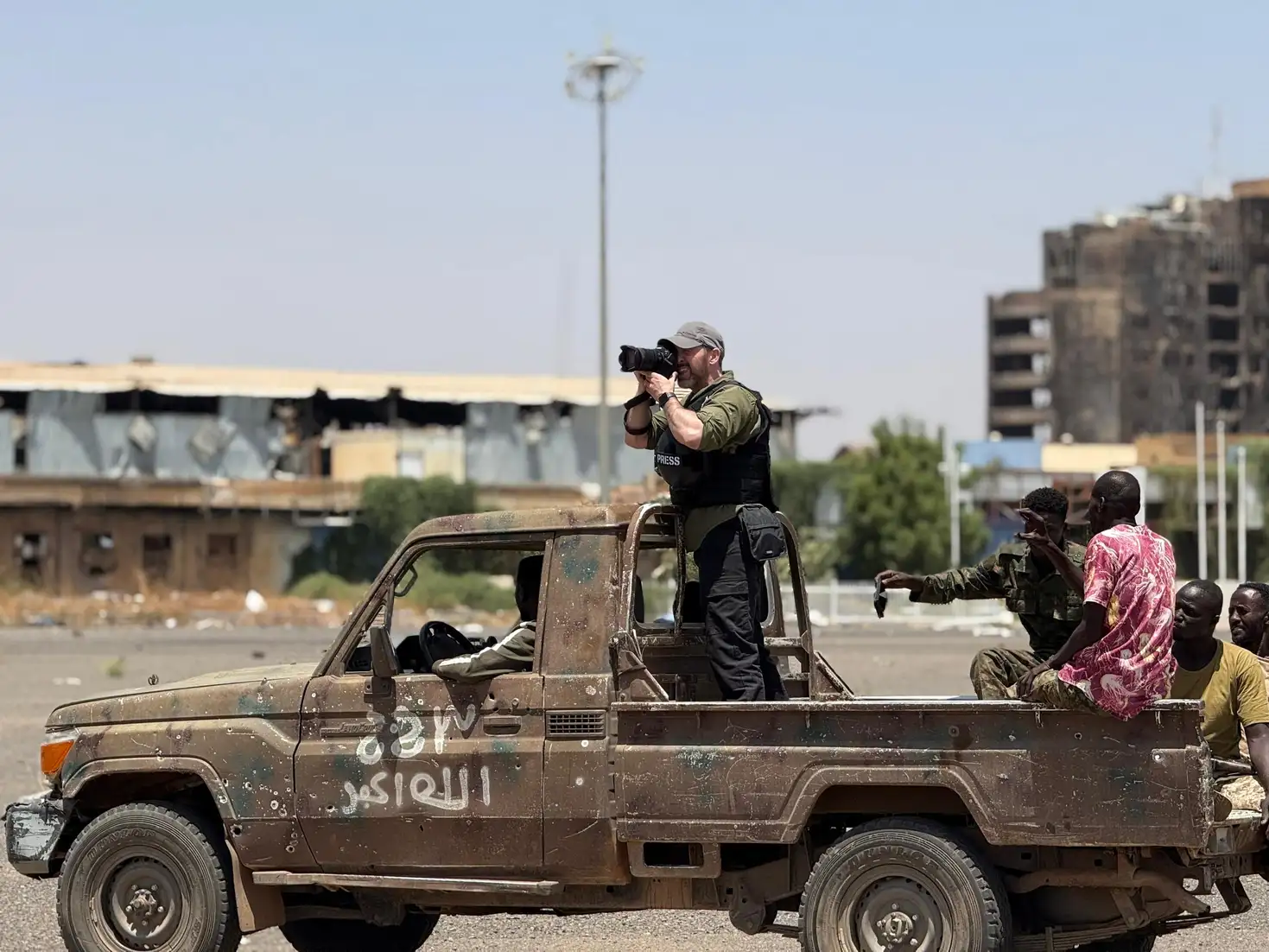
Documentary photography is all about real life and inspiring change. Explore the world, driven by curiosity and a passion for travel. Learn fine-print, photobooks, exhibition production, digital storytelling, documentary filmmaking, and more.
Why study this course?
What you'll study
Our modules are focused on documentary photography from the outset, to give you scope to explore all aspects of this exciting genre.
Expect to get hands-on from day one, with practical content to help you learn the necessary skills to access stories you are passionate about Small classes, field trips and individual support all feature in your first year to get you off to the best start for your career.
You’ll explore documentary photography on field trips and dive into collaborative projects, including technical training using a range of cameras and printing facilities.
Explore the social issue of your choice while learning how to create and select images with clarity and impact.
Research your own topic and get out-and-about making photographs. Experiment with formats and cameras while learning sequencing, editing and structuring long-form documentary stories.
Experiment with styles, ranging from journalistic documentary to experimental filmmaking, while learning moving-image, sound recording, interview techniques, and editing skills.
Use our world-leading library collection to discover the most exciting and important photographers . Explore the debates and challenges that shape photography.
Build your research skills by exploring documentary photography’s role in social change and advocacy. Consider its potential to highlight topics such as race, the environmental crisis and gender.
Part of this module can be studied through the medium of Welsh
Specialising in ‘long form’ documentary photography gives you scope to work on ideas you’re passionate about over extended periods.
Live projects and workshops include design and production of professional exhibitions, photobook design and location lighting.
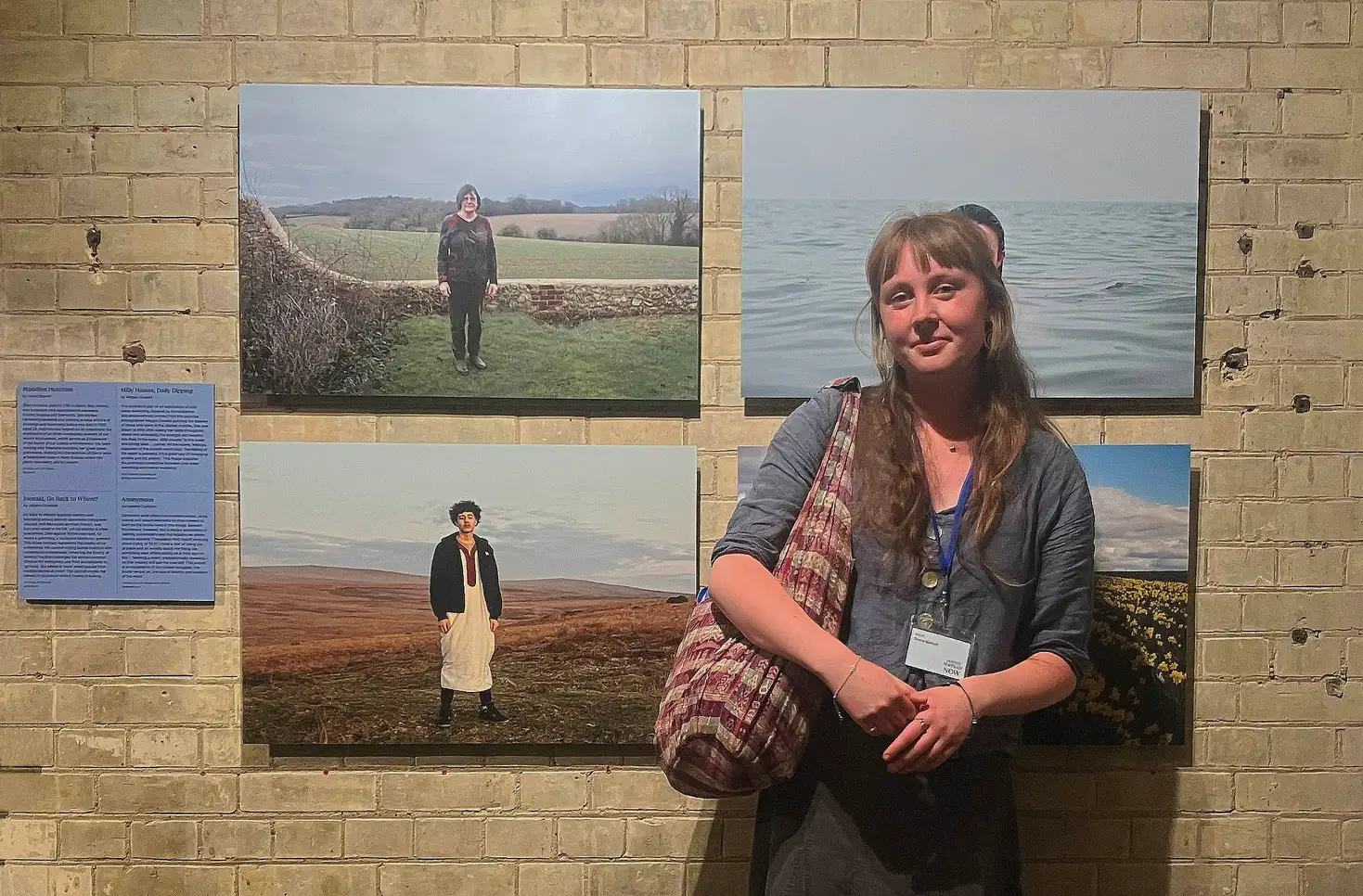
Choose your topic and process to forge a distinctive path as a contemporary photographer. Originate, design, frame and install a professsional exhibition.
Build storytelling skills as you design, scale and sequence your images for publication. Learn to print, construct, and bind photobooks.
Build your knowledge and experience of industry and develop skills that are essential to market and promote your work in this business and careers focussed module
Part of this module can be studied through the medium of Welsh
Connect critical theories from photography, fashion, film, art and advertising to how you make, describe and rationalise your practice.
Put theory into professional practice in your final year, during which many students travel internationally to produce their portfolios.
You’ll create one or two ambitious bodies of work and respond to a live professional brief to prepare you for a sparkling career in the photographic industry.
Start to develop a big idea for your project portfolio. Use all your skills and our facilities to work on a live brief to set timescales, honing your professional abilities.
Follow your passions to create your final portfolio to be showcased in our graduation events, exhibitions and/or for publication.
Expand your understanding of key foundations of business practice, creative strategies, marketing and distribution networks through industry-based research.
25% of this module can be studied in Welsh
We regularly review our courses to keep pace with changing skills and employer needs. If a review leads to significant changes, we’ll contact you to explain what’s changing for the coming year.
Teaching and Assessment
Our course is one of the leading documentary photography and photojournalism courses in the world. Our diverse team has worked in industry and academia, spanning the professional and theoretical aspects of documentary photography. From international documentary-makers to people experienced in curation and magazine photography, we have experience in all aspects of documentary photography and will connect this to how you learn.
Learning combines lectures, workshops, field trips and independent shooting, encouraging you to explore real-world stories.
You’ll produce portfolios, photobooks and exhibition work, alongside written and reflective assignments that support your practice. Regular feedback helps you refine your ideas and technical approach.
Assessment is entirely coursework-based, with no exams. You’ll be evaluated through practical photography projects, from initial research and concept development to final images, publications and exhibitions.
Live briefs and industry-focused projects form part of your assessment, while your final year centres on a major portfolio project that showcases your personal style and prepares you for professional practice.
Work in professional photography studios and digital labs with access to industry-standard equipment and specialist technical support. You’ll develop your skills through hands-on practice in shooting, editing and producing visual work.
Course Leader
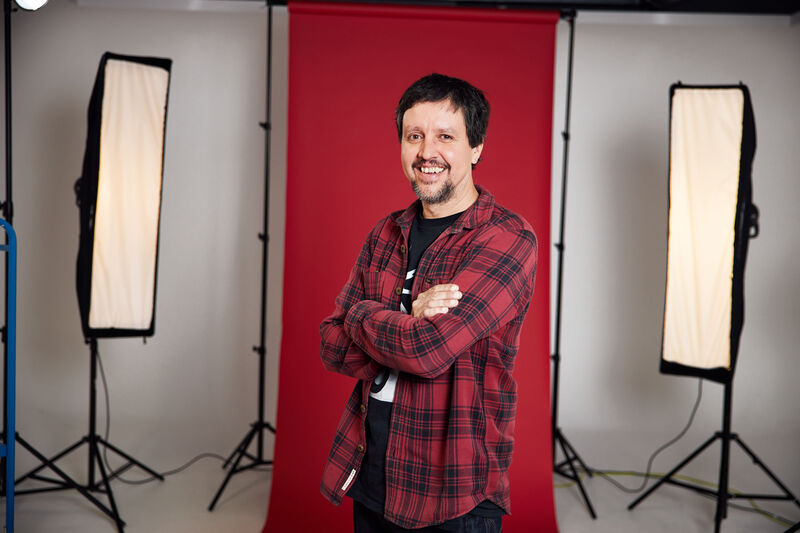
David Barnes
David Barnes is Course Leader for BA Documentary Photography and brings more than 25 years of industry experience to the classroom.
An award-winning documentary photographer and filmmaker, he has worked for the UK's leading magazines, produced BAFTA-nominated films, and developed major exhibition projects.
Since joining the course in 2006, he has helped shape the careers of graduates who have gone on to become leading documentary photographers and photojournalists across the UK and Europe.
Passionate about storytelling in all its forms, David combines cutting-edge industry knowledge, extensive professional networks, and hands-on mentoring to help students turn their creative ambitions into impactful, career-defining work.

“The networking opportunities on the course have been invaluable, especially getting to know so many industry figures through events and exhibitions.”
Freddie Bingham, Documentary Photography student
Entry Requirements
Additional requirements include:
GCSEs: The University normally requires a minimum 5 GCSEs including Mathematics/Numeracy and English at Grade C or Grade 4 or above, or their equivalent, but consideration is given to individual circumstances
Contextual offers
We may make you a lower offer based on a range of factors, including your background (where you live and the school or college that you attended, for example), your experiences and individual circumstances (as a care leaver, for example). This is referred to as a contextual offer, and we receive data from UCAS to support us in making these decisions.
USW prides itself on its student experience and we support our students to achieve their goals and become a successful graduate. This approach helps us to support students who have the potential to succeed and who may have faced barriers that make it more difficult to access university.
How to applyContextual admissions policyAsk us a question104 UCAS points or above
Typical qualification requirements
A Level:
BCC to include a relevant art and design subject
Welsh BACC:
Pass the Advanced Welsh Baccalaureate Diploma with Grade C/B in the Skills Challenge Certificate and BC - CC at A Level with a relevant art and design subject
BTEC:
BTEC Extended Diploma Distinction Merit Merit in a relevant subject
Access to HE:
Pass the Access to HE Diploma with a minimum of 104 UCAS tariff points
T Level:
Pass (C and above)
International applications welcomed:
We welcome international applications with equivalent qualifications of our entry requirements. For more details related to your country of residence, please view our dedicated country pages.
International studentsPre-Sessional EnglishEnglish language requirements
International applicants will need to have achieved an overall of IELTS 6.0 with a minimum of 5.5 in each component/TOEFL 4 overall and a minimum of 4 in each component or equivalent.
Equivalents can be located on our English Language pages.
If you have previously studied through the medium of English, IELTS might not be required, please visit our country specific page for further details. If your country is not featured, please contact us.
If you do not meet the English entry criteria, please visit our Pre-Sessional course pages.
Fees and Funding
Studying at university is one of the most significant investments you'll ever make. Whilst you’re studying, you’ll have two main financial obligations – tuition fees and living costs. There’s lots of financial help available from the University of South Wales and external funding sources, that may provide loans (which have to be paid back) and grants, scholarships and bursaries (that don't).
*Full-time fees are per year. Part-time fees are per 20 credits. Once enrolled, the fee is anticipated to remain at the same rate throughout the duration of your study on this course except as described below.
Please be aware that we may increase the maximum fee for home students on full-time undergraduate courses only where the Welsh Government increases the permitted level of inflation of fees. Fees for all students (including part-time, postgraduate and international students) may be amended in accordance with our applicable Fees and Debt Management Policy. We will ensure that students are given clear, intelligible, unambiguous and timely information about our courses and costs in good time, ahead of the next academic year.
As a student of USW, you’ll have access to lots of free resources to support your study and learning, such as textbooks, publications, online journals, laptops, and plenty of remote-access resources. Whilst in most cases these resources are more than sufficient in supporting you with completing your course, additional costs, both obligatory and optional, may be required or requested for the likes of travel, memberships, experience days, stationery, printing, or equipment.
Equipment
Digital SLR or Mirrorless Camera with interchangeable lens option – this to start the academic year and to be used as main camera for production
Cost: £250 - £1000
Field Trips
Year 1 UK trip (All trips are subject to change and viability in relation to student numbers), Year 2 Network Events
Cost: £300-£600
Materials
Cost of printing papers/film etc. over a three year period
Cost: £1000 - £1500
PC or Mac computer
PC or Mac computer capable of image and video editing and storage/processing of images
Cost: £400-£1500
Final year project
Costs of producing final year publication and fabrication of graduate show work- cost is dependent on nature of work and aim of student regarding next step in career/employability
Cost: £100-£600
per year
Studying at university is one of the most significant investments you'll ever make. Whilst you’re studying, you’ll have two main financial obligations – tuition fees and living costs. There’s lots of financial help available from the University of South Wales and external funding sources, that may provide loans (which have to be paid back) and grants, scholarships and bursaries (that don't).
*Full-time fees are per year. Part-time fees are per 20 credits. Once enrolled, the fee is anticipated to remain at the same rate throughout the duration of your study on this course except as described below.
Please be aware that we may increase the maximum fee for home students on full-time undergraduate courses only where the Welsh Government increases the permitted level of inflation of fees. Fees for all students (including part-time, postgraduate and international students) may be amended in accordance with our applicable Fees and Debt Management Policy. We will ensure that students are given clear, intelligible, unambiguous and timely information about our courses and costs in good time, ahead of the next academic year.
As a student of USW, you’ll have access to lots of free resources to support your study and learning, such as textbooks, publications, online journals, laptops, and plenty of remote-access resources. Whilst in most cases these resources are more than sufficient in supporting you with completing your course, additional costs, both obligatory and optional, may be required or requested for the likes of travel, memberships, experience days, stationery, printing, or equipment.
Equipment
Digital SLR or Mirrorless Camera with interchangeable lens option – this to start the academic year and to be used as main camera for production
Cost: £250 - £1000
Field Trips
Year 1 UK trip (All trips are subject to change and viability in relation to student numbers), Year 2 Network Events
Cost: £300-£600
Materials
Cost of printing papers/film etc. over a three year period
Cost: £1000 - £1500
PC or Mac computer
PC or Mac computer capable of image and video editing and storage/processing of images
Cost: £400-£1500
Final year project
Costs of producing final year publication and fabrication of graduate show work- cost is dependent on nature of work and aim of student regarding next step in career/employability
Cost: £100-£600
Explore our facilities
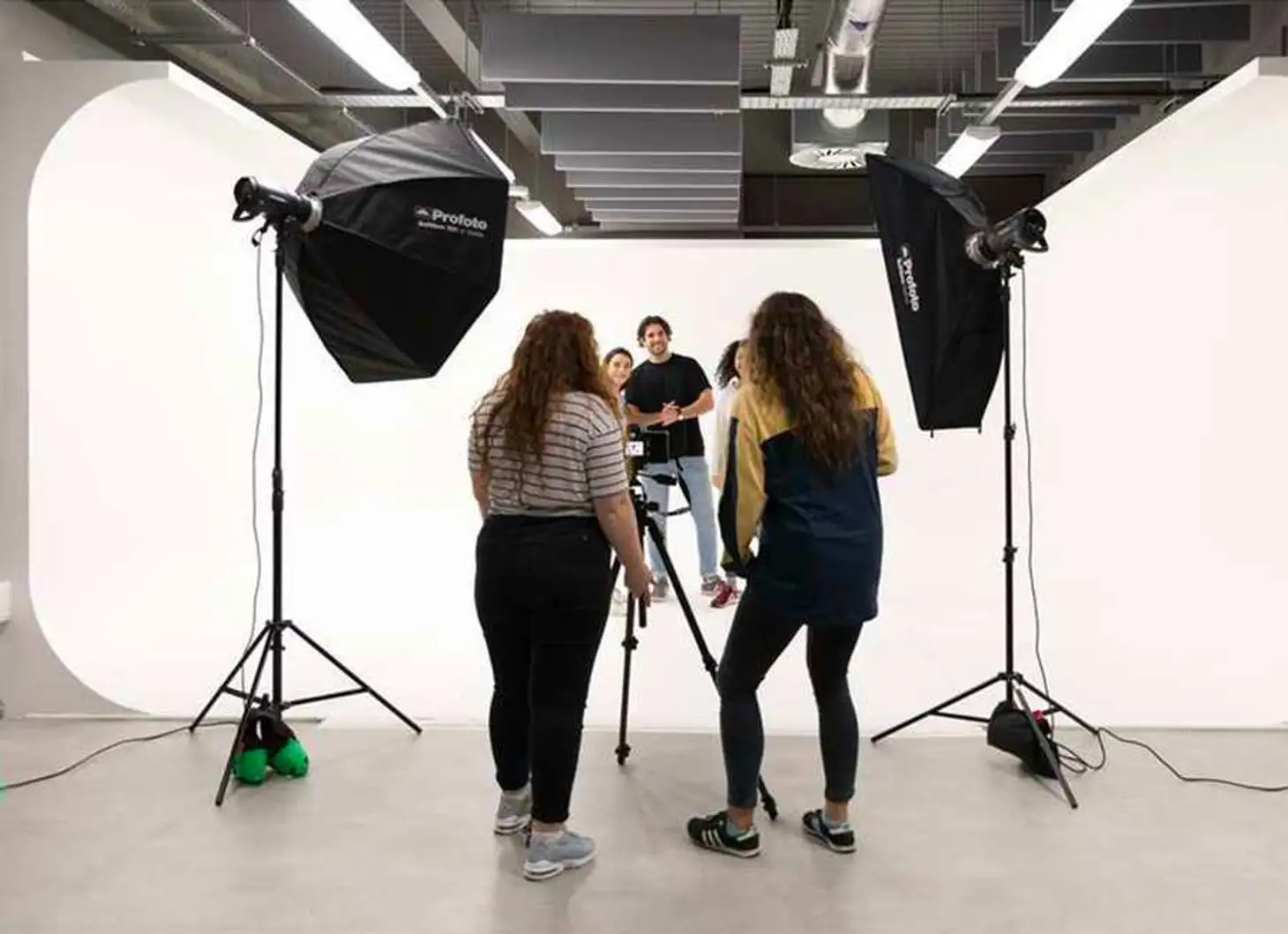
Media Loans
Access industry-standard cameras, lighting, sound and recording gear, supported by free Media Loans and experienced technicians. We have everything you need to help you experiment, refine and bring your work to life with confidence.
How to apply
All applications for full-time undergraduate courses or foundation degrees should be made via UCAS. Take the next step: Apply through UCAS
You can apply to us directly for all part-time undergraduate courses, if you’re seeking advanced entry or you’re an international student. To apply directly, please choose the application form below for your preferred start date and mode of study (full-time or part-time).
-
Apply direct
Documentary Photography
-
Full-time, 3 years
-
September
-
Cardiff
-
If you already have a relevant qualification or experience related to the course you're applying for, you may be eligible to start at a later stage of the course. For example, students from partner colleges can ‘top up’ their qualifications to a degree by joining us in Year Two or Year Three of a course. This process is known as ‘advanced entry’, you can apply directly to the University for 'advanced entry' using the application forms provided above.
Applicants accepted through advanced entry may study a different combination of modules to those advertised, as they will be joining a course already in progress. You will be contacted and advised about these modules once your application has been processed and an offer made.
International applicants can apply to us directly. If the University has an in-country team in your region, your application will be assigned to them for assistance.

Related stories and highlights