Refugee Week | Syrian academics gain AdvanceHE Fellowships from USW
20 June, 2023
/prod01/channel_2/media/university-of-south-wales/site-assets/images/news/2023/06-june-/Aleppo_Syria.jpg)
To mark Refugee Week (19-25 June) we speak to three academics who have been displaced from Syria and have benefited from working towards Higher Education fellowships, thanks to support from the University of South Wales.
Jamil Hallak, Sohayb Abdulkarim and Fateh Shaban are all members of the Cara (Council for At Risk Academics) Syria Programme, which has been running in parallel with Cara's core Fellowship programme and is now in its seventh year. These are run in partnership with a network of UK universities – including USW – that provide financial and in-kind support, helping persecuted academics from around the world to escape to a place of temporary safety in the hope of eventual return.
As part of the USW/Cara Fellow Scheme, these three academics have been supported by USW colleagues to gain Fellowships from AdvanceHE, previously known as the Higher Education Academy.
Jamil Hallak
Jamil was in Syria, studying for a Masters degree in Industrial Engineering and working part-time as a lecturer when the war started. As the unrest became too dangerous for him to continue his academic work there, Jamil made the decision to leave the country with his family and relocate to Turkey.
He later completed his PhD in Industrial Engineering at Cukurova University, Turkey, in 2019. His research explored the development of a multi-objective methodology that could help decision makers identify optimal shelters, hospitals, schools and other facilities in areas of conflict, using GIS (geographic information systems) to allocate the most in-need displaced people to such facilities.
During his time at Aleppo University in Syria, Jamil noticed a gap between knowledge acquisition and the theory of a subject being applied in a practical way. It has been his goal ever since – in whatever country he works – to close this gap and develop employability skills in his students, maximising their full potential in the workplace.
Since becoming a member of the Cara Syria Programme, and subsequently working towards his HEA Associate Fellowship, Jamil has been offered a teaching role at Hasan Kalyoncu University in Turkey.
He said: “It was a dream come true to be offered the opportunity to work with USW and continue working in my area of expertise. After moving to Turkey, I was disconnected from jobs in education, and this gave me the chance to start again and find new opportunities.
“I’ve been given invaluable support and guidance, and have gained a platform where I’m able to connect with other academics; exchanging ideas, learning from their experiences and seeing my research from different perspectives.”
Jamil has also benefited from a 10-week course in English for Academic Purposes, delivered by USW’s Centre for International English.
He added: “It was a great opportunity to discuss my work with other educators, and gain further skills in English which has undoubtedly enriched my teaching and research skills as well.
“Achieving the Associate Fellowship is a significant milestone in my career. I feel a great sense of accomplishment and pride to have received this recognition from USW, and it motivates me to strive for further achievements in my teaching and research.”
Sohayb Abdulkarim
Sohayb started his academic journey at Aleppo University, Syria, in 1987 where he studied an undergraduate degree in Mechanical Engineering, followed by a diploma in Aerospace Engineering. He was then awarded a scholarship to pursue an MSc in Aerospace Engineering at the University of Salford, where he graduated in 2003 with first class honours.
Sohayb was awarded another scholarship to conduct PhD research at RWTH-Aachen University in Germany, where he graduated in 2011. However, due to the war in Syria which started that year, he had to relocate to Turkey, where he worked as an Assistant Professor in Gaziantep University’s department of Aerospace Engineering. There, Sohayb designed and delivered preparatory courses for students, which inspired his passion for teaching.
He continues to teach and carry out research at Gaziantep University, and has since become a member of the Cara Syria Programme, and a USW/Cara Fellow, which has allowed him to work towards his HEA Fellowship.
Sohayb said: “I have gained so much during my time with the University of South Wales. Having an affiliation with USW is of huge value when publishing research papers and working with academics from other universities. Being able to access the vast amount of library resources and software at USW has also been of great benefit when conducting my research.
“I feel a huge sense of achievement to have got to this point and have gained this standard of recognition. I will be able to add the HEA certificate to my CV, which will provide opportunities for me to apply for further research and teaching roles.
“I hope, of course, to return to Syria one day, if the situation there ever improves. I am one of 10 million people who have had to leave their homes, so it will take a very long time to return to any kind of normal.”
Fateh Shaban
Dr Fateh Shaban is a Doctor of Human Geography, and has been living in Turkey with his family since 2014, having previously worked as a lecturer at Aleppo University in Syria. After undertaking his PhD in Geography and Regional Planning at Helwan University in Egypt, Fateh was unable to return to Syria because of the civil war and the unrest it brought to so many people.
Since becoming a member of the Cara Syria Programme and more recently the Fellowship programme, Fateh has worked towards his Senior Fellowship with USW and has been able to continue his research in the field of Geography. He is now based at the University of Kent, working in its School of Anthropology and Conservation.
He said: “For me, and most of my Syrian colleagues, the lack of academic affiliation was certainly the biggest barrier to finding suitable jobs when relocating to Turkey. So that’s why being part of this scheme has been so beneficial; becoming a Senior Fellow is invaluable as it will have a positive impact on my future activities.
“While I am not able to plan for the future, because our situation is precarious, it is my hope and dream that one day, when the war is over, I’ll get back to my country and we can start to re-build our lives in Syria. I am so grateful to USW for its support. If it wasn’t for opportunities such as this, I wouldn’t be where I am today.”
Lyndsey Muir, scheme lead for Teaching and Supporting Learning at USW, added: “It has been an absolute honour and pleasure to work with all three of these academic colleagues. They bring such a wealth of global knowledge and experience to our scheme and will enable us to support future Cara colleagues, having all agreed to become international mentors for TSL.
“Being able to support colleagues in their mother language ensures everyone has the equal opportunity to engage with the scheme, and provides equity of access to continuing professional development activities, no matter their circumstances.”
Kate Robertson, Cara's Middle East Adviser and Syria Programme Lead, said: "Both Cara and its Syria Programme participants owe an enormous debt of gratitude to the institutions who support its work, and the individuals therein who give so generously of their time in a selfless act of solidarity.
"The USW/Cara Fellow Scheme, initiated by Dr Cath Camps in 2020, has not only provided Syrian colleagues with invaluable institutional affiliation, but also access to USW’s online resources, central to which its library. With often little or no evidence of their teaching skills, HEA Fellowship enables recognition of that experience and new opportunities, entirely thanks to USW."
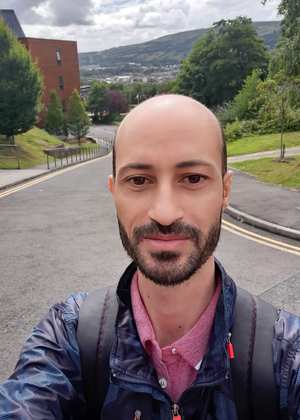
Jamil Hallak
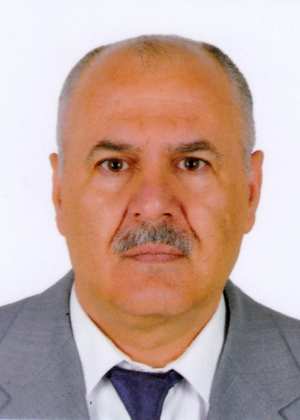
Sohayb Abdulkarim
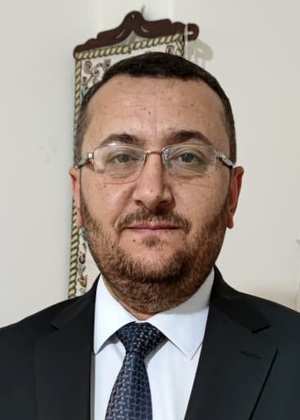
Fateh Shaban