The George Ewart Evans Centre for Storytelling
The George Ewart Evans Centre for Storytelling at the University of South Wales is dedicated to promoting, teaching, developing and researching storytelling in all its forms.
Creative Industries Research and Innovation Group/prod01/channel_2/media/university-of-south-wales/site-assets/images/00-miscellaneous/misc-storytelling.jpg)
Stories are key to understanding, celebrating and reimagining our heritage and culture: they help us see how we got to the place we are now and why that matters on a human level.
The Centre focuses on storytelling as an oral, performance, and written artform, as a means of communicating personal narrative and hearing from often marginalised communities, and as a research methodology. The Centre has fostered collaboration between academics within and beyond the University, as well as being the external face of storytelling research at USW.
We have four areas of focus – storytelling, health, and wellbeing; storytelling and environment; storytelling and social justice; and storytelling, culture, and heritage. These key areas of focus are underpinned by a cross-cutting theme of storytelling research methodologies and innovation. Our areas of focus are framed by an intersectional approach that works across the life course and across identities and that moves between the micro-social, international, and transnational.
Our goal is to be a support network for USW researchers at all career levels, and a space to nurture research, to try out ideas, and to find collaborators. We aim to generate high quality, rigorous research outputs; conduct research that matters and makes a difference; secure external funding for research; and champion storytelling in all its forms – as a research method, a democratic practice that amplifies voices, a performance practice, and a way of better understanding the world, those we share it with, and our place within it.
A key tenet of how we work with story is that the authentic voice of the teller is respected and they are in charge of their own representation. Above all, a storytelling approach ensures that orthodoxies are challenged, and authentic voices are not lost.
Storytelling for Health and Wellbeing conference 2026
Biennially, the Centre works with partner organisations to host the Storytelling for Health and Wellbeing conference, which aims to acknowledge and celebrate storytelling for health and wellbeing, share and understand good practice, and learn from Welsh and International communities through dialogue and exchange.
Watch a video reflecting on last year's event.
Contact us
If you would like to find out more about the work of The George Ewart Evans Centre for Storytelling please contact the Centre Directors, Professor Emily Underwood-Lee or Professor Roiyah Saltus.
Professor Emily Underwood-Lee
Professor Roiyah Saltus
Sign up to join our mailing listResearch Projects
/prod01/channel_2/media/university-of-south-wales/site-assets/images/16-other/research/research-dasv-logo.jpg)
/prod01/channel_2/media/university-of-south-wales/site-assets/images/00-miscellaneous/misc-lotus-flower.jpg)
/prod01/channel_2/media/university-of-south-wales/site-assets/images/16-other/research/research-womens-boxing.jpg)
/prod01/channel_2/media/university-of-south-wales/site-assets/images/00-miscellaneous/misc-torfaen-sign.jpg)
/prod01/channel_2/media/university-of-south-wales/site-assets/images/00-miscellaneous/misc-artwork.jpg)
/prod01/channel_2/media/university-of-south-wales/site-assets/images/00-miscellaneous/misc-open-book-laptop.jpg)
/prod01/channel_2/media/university-of-south-wales/site-assets/images/16-other/research/research-community-voices-revisted.jpg)
/prod01/channel_2/media/university-of-south-wales/site-assets/images/13-video-thumbnails/video-forty-voices.jpg)
RESEARCH OUTPUTS AND IMPACT
/prod01/channel_2/media/university-of-south-wales/site-assets/images/16-other/research/research-bawso-stories.jpg)
The Bawso BME Oral Stories project was an innovative partnership project between USW’s George Ewart Evans Centre for Storytelling, specialist domestic abuse organisation Bawso and National Museum Wales. Transforming the ways in which Welsh heritage is understood, preserved and represented, survivors of violence who have been supported by Bawso shared their stories and had them archived by the Museum.
Read our final report on the project.
The project gathered oral histories and digital stories about Bawso service users’ experiences of coming to Wales under a range of circumstances and how it has been to try and make a home. Bawso provides specialist support to survivors of targeted forms of domestic abuse and violence such as FGM, forced marriage and honour-based abuse in addition to modern slavery and trafficking. These atrocities are happening in Wales, and this project seeks to amplify acutely marginalised and under-represented voices and experiences as a part of Welsh heritage. This project also continues the development of a long-term collaborative relationship between Bawso and USW.
“I am very happy that I have shared my culture in Wales”
Bawso Service User
“The project has clearly demonstrated the power of objects to spark memories, conversations and ideas, as well as the potential of museums to be safe, supportive and therapeutic spaces for our communities. The scale of the project – involving five of Amgueddfa Cymru’s museums across Wales – was ambitious, but was ultimately one of the biggest successes of the partnership. This enabled us to engage with Bawso service users and staff in communities beyond Cardiff, and to incorporate a more diverse range of museum collections and sites into the project. The best working is collaborative working. Through our partnership with Bawso and USW, the voices of the women who entrusted us with their stories will become a permanent part of the nation’s collective memory. These stories matter, they need to be told, shared and understood. For the museum, this is the most important legacy of Bawso Stories.”
Amgueddfa Cymru – Museum Wales
Storytelling is an increasingly popular method for health, social care, and wellbeing practice and policy. Storytelling enables organisations to listen to ‘what matters most’ for their service users and staff and create service-user informed, needs-led provision and effectively allocate resources. However, little exists to ensure practitioners are rigorous, research-informed, and qualified.
This project explored the potential to build the Centre’s offer to ensure effective training, courses and knowledge exchange. Led by PGR alumnus of the Centre (Hilary Dyer, Anna Suschitzky), who have become leading industry experts in storytelling for health and social care and supported the Centre’s academic team and in partnership with Social Care Wales, this project helped to make a difference for people wishing to embed research-informed storytelling as part of their professional practice in health, social care, and associated areas.
Impact:
Scientific: storytelling methods and applications are being better researched, leading to greater knowledge and understanding of storytelling and its uses in relation to health, social care, and wellbeing.
Economic: better informed, needs led services enable a more strategic allocation of financial and other resources.
Societal: people are being heard, and benefitting from accessing services designed with the user in mind, gaining therapeutic benefits through the storytelling process.
This project supported the University’s ambitions to “be known for research-informed, research-led teaching and learning” and “demonstrably contribute to challenge-based learning and teaching and knowledge transfer activities” (Research and Innovation Strategy) with a focus on course provision that is innovative, accessible, and impactful.
For this project we captured stories from people working to change our industrial carbon emission technologies, within industry, policy, energy innovation and the wider community. These stories were used not only to share and disseminate the findings of the RICE project, but also as a means of generating meaningful understanding of the dynamics of changing carbon emissions strategies and technologies in a specific time and place.
The RICE project was driven by a consortium of researchers and industrial partners in South and West Wales, funded by the European Regional Development Fund. It focussed on delivering transformational change through the translation of innovative processes to reduce Wales’ CO2 emissions and decrease Welsh Heavy Industry’s energy and raw material consumption.
This project builds on the Centre’s work in the field of storytelling for social change and environmental stewardship.
The project gathered information, memories, successes, and materials across the 40 years of the Welsh Women’s Aid movement, from its beginnings as a collection of grassroots women’s organisations created out of the Women’s Liberation Movement of the early 1970s, to the present day.
The heritage this project focussed on included:
- Identifying the women instrumental in the development of a feminist social and political agenda in Wales, who gave women in Wales safety, support and a voice, exposing from behind closed doors the 'hidden’ social problem of domestic abuse, and simultaneously framing it as a fundamental cause and consequence of women’s inequality.
- Reviewing the key historical moments relating to Welsh Women’s Aid and the wider movement, acknowledging that the diversity of women’s identities and life experiences (women of different ethnicities, sexualities, social class, ages, and abilities) and are often marginalised or omitted from the wider reporting of feminist history and capturing these intersectional experiences as a priority.
- Gathering the memories of activists, survivors, and refuge workers, involved in the movement and their reflections on past successes and future challenges and sharing these as accessible digital stories via a tour of Welsh community spaces, both formal (e.g. museums, educational establishments), and informal (libraries, community centres and virtual online spaces.
- Capturing for archive the oral histories of women as catalysts of change at various points in the 40 year history of Welsh Women’s Aid from the founding year in 1978 to 2018.
- Collating for archive and a final event and exhibition, the physical documents and artefacts (reports, key policy and legislative papers, newsletters, leaflets, newspaper articles, books, banners, badges, t-shirts, campaign information, fundraising materials, photographs, and other objects) which demonstrate the journey of the movement and the activists and organisations involved over the past 40 years.
Outputs and Impacts:
Read our final report on the project.
- 26 women instrumental in the women’s liberation and Women’s Aid movement in Wales had their stories recorded
- 46 oral histories and digital stories from activists, survivors and staff involved in the Wales movement over the past 40 years were created
- 18 survivors contributed 22 stories from digital storytelling workshops
- 46 accessible digital stories shared across Wales and online through The People’s Collection Wales, YouTube and Facebook.
- Comprehensive archive created at The People’s Collection of Wales and the National Library of Wales, which will continue to be added to in the future to further grow the collection, and a timeline created of key historical moments relating to the Welsh Women’s Aid’s movement captured and shared.
- 68 volunteers supported the project, and over 100 days volunteering provided
- 5,648 people in Wales attended the touring exhibition and over 14,500 museum visitors saw the final exhibition
- More than 20,000 individuals, pupils and students, community groups, and others attended exhibitions and lectures in their local communities and educational spaces hearing powerful survivor stories, learning about the reasons for the movement, the challenges and achievements faced at various times over the past 40 years, and better understand why the sector is still needed.
- Approximately 10,000 individuals accessed project information via online resources and social media
View our free, downloadable training guide to help you and your organisation learn and improve services through listening to the Forty Voices, Forty Years stories.
Everyone, in some way, has a relationship to the maternal. As Adrienne Rich famously asserted, we are all “of woman born” (Rich, 1996). Bracha Ettinger notes that we all carry the maternal within us, regardless of whether we have chosen to become mothers or not, because we all carry the memory of being carried (Ettinger, 2006). Maternal studies as a discipline has been developing in recent years (cf Baraitser, 2009) and has been particularly influential within visual art (cf Betterton, 2014; Chernick and Klein 2011; Liss, 2009; Pollock, 1999;) and drama (cf Komporaly, 2007). Despite the relevance of the maternal it is an area that has broadly been overlooked in Performance Studies.
This research project aimed to investigate the following key questions:
- How can performance and the maternal cross subject barriers?
- What is unique about the representation of the maternal in performance?
- What can healthcare, education, welfare and other practitioners with an interest in the maternal and performance studies scholars and artists learn from one another?
- What work already exists in these areas?
There is an increasing need to explore the material world from which a sense of wellbeing occurs. This project captured the personal, social and environmental processes in which individual and collective wellbeing are constituted, and in this case, enacted through lifelong, as well as more recent, leisure activity. What can exploring leisure activities reveal about our understanding of notions and performances of agency and resourcefulness, and of wellbeing? What happens when we start from this point of enquiry rather than asking questions such as ‘how do you cope with loneliness?’
Aims: Explore the links between leisure and wellbeing, with a focus on the ‘moments’ between everyday enactments of public leisure and private (at home) aloneness. End point: A greater understanding of how best to capture and explore the role and value of leisure pursuits and past-times in shaping meaningfulness of life, and notions of wellbeing for oldest old residents living in urban centres of SE Wales.
Method: A small scoping study using ‘beyond text’ ethnographic methods (immersive encounters, filmic, photographic and participant observation, creative concepts maps) as well as conversations, field notes, soundscapes, personal musings and blog entries.
Sample: Migrant elders (80 years+) living in SE Wales were the paradigmatic example of this study. Those regularly attending (or have a long history of attending) domino, bingo hall and luncheon clubs were targeted.
Data collection: The stories were captured using creative mental mapping and biographical artefacts. All were given the opportunity to co-create a digital story or picture story. From the observations made, images taken, and reflections on the coproduced stories emerged factors influencing elders’ understanding of the role and meaning of leisure activity in their lives, more current manifestations of aloneness, and any links between the two.
Outputs
- observations (to include film footage, field notes, blogs, photographs)
- digital and picture stories
- journal article
Artists Emily Underwood-Lee, Brian Lobel and Emily Speed worked with parents at Great Ormond Street Hospital (GOSH) and GOSH Arts to consider the importance of finding space for yourself when you’re a parent or a carer of a child in hospital. Brian and Emily Underwood-Lee staged performances at the bedside for parents across the wards asking where they go, and what they do to look after themselves when they are at GOSH. Emily Speed used the information gathered from parents to make an artwork which supports parents to care better for themselves when they are in the hospital.
Outcomes:
- Performances with 100 parents, carers and children at GOSH.
- A permanent artwork/s situated in the wards at GOSH.
- A resource available for all parents at the hospital.
- A resource available for all staff at the hospital.
- A publication exploring the research findings.
- A project report.
Impact:
The project engaged with families and staff at GOSH, comprising of a diverse group who cross cultures, abilities, genders and ages.
The performative participatory sessions engaged specifically with parents and carers - through participating in sessions and experiencing the artwork they were informally empowered to think about self-care and speak with each other about it.
GOSH has an average yearly footfall of over 300,000 which includes children, their families, support staff, medical staff, administrators, and others who have an opportunity to engage with the public artwork. The conversations generated by the project continue to inform decisions made in the hospital which will improve the lives of GOSH families. Through a coordinated social media strategy, and using GOSH’s huge international Twitter (101k) and Instagram (18k) reach, we created an easy to digest and an impactful digital record of the process and artwork, ensuring that parents and carers and all those interested in patient advocacy, healthcare and arts & health can engage with Kicking Up Our Heels.
Fireside Science (Gwyddoniaeth wrth y tân) was a Wellcome Trust funded public engagement project that aimed to promote open dialogue and mutual understanding between non-clinical NHS staff and academic scientists in Wales. The project was a collaboration between researchers at Cardiff University and the University of South Wales.
Welsh NHS staff are a vital link between the kinds of projects funded by the Wellcome Trust and translational outcomes in the clinic. However, 37,000 non-clinical Welsh NHS staff are not directly involved in research and may question any investment therein when the NHS is often considered to be under-resourced.
This project draws on the traditional Welsh culture of storytelling, using it as a means to facilitate conversations between non-clinical NHS staff and scientists about their working lives. The focus of this project was to highlight the commonalities of life in research and life in the NHS, with the potential to foster future relationships.
Participants took part in a half-day virtual workshop which taught transferable communication and storytelling skills and culminated in a conversational podcast being recorded for wider dissemination.
/prod01/channel_2/media/university-of-south-wales/site-assets/images/news/2025/10-october/Prof-Roiyah-Saltus-and-Prof-Emily-Underwood-Lee.jpg)
Work with us
The George Ewart Evans Centre for Storytelling is delighted to collaborate with organisations to create innovative research that respectfully and ethically captures and understands story and personal narrative to work towards social justice, wellbeing, cultural understanding, heritage conservation, and to find solutions to some of the most pressing social challenges.
We welcome storytellers, artists and people in the creative and cultural industries as well as people who use storytelling in a variety of settings including within communities, education and healthcare. Students, academics and anyone who wants to include storytelling as part of their professional practice will find a wealth of resources at the Centre.
OUR PARTNERS
We are proud to partner with organisations on innovative and impactful research collaborations.
Storytelling Reflective Practice Network
The Storytelling Reflective Practice Network is an online group for people interested in, or working with, personal narratives, within community development, social care, and health settings. The network provides a meeting space to explore challenges, share best practice, and for testing ideas when working with stories. The network, which is hosted by the George Ewart Evans Centre for Storytelling, develops on the ‘Storytelling Conversations’ meetings that were initiated by Anna Suschitzky, Storytelling Development Lead at Mencap Cymru.
The group meets every six weeks via Microsoft Teams and all are welcome to attend. Please email [email protected] to be added to the invitations for future meetings or let us know if there any particular ways that we can support you to attend.
Casglu
Casglu is a regular online coffee and chat space for storytellers, people who work with story, and those whose practice intersects with oral storytelling. It’s a space to discuss themes, challenges, and issues within the craft of storytelling, to share skills, network, and build community with other practitioners of the art form. Our discussions are lively, provocative, and centre around the practical application of storytelling as a performance art form and its use across a range of community and applied settings. All are welcome to join. Please email [email protected] to be added to the mailing list and kept up to date with future events.
Astrid Lindgren Memorial Award
The George Ewart Evans Centre for Storytelling is proud to be a nominating body for the Astrid Lindgren Memorial Award for children’s literature, which we have been doing since 2011. The ALMA lead for the Centre is Dr Marta Minier.
The Astrid Lindgren Memorial Award is presented every year. The award total is SEK 5million (Swedish Krona), making it the biggest international children’s and young adult literature award in the world. The award total indicates that reading by children and young adults is extremely important. The total is also intended to inspire those involved in this field.
The award is presented to authors, illustrators, oral storytellers and those active in reading promotion work. The award may be presented to a single recipient or to several, regardless of language or nationality.
The Astrid Lindgren Memorial Award is administered by the Swedish Arts Council.
To find out more about the award please visit the Astrid Lindgren Memorial Award website.
Cael Ei Weld / Being Seen
Cael Ei Weld is a filmmaking group for women of any age with an interest in DIY filmmaking and a desire to tell the kind of stories about their lives that are rarely seen on screen. The group welcomes experienced filmmakers and those who are new to film practice alike. The pleasure in skills and knowledge sharing will be the beating heart of this newly-formed group with the view to making films on a shoestring that independent film festivals world-wide would wish to programme.
Monthly meetings take place face to face at our Cardiff campus. Joining the meeting online will be an option for those unable to attend in person. For more information, contact [email protected].
Using Storytelling to Improve Health and the Environment
/prod01/channel_2/media/university-of-south-wales/site-assets/images/13-video-thumbnails/video-research-storytelling-for-wellbeing.jpg)
OUR MEMBERS
The George Ewart Evans Centre for Storytelling (GEECS) has an experienced staff, a growing number of research students, and a truly international profile working with partners across the globe.
The Centre has four key areas of focus:
- Storytelling, health and wellbeing
- Storytelling and environment
- Storytelling and social justice
- Storytelling culture and heritage.
These key areas of focus are underpinned by a cross-cutting theme of storytelling research, methodologies, and innovation. Our areas of focus are framed by an intersectional approach that works across the life course, and across identities, and that moves between the micro-social, international and transnational.
- Dr Thania Acaron
- Dr Jodie Allinson
- Prof Florence Ayisi
- Prof Michael Brown
- Dr Michael Carklin
- Dr Sofia Christidi
- Dr Sarah Crews
- Dr Benjamin Gwalchmai
- Dr Sophia Kier-Byfield
- Dr Eileen Little
- Dr Ian McNish
- Emeritus Prof Kevin Mills
- Dr Marta Minier
- Prof Roiyah Saltus
- Leonie Sharrock
- Dr Rob Smith
- Emeritus Prof Joseph Sobol
- Dr Steve Walden
- Prof Diana Wallace
- Dr Sarah Wallace
- Philippa Watkins
- Matt White
- Ian Wiblin
- Dr Rebecca Williams
- Prof Emily Underwood-Lee
Jessica Jones is Hospital Director for Elysium Healthcare and a qualified mental health nurse. She is a leading figure in the development of arts interventions in forensic mental health. She was the UK’s first Clinical Nurse Specialist in Storytelling and has introduced storytelling to patients at Elysium Hospitals, secure mental health facilities located across the UK. Jessica Jones has been recognised by the RCN for her pioneering work in this area.
Dr Steve Killick trained in Psychology at Cardiff University and developed his interests in storytelling, drama and performance in education and therapy. This ranged from working in street theatre & circus and making a number of films related to mental health and child development. He worked in the NHS and in other health, education and third sector settings, and has developed his interests in using storytelling in these contexts and reflected in his publications, including ‘Telling Tales-Storytelling as Emotional Literacy’ (with Taffy Thomas), ‘Building Relationships through Storytelling’ (with Maria Boffey) and ‘Feelings are Funny Things’ (with Phil Okwedy).
His coaching and therapeutic work is very influenced his mindfulness practices, particularly ‘Acceptance and Commitment Therapy (ACT)’. He now works in independent practice in both adult and child contexts, focusing on areas such as wellbeing and resilience, attachment and loss, emotional intelligence and positive psychology. He is an experienced trainer working with several universities and organisations. He also works as a storyteller and is currently involved in developing ‘Feelings are Funny Things’, a project for schools to help think about feelings and wellbeing using storytelling.
Karen’s professional background is predominantly in the fields of education, media and community engagement. She has significant experience in digital inclusion and recently retired from her role as a Director at Cwmpas (formerly the Wales Co-operative Centre) where she led the delivery of Welsh Government’s digital inclusion programme for several years.
She has previously held senior positions at the Welsh Institute for Health and Social Care and the University of South Wales, creating and leading programmes specialising in the co-production of patients’ and citizens’ stories to improve service delivery. She was the founder Senior Producer of the BBC’s award-winning community based Digital Storytelling initiative.
Previous non-executive roles include Chair of Digital Leaders for Wales, a member of Ofcom’s Advisory Committee (Wales) and the member for Wales on the UK wide Communications Consumer Panel. She has also served on several expert panels.
Nancy Lidubwi woks for Bawso as Violence Against Women Policy Manager and she is the project lead. As such, her role is to retain managerial oversight throughout the project via a named member of staff.
She is responsible for overall grant management, monitoring and reporting, all project press and publicity, all aspects of recruitment, management and support of project participants.
Nancy is in charge of all public engagement with the project including being the first point of call for all enquiries regarding the project, attends all project workshops, monthly project management meeting and provides the USW team with any BAWSO specific training and inductions.
Other roles include management of contractual arrangements for project evaluation, co-ordination of a project steering group that includes representation from necessary stakeholders, BAWSO, and USW and managing relationships with project partners.
Nancy has worked with Bawso in different roles that included Head of Business Development in charge of fundraising and developing strategies to make the charity financially sustainable. She also worked as Head of training and service user engagement where she developed and delivered trainings to mainstream organisations and charities on violence against women from a black and minority ethnic perspective. This role included advocating for the rights of service users and ensuring that their voices are heard and included in policy design and implementation and their needs are put at the centre of service delivery.
Nancy holds an Msc Econ in Economics & Social Development degree and BA Sociology
Daniel Morden is one of the leading exponents in the art of storytelling. Daniel has delighted audiences all over the world with his performances including the Vancouver, Oslo and Yukon story telling festivals, The Hay, Beyond The Border, Bath and Cheltenham festivals and at venues such as The Barbican, The National Theatre and The British Museum. He has also worked on television and radio, and has published six children’s books. He was recently awarded the Hay Festival Medal for his contribution to storytelling.
Leah Salter is a systemic social constructionist practitioner – a psychotherapist (UKCP reg), a supervisor and an educator working in multiple contexts in the UK. Leah works with the NHS Wales as a systemic psychotherapist with families and communities, mostly in mental health services. Her work includes family therapy, arts in health initiatives and community dialogue/storytelling projects. Leah is also a tutor and supervisor for the Professional Doctorate in Systemic Practice Programme at the University of Bedfordshire where she also hosts reading seminars on black indigenous knowledges/new materialism and decolonial practices. She has co-written contributions to the field of ecosystemic practices with her colleague, Gail Simon.
Her own doctoral research drew on autoethnography and narrative research as a reflexive inquiry into her own group work practices, most notably working with women with experiences of abuse and oppression. She has published papers in this area of research and practice.
Leah is co-director for The Centre for Systemic Studies (cic) – hosts of The Family Institute who have provided training for family therapists and systemic practitioners for over 50 years. She lives in South Wales, on the coast, and has a passion for storytelling, dancing, walking and ecological matters. She works with Friends of the Earth and has also, with systemic colleagues, set up a project called MindEcology, a social action project emphasising local, ecosystemic responses to global issues by responding to ecological wellbeing.
Practice and research interests include narrative research and practice as social activism, solidarity practices, group work with women, storytelling, resisting psychopathology, Transmaterial Worlding, ecosystemic practice and developing systemic social constructionism beyond human systems.
Tom Ware is an Executive Producer for Yeti Media, part of the Rondo Media Group, based in Cardiff, Wales. He was previously (1992-2008) an executive producer at BBC Bristol specialising in development, Daytime and Arts programming. His credits include documentary, factual entertainment, factual formats, features, comedy and drama series for a wide range of UK and international broadcasters. His awards include RTS, BAFTA, Broadcast and International Emmy.
STUDY WITH US
Digital Storytelling course
This course is designed to develop the confidence and skills required in order to assist people to convey their story or experiences through the medium of digital storytelling.
The course will include the practical knowledge required to create a story using rudimentary audio and video editing software, alongside the soft skills required to capture stories on a one-to-one basis.
By the end of the course, students will have experienced making a digital story from start to finish, created a digital story about themselves, and learnt about good practice when using stories, how to structure and present effective stories, and ethical and governance considerations for the use of stories within organisations.
Topics include:
- What is a story
- Why stories work
- What is a digital story
- Listening
- Reflection as a process
- Recording and editing audio
- Understanding the importance of images
- Creating digital stories with audio and pictures
- Considerations for working with others
- Importance of consent
- Ethics of storytelling
This course would suit anyone with an interest in storytelling for change, communication, or research.
Postgraduate study
We welcome applications for PhD or Masters by Research study in one of our areas of expertise. You can study full or part time, on campus or remotely. If you're a professional with an existing body of research, a PhD by Portfolio could be the route for you.
Postgraduate researchers are assigned a supervisory team who have the expertise and experience to support them in their studies. Supervisors will help you to shape your doctoral research project, advise you on creating networks and establishing your career.
OUR RESEARCH STUDENTS
Rebecca Haycock, PhD
Title: Exploring concepts of vulnerability and agency with young people who have experience of domestic abuse: developing an ethical, young person-centred methodology.
Lucy Henderson, PhD
Title: What is the experience of newcomers to amateur theatre, and what can this experience teach us about access and engagement?
Rebecca Robinson, PhD
Title: Trans* Representation in British Experimental Theatre.
Elizabeth Warren, PhD by Portfolio
Title: Helping to Shape the Academic Discipline of Storytelling: The History, Development, and Impact of the South Mountain Community College Storytelling Institute.
Examples of work from past research students
Caroline Andrews, Masters by Research
Title: The Efficacy of Storytelling for building agency and identity for people with learning disabilities.
Alison Coles, PhD
Title: Harnessing practitioner curiosity and creativity for the development of art psychotherapy theory and practice.
Hilary Dyer, Masters by Research
Title: Exploring the Impact of Digital Storytelling for Health.
Emma Foley, Masters by Research
Title: “Putting together pieces of a puzzle”: the lived experiences of parent carers of children with learning disabilities attending mainstream education.
Eirini Koutelieri, PhD by Portfolio
Title: Storytelling Using Myths Through a Range of Media in the Foreign Language Classroom: Enhancing the Motivation of Primary School Learners of English in Greece.
Patrick Quinn, Masters by Research
Title: Towards a Deeper Understanding of Serious Game Design for the Prevention of Mental Health Disorders in Young People.
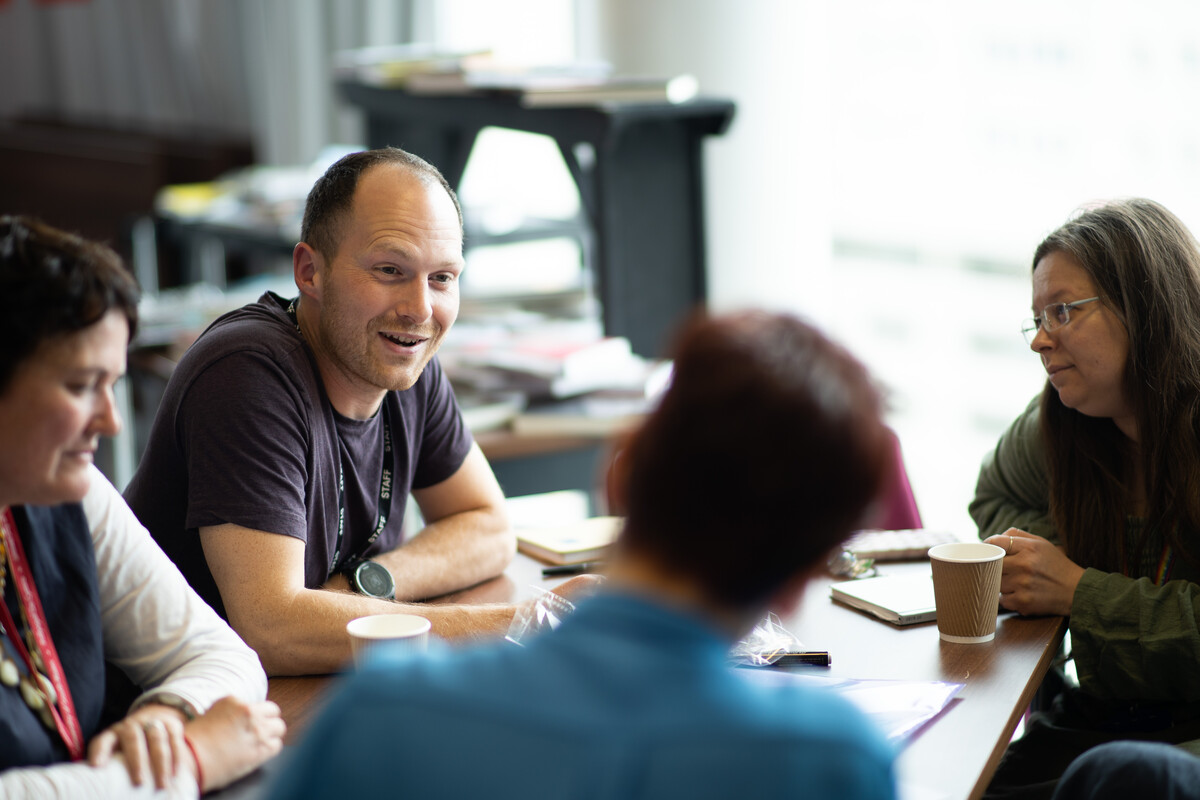
Postgraduate Research Degrees
Tuition fees
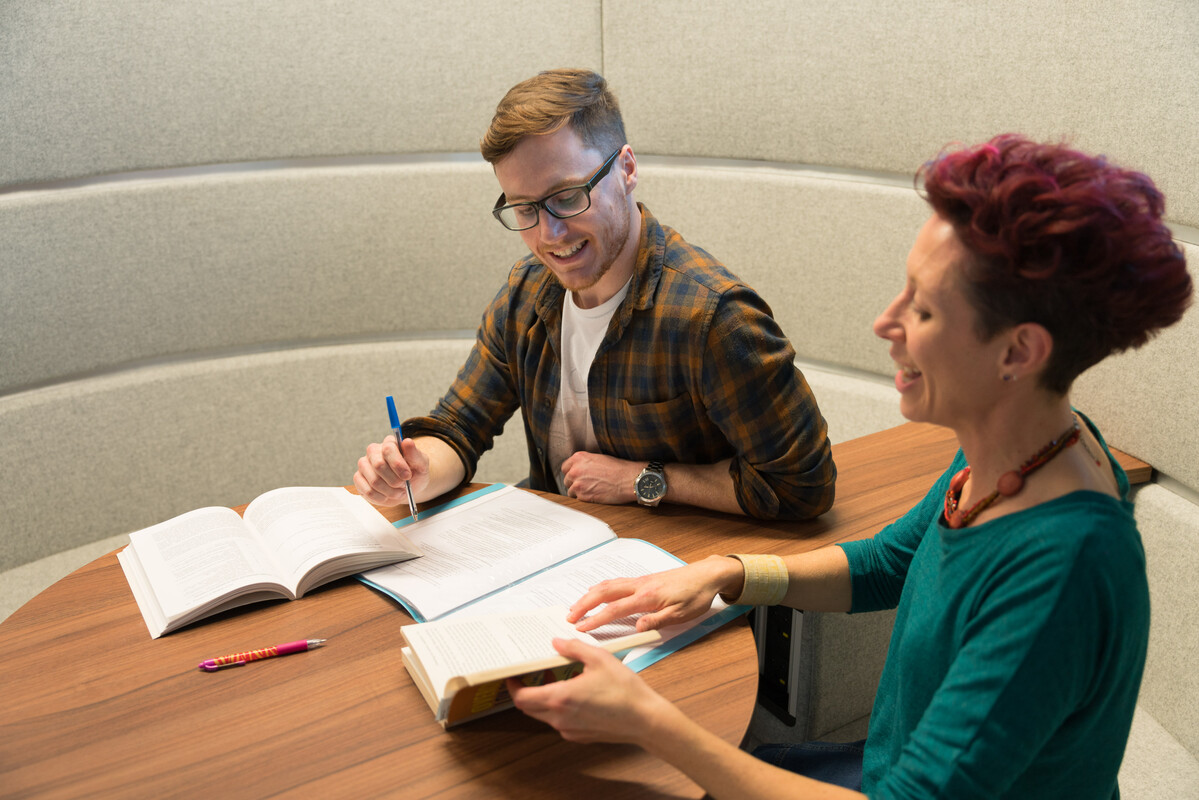
Postgraduate Fees and Funding
Thinking of applying?
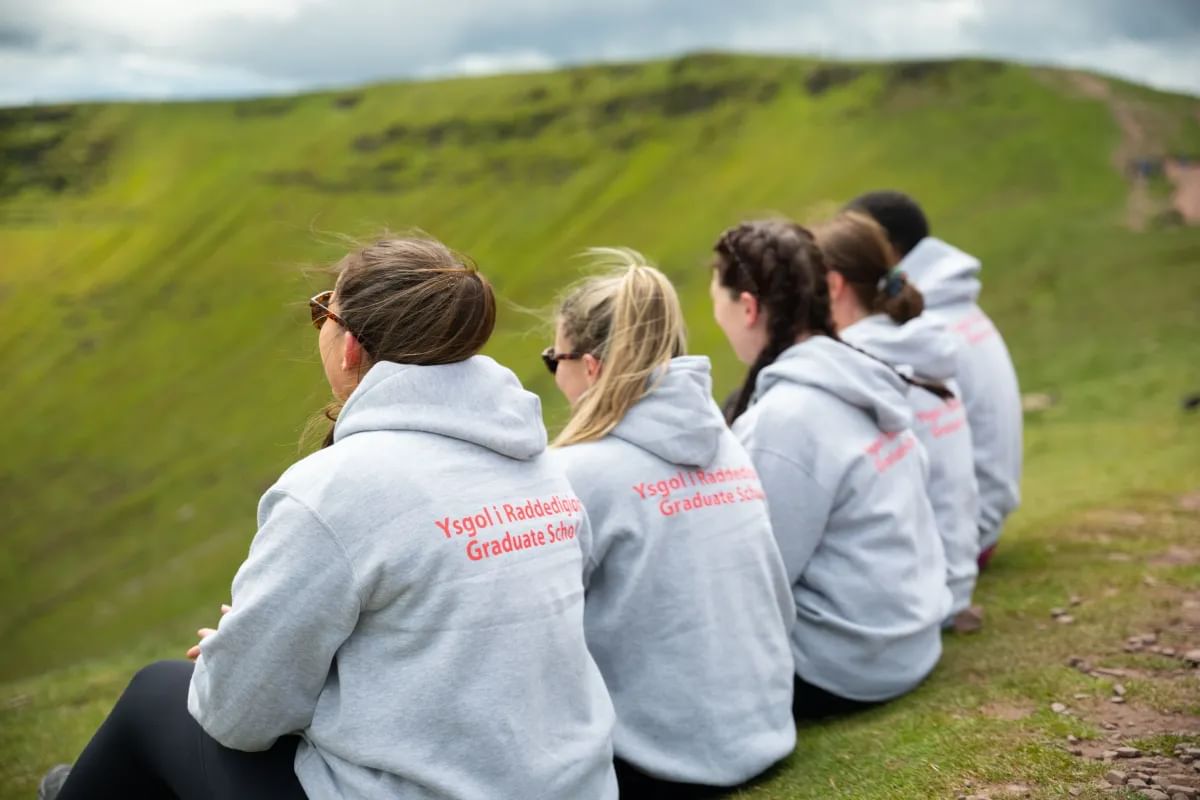
The Graduate School