International Centre for Policing and Security
The International Centre for Policing and Security (ICPS) is the UK's oldest and most reputable policing and security centre.
Criminology, Policing and Security Research and Innovation Group/prod01/channel_2/media/university-of-south-wales/site-assets/images/13-video-thumbnails/video-thumbnail-policing-research.jpg)
The (ICPS) undertakes research that informs UK and EU governments, specialising in key security issues such as terrorism, political violence, cybercrime and warfare, and transnational organised crime.
The ICPS is led by Professor Christian Kaunert, Jean Monnet Chair in Policing and Counter-Terrorism in Europe and one of the foremost experts on European policing and criminal justice co-operation.
The ICPS is deeply involved with national and internationals research networks and is highly regarded by European institutions and agencies, notably Europol.
The Centre's work is divided into two broad themes:
Terrorism and Security Research
The Terrorism and Security Research is led by Professor Christian Kaunert. Previously, Professor Kaunert served as an Academic Director and Professor at the Institute for European Studies, Vrije Universiteit Brussel, Professor of International Politics, Head of Discipline in Politics, and Director of the European Institute for Security and Justice, Jean Monnet Centre of Excellence at the University of Dundee.
Policing Research
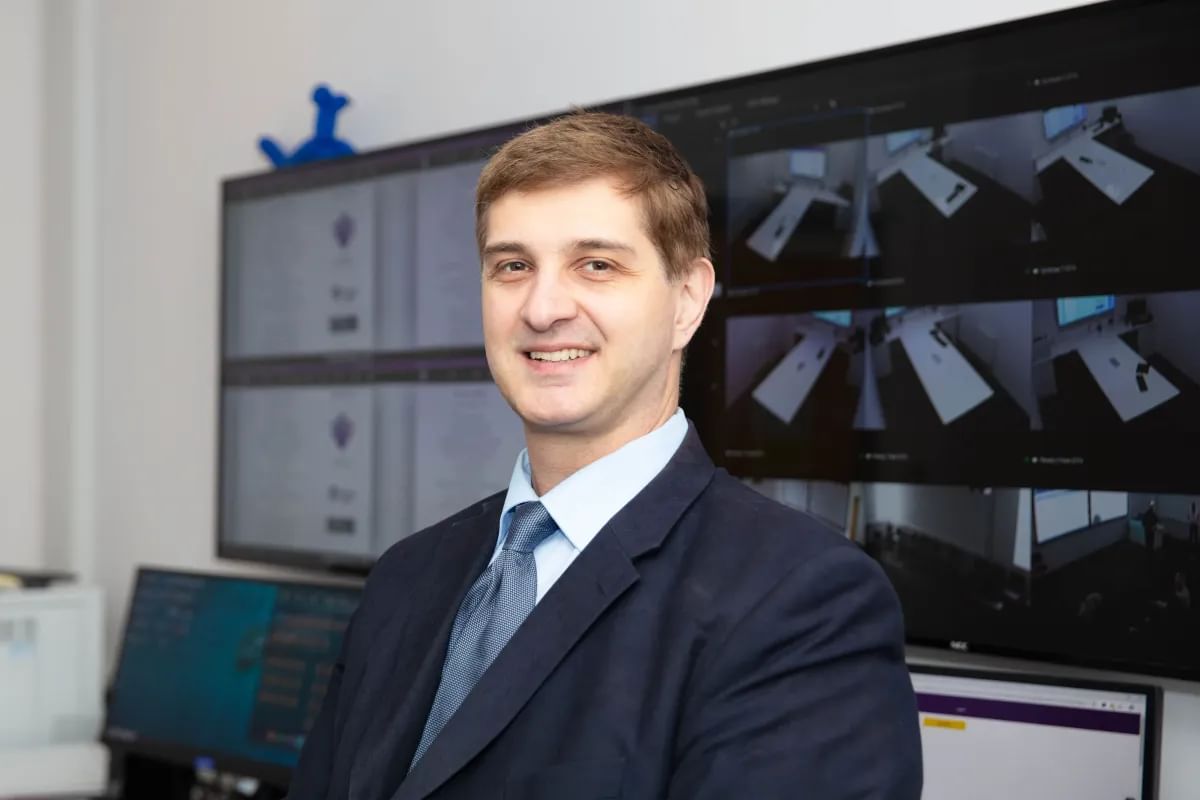
Policing research at the International Centre for Policing and Security is focused upon impactive and sustainable research outcomes focused upon improving not just police activities but also the delivery of policing services to the community at large. Evidence based policing, organisational aspects and police education are issues that researchers at the centre are constantly engaged in. Policing does not exist in a vacuum and is constantly being influenced by wider political, economic, social, technological, environmental and legal activities. It is also influenced by the challenges of globalised activity. Consequently, police research at the Centre is focused upon issues that are critical to the delicate relationship between police agencies and wider communities especially in the democratic policing model seen across the world. that we could do to make the contact information stand out? Image of Christian to be used with the contact us section
Issues such as policing the pandemic, black lives matter, and police legitimacy are issues that researchers at the Centre are currently engaged upon and researchers have conducted numerous evaluation research programmes for policing agencies across the world. Current work involves the impact of the new policing professional qualifications upon the workplace, as well as the role of volunteers for the future of police organisations. Engaging with industry partners is also an important aspect of the police research centre, and we currently run masters by research programmes and PhD opportunities for serving police officers and staff.
Our Expertise
Our areas of expertise include:
- Migration and refugees
- Intelligence studies
- Border security
- Terrorism and counter terrorism
- Risk management and analysis
- International security of drugs, human trafficking and organised crime
- Cyber security and governance
- Geopolitics of natural resources
- EU Security
Our experts work with organisations of all sizes, and from all sectors, to develop new ideas, products and services that solve a specific problem. We help policy makers gather evidence to understand the needs and experiences of a sector or industry to better inform solutions.
Research Projects
Prof Christian Kaunert, leading a team of several excellent researchers from the University of South Wales has been awarded a prestigious Jean Monnet Chair for three years, starting from September 2018. Jean Monnet Chairs, as part of the prestigious Life Long Learning programme of the European Union, are very competitive. These highly prestigious awards are designed to undertake very advanced research and teaching activities at a world-leading research organisation in Europe. Each award is worth € 50,000. This award underlines the research prestige of the University of South Wales, being a recognised global leader in research in policing and counter-terrorism.
The Jean Monnet Chair is centred on the EU policy area of Counter-Terrorism and Police Cooperation, which has often been overlooked in European integration. The objective of this Jean Monnet Chair, is to engage students, academics and policy-makers/practitioners in a dialogue on: (1) the policy evolution of EU Counter-Terrorism (dynamics and change of instruments, decision-making, participation of institutional/societal actors); (2) taking stock of European internal security; (3) technological developments in the sphere of data exchange and security/intelligence tools; as well as (4) challenge to law-makers and civil society at large. Throughout the lifetime of the project, teaching activities of three separate modules on Policing, Security and Counter-Terrorism in the European Union within the Jean Monnet Chair, culminated in the development of a Masters Programme in International Security and Risk Management, will was complemented with conferences, lecture series, and the accession to the EuroSIM teaching event as part of the TACEUSS transatlantic EU simulation network. These events led to several significant research outputs.
The Jean Monnet Chair activities were organised in cooperation with the special interest section on the Area of Freedom, Security and Justice of the European Union Studies Association (EUSA). EUSA is the premier scholarly and professional association focusing on the European Union, the ongoing integration process, and transatlantic relations. Founded in 1988, EUSA now has almost 1,000 members throughout North America, all EU member states, and on all continents, representing the social sciences, humanities, business and law practitioners, news media, and governments on both sides of the Atlantic. EUSA is an independent, non-profit educational organisation. Prof. John Occhipinti and Prof Christian Kaunert, as joint Directors, have established a special interest section on the Area of Freedom, Security and Justice within the framework of EUSA; the formal decision to establish this special interest section was taken in November 2012.
The project is both extremely relevant and timely for several reasons. The ‘EU acquis’ on EU Justice and Home Affairs has grown significantly over the last years; a majority of Union citizens, according to Eurobarometer (1997-2018) periodic surveys, increasingly feel that EU-level actions have an added value compared to those taken solely at a national level and two thirds of citizens support EU-level actions in the fight against organised crime, irregular migration and terrorism. The detailed analyses of EU policy-making in European internal security will be of profound benefit for representatives of the EU member states’ diplomatic and home affairs establishment. This will also provide further insights into the policy-making of the most dynamic policy area of the European Union, and the workings of the European institutions. This has clear practical relevance for EU officials and national officials working for national ministries and embassies in Brussels. Given the sustained interest of governments in the development of this most dynamic policy area in the EU, this project will have an important impact on both academic and governmental debates.
In this project, the team at the University of South Wales serves as a hub that connects to the different stakeholders in the field of EU policing and counter-terrorism, i.e. policy-makers, civil society and the academic community. The project provides the platform required for a fruitful exchange between policy-makers, civil society and academia. The project is of innovative character, as such a hub does not yet exist in that area. Due to its outstanding position in the academic community and its research excellence, the University of South Wales is in a unique situation to serve as platform and centre of excellence. Furthermore, the events will be fully open to civil society, which is directly addressed and invited in the preparation of specific events.
European cooperation on counter terrorism
Based at the University of South Wales, under the coordination of Prof Christian Kaunert, EUCTER Jean Monnet Research Network provides research-led excellence in teaching and learning at the intersection of two fundamental areas of EU policy – the Area of Freedom, Security and Justice (formerly known as Justice and Home Affairs) and EU counter-terrorism policy and law (also within the CFSP, notably in relation to counter-terrorist financing) – through an international cross-section of doctoral, post-graduate and graduate students. The objective is pursued by advancing cutting-edge blended learning formats, distance-learning, strong inter-disciplinarity, policy relevance. The project brings together three inter-related teaching and research areas: EU justice and home affairs, EU counter-terrorism and EU external relations. While the EU has progressively become an actor in international security in its own right thanks to its increased powers in the field of external relations (i.e. trade policies), the Lisbon Treaty has also underlined the need for more increased cooperation in the field of EU counter-terrorism.
Focusing and analysing on EU counter-terrorism cooperation and diplomacy is the objective of EUCTER. The project aims to discover and explain if and why EU counter-
terrorism cooperation, as well as external relations (i.e. CFSP/CSDP, human rights, legal dimensions, etc.) have added to an increased relevance, and if and why diplomacy can add to the counter-terrorism tool set in the EU’s cooperation with third partners via its own delegations at the bilateral and multilateral levels. EUCTER’s impact is substantial: it increases the public awareness of EU counter-terrorism cooperation and diplomacy via its website and publications in both journals and international books series. Moreover, it enables young researchers to conduct their research and education in this previously under-researched field of EU action through scholarships for outreach events (i.e. their participation to the public debate via workshops, roundtables and conferences).
TUECS is the acronym of The Uberization of Europol’s Cybercrime Strategy. It is a European Commission funded project under the Marie Sklodowska Curie Actions Individual Fellowships grant agreement no 886141.
Objectives
As global cybercrime continues to grow, providing security in cyberspace is not easy for many governments. They have a cyber-skills shortage and lack of resources to tackle cybercrimes. In this new cybersecurity environment, governments need the support of non-governmental organisations to use scarce public and private sector resources efficiently for public safety. As a result, new cybersecurity governance models are essential to enhance public-private partnerships (P3).
In this regard, Europol is the first policing agency to declare that they have been using sharing economy as a new P3 model to tackle certain cybercrimes. This new cybersecurity governance model is a ground-breaking idea in public administration and can be adapted in many public governance fields. Even though there is a growing interest in sharing economy in the commercial area, sharing economy is an understudied research concept in public governance.
Based on this knowledge gap, TUECS aims to examine to what extend does Europol adapts sharing economy to facilitate resource sharing between public and private actors while tackling cybercrime?
The project examines three major cybercrime areas: ransomware; crypto-laundering, and online child sexual exploitation that Europol has already pushed public and private actors to cooperate.
Intended outcomes
TUECS is expected to impact the knowledge on e-governance and sharing economy theory significantly. For the first time, this research examines the sharing economy in the field of cybersecurity. It follows an interdisciplinary approach integrating a conceptual framework from economics to politics. The research project provides a new perspective that sharing economy can be adapted to public governance to enhance P3.
This research shows that Europol's online intermediary role in the field of cybercrime. It enables it to act as an agenda-setter in specific and sensitive crime areas and emphasise its relations with actors involved in the complicated cybersecurity community. It will not just look at the discussion to explain Europol's agenda-setting but also on practices that form this new collaboration act. Analysing viewpoints of confronting actors throughout the extensive fieldwork will provide a critical analysis of their relationships and underlying challenges in the online cybersecurity community.
The research project takes Europol’s sharing economy platforms as a laboratory to better understand contemporary political and digital transformations in cybersecurity governance. For that reason, this research will enrich ways of thinking about, conceiving and approaching relations between public and private actors as well as between EU institutions, identifying strengths and weaknesses at the institutional and operational level in this new innovative cooperation P3 model. The project will generate significant policy-relevant findings for P3 in the cybersecurity domain. It will be a leading study in its field and in other policy areas or sectors that suffer to develop new talents internally and seek an outsourced skilled workforce.
The scientific findings of the proposed research on Europol's intermediary role in preventing cybercrime will reveal the dynamics of sharing economy as a multi-party collaboration model. It will inspire other researchers in political science and international relations disciplines interested in digitalising multi-sided governance models. They can benefit from this research using the same theoretical model to generalise their empirical findings.
Moreover, the sharing economy model is generally examined in business and economics disciplines. This research, however, will also integrate sharing economy to other social science disciplines, including European Studies (European policy-making process), Public Policy (European governance system), International Relations (digitalised P3), Security Studies (interest and threat formation between multi-sided actors) which have overlapping context. The resource gap in cyber investigations is another theme this research concerns. The theoretical model proposed in this research provides a sustainable solution to the P3 in policing. Therefore, the focus of this research on a cooperation platform will also contribute to policing and criminal justice studies.
The International Centre for Policing and Security has been awarded three Marie Skłodowska-Curie actions (MSCA) Individual Fellowships to undertake research into the security industry, migration, and cyber-crime.
The awards underline USW’s position as a global leader in policing and security research.
Marie Curie Fellowships, as part of the H2020 research funding programme of the European Union, allow academics to undertake advanced research activities at a world-leading research organisation in Europe. They are highly competitive, and only around 10% of applications are successful.
Marie Curie Fellowships, as part of the H2020 research funding programme of the European Union, allow academics to undertake advanced research activities at a world-leading research organisation in Europe. They are highly competitive, and only around 10% of applications are successful.
Dr Joana de Deus Pereira’s Individual Fellowship, awarded in 2018, seeks to understand how and to what extent the security industry shapes the European migration policy.
“Being an MSCA Fellow is an opportunity and an honour. I am part of a network of excellence that has a voice in all corners of the world. I have the privilege to work with renowned scholars, such as Professor Christian Kaunert, and the Fellowship has led to lecturing roles at the NATO Centres of Excellence and at USW, where I lead modules on international security of drugs, human trafficking, and organised crime, and risk management and analysis.
Dr Eyene Okpanachi is researching the challenges of return migration in Africa in the age of complex emergencies. He will be comparing multi-level governance systems in Ethiopia and Nigeria.
“Being a Marie Curie Fellow enables me to develop a global research network with leading researchers in security and migration,” said Dr Okpanachi.
“The work is helping to deepen my own understanding of return migration, but also to disseminate this much-needed knowledge to the research and policy community, especially in Africa.”
Dr Ethem Ilbiz examines Europol’s fight against cybercrime in the context of Uberization.
His research aims to reveal the interaction dynamics between Europol (European Union's law enforcement agency), national law enforcement agencies, and private actors, and investigates three major cybercrime areas: ransomware, money laundering in cryptocurrencies, and online child sexual exploitation.
The Uberization framework proposed in this research will enhance public-private partnerships in cybersecurity and enable the efficient use of resources.
Dr Ilbiz said: “Working with Professor Christian Kaunert is one of the main reasons I decided to come to USW. He is one of the foremost experts on European policing and criminal justice co-operation and highly regarded by European institutions and agencies, notably Europol."
During their fellowships, the academics are based at the International Centre for Policing and Security (ICPS) - the UK's oldest and most reputable policing and security centre - and mentored by Professor Kaunert, Director of Terrorism and Security at USW and Jean Monnet Chair in Policing and Counter-Terrorism in Europe.
Prof Kaunert said: "This research has clear practical relevance for UK and EU officials working for national ministries and embassies in Brussels.
"Given the sustained interest of governments in the development of this area, these projects will have an important impact on both governmental and academic debates."
Dr Eyene Okpanachi is researching the challenges of return migration in Africa in the age of complex emergencies. He will be comparing multi-level governance systems in Ethiopia and Nigeria.
"I chose to undertake my Fellowship at USW because of its impressive track record of providing support for researchers, and its high value for equality and diversity.
"The International Centre for Policing and Security (ICPS) is one of the leading centres of excellence for studying the migration-security problematic and it is staffed with scholars of high international repute, including my supervisor, Professor Christian Kaunert, who is also the holder of the prestigious Jean Monnet Chair in Policing and Counter-Terrorism in Europe. The opportunity to tap from the vast expertise and knowledge of these scholars places ICPS-USW as the perfect knowledge hub.
"In addition, the ICPS offers the unique advantage of combining academic and policy/practitioner insights into the dynamics of policing and security, migration, borders, and justice specifically in the European, but also the international context. This is a perfect fit for my work that traverses disciplinary boundaries, focusing on return migration to Africa and its entanglement with the EU's external borders policy aimed at curbing irregular migration, and the complex emergencies faced by migrants transiting through Libya to Europe.
"Being a Marie Curie Fellow enables me to develop a global research network with leading researchers in security and migration,” said Dr Okpanachi. “I can draw on this network as well as the extensive network of my supervisor to enhance the visibility of my research output.
"It is helping to deepen my own understanding of return migration, but also to disseminate this much-needed knowledge to the research and policy community, especially in Africa."
Dr Eyene Okpanachiis part of the Terrorism and Security Research area, led by Professor Christian Kaunert. He is one of three Marie Curie Fellows at the International Centre for Policing and Security.
Eyene's broad area of research and academic interests are comparative politics and international relations, but he is specifically interested in migration / mobility, security (including terrorism and counter terrorism), conflict and peace processes, federalism and multi-level governance, natural resource politics, institutions and institutional reforms, public policy, and the politics of government decision-making.
RESEARCH OUTPUTS AND IMPACT
/prod01/channel_2/media/university-of-south-wales/site-assets/images/08-subjects/policing-and-security/subject-policing-and-security-generic-33121.jpg)
/prod01/channel_2/media/university-of-south-wales/site-assets/images/01-campus-and-facilities/16-pontypridd-facilities/162-glyntaff-facilities/campus-facilities-glyntaff-policing-hydra-32959.jpg)
/prod01/channel_2/media/university-of-south-wales/site-assets/images/08-subjects/policing-and-security/subjects-policing-and-security-stock.jpg)
/prod01/channel_2/media/university-of-south-wales/site-assets/images/08-subjects/policing-and-security/subjects-policing-and-security-police-tape-stock.jpg)
/prod01/channel_2/media/university-of-south-wales/site-assets/images/08-subjects/policing-and-security/bsc-professional-policing-including-foundation-year.jpg)
/prod01/channel_2/media/university-of-south-wales/site-assets/images/08-subjects/policing-and-security/subjects-policing-photoshoot-46090.jpg)
OUR PARTNERS
We collaborate locally, nationally and internationally with partners from industry and academia to provide world-leading knowledge and impact and have strong relationships with a range of stakeholders/key research users. We have an excellent track record of engaging and working closely with police forces and other external partners, including:
- Devon & Cornwall Police
- Dorset Police
- Dyfed Powys Police
- South Wales PolIce
- Gwent Police
- Gloucestershire Constabulary
- Wiltshire Police
OUR MEMBERS
The ICPS team comprises a diverse group of experts with extensive knowledge in policing, counter-terrorism, and various security challenges, including migration and refugee issues, intelligence studies, and border security. Led by renowned specialists like Professor Christian Kaunert, who holds the Jean Monnet Chair in EU Counter-Terrorism, our researchers excel in addressing complex topics such as terrorism and counter-terrorism, supported by networks like the Jean Monnet Centre of Excellence and the Jean Monnet Network on EU Counter-Terrorism, which connects us with 14 international partners.
Our commitment to international security extends to critical areas like drug trafficking, human trafficking, and organized crime, as well as the evolving landscape of cybersecurity and governance. Additionally, we explore the geopolitical dimensions of natural resources and their implications for EU security. Through initiatives such as the Horizon Europe Marie Curie Doctoral Training Network EUGLOCTER and our three Marie Curie Postdoctoral Fellowships, we cultivate the next generation of scholars equipped to tackle these pressing issues.
We also maintain strong partnerships with various police forces, including Devon & Cornwall, Dorset, and South Wales, among others, ensuring that our research is grounded in practical applications that enhance law enforcement capabilities. By collaborating closely with law enforcement and academic partners, the ICPS team generates impactful research that informs policy decisions and strengthens security frameworks at local, national, and international levels, reinforcing our dedication to research excellence and practical relevance in the field of security.
- Dr Gareth Cuerden
- Hannah Coombs
- Jay Dave
- Dr Edwin Ezeokafor
- Mike Edwards
- Dr James Gravelle
- Dr Ethem Ilbiz
- Professor Christian Kaunert
- Professor Sarah Leonard
- Helen Martin
- Dr Eyene Okpanachi
- Professor Ian Pepper
- Clive Perry
- Roger Phillips
- Huw Smart
- Daniel Welch
- Professor Peter Vaughan
- Dr. Ori Wertman
Dr Amal Abu-Bakare is a lecturer in the politics of race and decolonial studies at the University of Liverpool. She received her PhD in International Politics from Aberystwyth University. As a Saudi-born Nigerian dual citizen of Canada and the United Kingdom, Abu-Bakare is interested in all things international, particularly politics.
Dr Amal Abu- Bakare has significant research as well as practical experience in IR theorisation and counterterrorism. Her research area is anti-colonial theory in International Relations and Counterterrorism politics. Her current project is titled 'The ‘Colour’ in Counterterrorism: A postcolonial analysis of racialisation in British and Canadian counterterror approaches'.
Visiting Professor Philip Birch is an Associate Professor of Criminology and Policing in the University of Technology Sydney. He has previously held posts at the University of Western Sydney, the University of New South Wales, Sydney, Australia and the University of Huddersfield in United Kingdom (UK).
Prior to entering academia Philip worked as a criminologist in the field holding posts in the UK prison service as well as in the crime and disorder field, which involved managing a specialist crime unit. Philip has published internationally, including books, book chapters, peer reviewed articles and Government reports in his main areas of research – offender management and rehabilitation; police, prisons and probation practices; gender inclusive violence, with a particular focus on domestic family violence, and sex work.
Philip was the co-founder and inaugural editor in chief of the Journal of Criminological Research, Policy and Practice (JCRPP, 2014-2017) and Abuse: An International Impact Journal (2020 – Present). He is also the editor in chief of Salus: An International Journal for Law Enforcement and Public Safety (2018 – Present) and sits on the editorial board of the Journal of Aggression, Conflict and Peace Research.
Professor Oldrich Bures is the founding director of the Center for Security Studies and Professor of International Political Relations at Metropolitan University Prague. His research is focused in the areas of Conflict Resolution and International Security, with special emphasis on privatization of security, (counter-) terrorism and recently also migration.
His work has been published in Security Dialogue, Cooperation and Conflict, Terrorism and Political Violence, Studies in Conflict and Terrorism, International Studies Review, International Peacekeeping, Intelligence and National Security, Global Governance and Journal of Business Ethics, among other key journals.
He is the author of several monographs, including EU Counterterrorism Policy: A Paper Tiger? (Ashgate, 2011) and Private Security Companies: Transforming Politics and Security in the Czech Republic (Palgrave Macmillan, 2015), and (co-)editor of several edited volumes, including A Decade of EU Counter-Terrorism and Intelligence: A Critical Assessment (Routledge 2017) and Security Privatization: How Non-security-related Private Businesses Shape Security Governance (Springer 2018).
Dr Briony Callander is an independent scholar. Dr Callander obtained a BSc in Aerospace Business Systems and an MA in Intelligence and Security Studies from the University of Salford and a PhD in EU Politics from the University of Dundee. Dr Callander worked as a Lecturer in International Studies at the University of Salford. As a PhD researcher Dr Callander has had success in achieving significant research funding including securing a prestigious UACES Scholarship and the Lord Cockfield Scholarship.
Dr Callander has written book with Prof Kaunert on the area of EU aviation security. Her future research will not only expand her work on the politics of aviation security outside of the EU but furthermore the impact on counter-terrorism and international security in the wider sense.
Dr Callander has recently been sought out by academic staff at the Royal Air Force College Cranwell regarding possible future collaboration in the area of the development of Air Power with a focus on regulation and legislative involvement.
Dr Callander has worked in the industry for nearly a decade – originally as an Aviation Security Officer and subsequently in Resource Planning, Insight and Operational Support for Manchester Airports Group, based at the UK’s third largest airport. During this time, she has fostered strong connections with various other areas notably Guest Experience (who are responsible for Facilitation), Security Training and Compliance.
Ali Chakari works on de-radicalisation projects and has served as policy advisor at the Ministry of Security and Justice in the Netherlands.
Ali has worked on a Family Care Package, in which he focused on families who were victims of radicalisation. The main aim of the project was to get familiar with the ideology and mindset of the radicalized individuals. Accordingly, he developed counter-narrative and re-integration program to help these individuals to contribute positively to society.
He has also worked on citizenship programs for schools, with the focus on how to improve mutual understanding, mutual respect and different perspective taking.
Ali’s experience is not only theoretical: he has in-depth practical knowledge of radicalization and counter-terrorism, which is valuable and can introduce a new perspective.
Dr Edwin Ezeokafor has significant research and teaching experience in security; terrorism and counter-terrorism, as well as wider global security, natural resources/ security and geopolitics. He has taught terrorism in the Maghreb, Sahel and Gulf of Guinea regions. He has also taught the link between natural resources and terrorist activities. He has taught international security and general international relations and emergent global security challenges, political risk analysis.
After completing undergraduate studies in History and International relations in Nigeria Edwin went on to complete a postgraduate studies at the University of Aberdeen and finally a PhD in International Security at the University of Dundee under the supervision of Professor Christian Kaunert in 2015.
Since then, Dr Edwin’s interests have focused on security and crisis consultancy; wars and conflicts; terrorism and counter-terrorism, particularly in the Maghreb, Sahel and Gulf of Guinea. Of particular interest to him are the activities of militant and pirate groups in Africa. He has published significantly in this area. He is the founding member of Dundee African Research Network (DARN) in Dundee University.
Professor Bernhard Frevel is Professor for Political Science and Sociology at the University of Applied Science for Police and Public Administration in North Rhine-Westphalia, Associated Professor at the Institute for Political Science at the Westphalian Wilhelms-University of Münster.
Bernhard's special fields of interest and research focus lie in local security governance, police organisation, and police education. He led third party funded security research projects on cooperative security politics, prevention of corruption, migration and safety in the city, and commissioned research on prevention of violence in municipal administration, and on Civilian Oversight of Internal Security Forces.
Bernhard has been collaborating closely with the University of South Wales since 2011, organising the annual International Summer School with police students from Wales, the Netherlands and Germany, and joint publications with Prof Colin Rogers on crime prevention, plural policing, and police education.
Amparo Pamela Fabe is a Filipino Faculty Member at the Armed Forces of the Philippines Education, Training and Doctrine Command and at the Philippine National Police College. She also teaches advanced security classes for the Special Forces, the Philippine Marines Corp (amphibious naval infantry elite unit), the Philippine National Police Special Action Force (police counter-terrorism elite unit) and the Philippine Coast Guard (maritime law enforcement elite unit). Fabe helped write Republic Act 11479, known as the Philippine’s Anti-Terrorism Act of 2020, particularly the section on penalizing the material support for terrorism. This law is useful in the successful prosecution of designated terrorists and terrorist organizations in the Philippines.
Fabe works in the two Priority Areas of the European Union for Southeast Asia: Counter-Terrorism/Prevention of Violent Extremism (CT/PVE), and Maritime Security. Fabe is the Anti-Money Laundering and Countering the Financing of Terrorism Subject Matter Expert of the European Union (EU) Delegation to Indonesia and Brunei Darussalam and Mission to ASEAN working under the EU Counter-Terrorism/Security Counsellor, Mr. Marc Vierstate-Verlinde. She was involved in drawing up the Workplan on Counter-Terrrorism and Preventing/Countering Violent Extremism in Southeast Asia 2020-2024. Her research project is funded by jointly by the Deutsche Gesellschaft für Internationale Zusammenarbeit (GIZ) GmbH and Expertise France. Her research project has three pillars: Policy Dialogue, Cooperation and Capacity Building and Public Diplomacy. Fabe also does prison research on IS (Islamic State) local militants and IS Foreign Terrorist Fighters (FTF) who are serving custodial sentences in Indonesia, Malaysia and the Philippines. Her studies feature: a.) Security focus (effective threat and risk assessment, management and monitoring); b.) Rehabilitation programmes that are tailor-made interventions based on individual needs; c.) Vocational trainings and employment to help future employment; and d.) Reintegration efforts.
In the field of Maritime Security, Fabe is one of the Philippine Representatives to the United Nations Office of Drugs and Crime Contact Group on the Sulu and Celebes Sea. She assists in evaluating Philippine maritime policy and regulations. She was a member of the ASEAN Technical Working Group on the South China Sea from 2010-2015.
Fabe helps craft terrorism and policing regulations at the regional and the national levels. Fabe is the Philippine National Police Representative both to the ASEAN Secretariat and the ASEAN Senior Officials’ Meeting on Transnational Organized Crime (SOMTC), and a member of the United Nations Cryptocurrencies Working Group.
She is a Senior Aviation Economist of the United States Agency for International Development advising the Civil Aviation Authority of the Philippines, Department of Transportation. She oversees aviation safety and security for six international airports and 82 domestic airports pursuant to International Civil Aviation Organization standards.
Dr Uche Igwe is a political risk analyst, security scholar and communications expert with twenty years of practical experience working with the parliament, government agencies, local and international non-governmental organizations, the media, research think tanks and private sector.
He holds a PhD degree in Politics from the Sussex Centre for the Study of Corruption, Department of Politics, University of Sussex and a Master of Arts degree in Governance and Development from the prestigious Institute of Development Studies (IDS) also in Sussex.
He is a regular commentator on contemporary issues of politics and governance in the continent, including democracy, corruption, conflict and insecurity, terrorist financing, social protection, Chinese engagement in Africa, and cybercrime.
Former Scotland Yard detective, Professor Adrian James is a Reader in Police Studies at the Centre for Advanced Police Studies, Liverpool John Moores University, UK. Awarded his doctorate by the London School of Economics for a study into the origins and development of intelligence-led policing, Adrian has published extensively on investigative policy and practice. His publications include a research monograph on the UK’s National Intelligence Model, which commonly is viewed as the template for intelligence-led policing models that have emerged around the world. He maintains strong links with the policing institution through his research and consultancy work and recently completed a study for the UK’s College of Policing into ‘what works’ in police intelligence practice.
Dr Andreea Stoian Karadeli is Turkish-based researcher and a collaborator with several international organizations (NATO, UN, EU).
Dr Karadeli's research is multidisciplinary with the main focus on the evolution of religiously inspired terrorism after the Arab Spring, with expertise on Daesh and al-Qaeda, conflict resolution, intercultural communication, face reading techniques and profiling. Her work has been published by national and international publications, while she has been a guest speaker in various conferences, forums, seminars and television debates around the world. Apart from her academic work, Dr Karadeli has been delivering terrorism-related courses and provided academic counselling for the training programs organized by the Center for Excellence - Defence Against Terrorism in Ankara, Turkey. She worked as a foreign lecturer in the Department of Political Science and Public Administration, Faculty of Political Sciences, at Sakarya University, and she graduated with the Summa cum Laude title from the PhD program in National Security and Intelligence attended at Mihai Viteazul National Intelligence Academy, in Romania.
Dr Karadeli is also an alumnus of Exeter University, United Kingdom, where she studied a BA in Arabic and Middle East Studies and a Master of Research in Security, Conflict and Justice. During the BA degree, she did field research on Arabic Language, Literature and Culture at Damascus University for 10 months.
Dr Oluwabamidele Kogbe has significant research on regional peace and human security governance dimension of comparative regionalism/ regional integration as well as practical experience.
His expertise in regional security governance and early warning offers insights into the democratic process of policing at the national, regional and global levels,
and offers a novel insight in thinking and rethinking counter-terrorism approaches from academic and policy standpoints.
Dr Oluwabamidele Kogbe has been under the mentorship of Professor Christian Kaunert for the last five years. He started as Professor Kaunert’s PhD student at the University of Dundee, Scotland, in November 2014 and achieved his PhD ‘Rethinking Civil Society Regionalism in Africa: Critical Reflections on West Africa’ at the University of Dundee in 2020. Apart from his undergraduate (Nigeria) and Postgraduate (UK) qualifications in Public Administration and Diplomacy, Law and Global Change, respectively, his PhD introduced an innovative framework to analyse how citizens and their regional organised groups and networks such as civil society organisations act in response to peace and security governance issues emanating within the regional structure often represented by a group of states like the African Union, the European Union and the likes.
His natural disposition for academic impact led him to initiate Dundee Africa Research Network (DARN) in June 2015, the network which has made a tremendous impact in promoting interdisciplinary collaboration and public engagement on African research in Dundee.
Professor Anthony Masys is a senior defence scientist with the Centre for Security Science, Defence R&D Canada, Department of National Defence, served as scientific advisor to the Royal Canadian Mounted Police (RCMP), and Affiliate Associate Professor and former Director of Global Disaster Management, Humanitarian Assistance and Homeland Security at the University of South Florida.
Professor Masys has conducted research, lectures and workshops across five continents working with various security and policing stakeholders to better understand global crisis/disasters and design resilience strategies for security and public safety. Dr Masys has a BSc in Physics and MSc in Underwater Acoustics and Oceanography from the Royal Military College of Canada and a PhD from the University of Leicester.
He is Editor-in-Chief of Springer Series: ‘Advanced Sciences and Technologies for Security Applications’. He has published extensively in the domains of physics and the social sciences. His research interests focus on policing and security, global health security, disaster forensics, safety and security, risk, crisis and disaster management, resilience, systems thinking, scenario planning, human security, counter-terrorism, complex socio-technical system analysis, modeling and simulation, action research.
Dr Amber McKinley is a Clinical and Forensic Victimologist and a senior lecturer at Charles Sturt University’s (CSU) Australian Graduate School of Policing and Security (AGSPS) where she lectures in Theoretical, Applied and Forensic Victimology and Human trafficking: A global perspective.
Her doctoral thesis was completed with the NSW Police Force and entitled, “Homicide Solvability and Applied Victimology in New South Wales, 1994-2013”. Amber is currently enrolled at the University of Maryland, Baltimore studying a Graduate Certificate in Aging and Applied Thanatology.
Her current research includes: the history of Australian familicide from 1816 – 2021; victims of serial homicide in Australia from 1806-2021; homicide solvability; the decline in homicide rates in Australia; vicarious trauma for first responders; interpersonal crimes in the Australian Defence Force and finally, a study of thanatology and suicide for the Australian Defence Force.
Amber works with the Australian Defence Force, Joint Military Police Unit where she researches and writes reports on sexual offences and sudden death for the Provost Marshal-ADF. She also lectures at the Defence Force School of Policing, for the Australian Federal Police and other government agencies.
Anant Mishra is a Researcher at the Centre for Land Warfare Studies (CLAWS), New Delhi, where his research is focussed on military strategy and tactics. He has a strong interest in and understanding of radical fundamentalism, Islamist
militancy, insurgency, counterterrorism policing in Europe, tactics and intelligence cooperation with special emphasis to Inner Asian and Middle East and North African (MENA) nations.
During his time at the Indian Army War College and Australian Defence College (ADC), Anant analyzed intelligence analysis, dissemination, and collection of intelligence in Indian and Australian security institutions, military intelligence establishments and civilian and police interagency interaction on intelligence.
Notably, his analysis on the then shattering relationship between Taliban and Al Qaeda proved decisive in the breakthrough of sectoral talks between NDS sector commanders and Taliban factions. The intel resulted in the arrest of two high valued targets which were known to have participated and/on many occasions personally led attacks on ISAF bases in Kunar and in Panjshir.
He has an academic background in national security, international relations, United Nations (UN) studies and counterterrorism. His Masters research at the Gujarat Forensic Sciences University on Boko Haram gave enormous written material to national security institutions in India. His research has been used by the Government of India, the UN and the Nigerian Government.
Anant has extensive publications in Indian Army’s Centre for Joint Warfare Studies, US Army War College, US Air Force University, Australian Defence College, Australian Army HQ publications and Australian Army PME. He is a member of Institute of Defence Studies Analysis and Centre for Joint Warfare Studies, where he extensively participates in discussions and publishes policy reports.
Dr Carlos Morgado Braz specializes in International Relations, Security Studies and Terrorism Studies. Carlos has lectured on topics ranging from Political Issues in Literature, IR Theory, Theory of Securitisation (Security Studies) to EU Security Policy. He is the co-editor of “A participação militar portuguesa em Timor Leste e o impacto nas dinâmicas informais da reconstrução da paz” in Freire, Raquel (eds.), Consolidação da Paz e a sua sustentabilidade: as missões da ONU em Timor Leste e a contribuição de Portugal. Coimbra: University of Coimbra Press.
He received his PhD Fellowship in 2016 with a thesis entitled Transnational Terrorism and the imaginary of Portuguese Politicians: Security practices and responsible policy decision-making. He received his Master’s in International Relations in 2013 from the University of Coimbra/School of Economics, examining the Portuguese military participation in Timor-Leste and the impact on peacebuilding dynamics: from UNTAET to UNMISET. His research laid the groundwork for a more robust study of the operational and strategic dimensions of Conflict Resolution in post conflict environment (Kosovo, Bosnia Herzegovina and Timor Leste).
He is a member of the Observatoire collaboratif du terrorisme, de l’antiterrorisme et des violences (CERI/Sciences PO Paris – CNRS / ESPOL-ICL) and a Senior Research Affiliate with the CINAMIL (Military Academy Research Center) and the CISDI (Security and Defense Research Center) from the Military Institute University Network for International Relations, Security and Defense (IUM).
Dr Joerg Monar Rector Emeritus of the College of Europe and formerly Director of the Department of Political and Administrative Studies of the College of Europe, Professor of Contemporary European Studies and Co-Director of the Sussex European Institute, University of Sussex, EU Marie Curie Chair of Excellence and Director of the SECURINT project on EU internal security governance at the Robert Schuman University in Strasbourg, Professor of Politics and Director of the Centre for European Politics and Institutions at the University of Leicester, and Director for the Institute for European Politics (IEP) in Bonn, Germany.
In addition to his research and teaching, Professor Monar has held consultancy assignments with the European Parliament, the European Commission, the Planning Staff of the German Ministry of Foreign Affairs, the Dutch Scientific Council for Government Policy (WRR, The Hague), the German Bundestag, the French Commissariat général au Plan, Paris, and the British House of Lords and House of Commons. He has also been elected a Fellow at the Royal Historical Society, London.
Professor Monar holds a PhD in Modern History (University of Munich, 1989) and in Political and Social Sciences (European University Institute, 1991). He is the author of over 200 articles and books on the political and institutional development of the EU, EU justice and home affairs and EU external relations. He is also a founding editor of the European Foreign Affairs Review.
Sarah Simons has a range of research interests including African Victimology, Forensic Victimology, Women, Peace and Security in Africa, Refugees and Asylum Seekers' Mental Health, Young African Women Empowerment, Forensic Criminology, Forensic Psychology and Forensic Psychiatry (PTSD) and Victimology.
Sarah trained with the police in Pasenda, USA in profiling then returned to Kenya to train members in the police force to enable them to track pirates. Sarah is currently working in the Demonratic Republic of the Congo, setting up a victims support unit for rape victims. Following this, she is going to university in Nigeria to study Forensic victimology and criminology.
Dr Kristan Stoddart is Associate Professor at the University of Swansea and was previously Reader in the Department of International Politics at Aberystwyth University where he was also the Deputy Director of the Centre for Intelligence and International Security Studies.
From 2014 to 2017, he worked on a £1.2 million project examining Cyber Security Lifecycles funded by Airbus Group and the Welsh Government which was designed to be impactful on government and a REF impact case study. He was member of the UK’s Independent Digital Ethics in Policing Panel for several years through to 2018, a member of the Project on Nuclear Issues, a Fellow of the Higher Education Academy and a Fellow of the Royal Historical Society. He has spoken at a wide number of conferences, nationally and internationally, including NATO, US Strategic Command, GCHQ, and the UK Cabinet Office and has submitted evidence to parliamentary enquiries. He also had various forms of media engagement, including the BBC, Channel 4, and the national press. He is the author or co-author of several books and many articles including: The British Nuclear Experience: The Role of Beliefs, Culture and Identity (with John Baylis) (Oxford University Press, 2014); Facing Down the Soviet Union: Britain, the USA, NATO and Nuclear Weapons 1976-1983 (Palgrave Macmillan, 2014); and The Sword and the Shield: Britain, America, NATO and Nuclear Weapons 1970-1976 (Palgrave Macmillan, 2014).
He has close links with national and international police forces, the UK military, NATO, industry and many national and international links within academia.
Steven Stottlemyre is a career public servant in the United States (US). The bulk of his career, which began with the US Army, has been spent working in the field of intelligence. As a soldier, he served 12 months in Iraq working as a Human Intelligence Collector during Operation Iraqi Freedom. He received the U.S. Army Commendation Medal for his service.
Later, Steve developed and taught formal courses on how to conduct lawful, ethical intelligence interrogations in wartime at the US Army Intelligence Center of Excellence and the US Department of Defense Human Intelligence Training Joint Center of Excellence. Steve went on to serve with the US Department of State (DOS) as the senior threat analyst for US diplomatic interests in North Africa during the Arab Spring uprisings of 2011. He was credited with being “closest to getting it right” about the threat environment in Libya among all US intelligence analysts by Ambassador Thomas R. Pickering, Chairman of the Benghazi Accountability Review Board. He was awarded the US Department of State’s Superior Honor Award for his threat analysis in 2014. Steve also served as senior threat analyst for the State Department during several international meetings, including the 2015 Summit of the Americas, and the 2012 NATO Summit, for which he received the Meritorious Honor Award.
The US Agency for International Development (USAID) Office of Security recruited Steve in 2016 to establish a small threat intelligence division mirroring that of the State Department. He personally briefed the USAID Administrator on potential threats during her overseas travel and advocated with her the benefits of intelligence analysis to safe aid operations.
Steve has also served several academic appointments, including as Faculty Member at the National Intelligence University, the highest scholarly institution of the US Intelligence Community. His postgraduate research has primarily focused on the theoretical underpinnings of intelligence and 20th-century North African affairs. Steve currently conducts research on the theoretical underpinnings of intelligence as a unique academic discipline. In this regard, he has published two peer-reviewed articles on intelligence theory.
Professor Christoph Weller currently Professor and Chair of Political Science, Peace and Conflict Studies at Augsburg University (Germany), and was previously University Professor of Peace and Conflict Studies at Philipps-University Marburg (Germany).
Prof Weller has significant experience in:
- Conflict, peace and violence research
- Sociology of knowledge of international politics
- German foreign policy
- Methodology of conflict and world politics research
- Interpretation battles
Weller completed his doctoral studies in the Department of Social and Historical Sciences at Darmstadt University of Technology with an interdisciplinary study about enemy images in the dissolving of the east-west-conflict and promoted the connection of constructivist approaches of IR with perspectives of peace and conflict studies. He published widely in this area and will bring significant value added to USW.
Prof Weller has been very successful in capturing research funding from a range of sources including the German Foundation for Peace Research and the German Research Foundation, and has considerable experience in organizing research events, workshops, seminars and interdisciplinary cooperation, which have led to a significant number of publications.
Dr Martin Wright is a Visiting Fellow at the International Centre for Policing and Security, University of South Wales. He was a police officer for 30 years and is the creator of the Retail Radio Link community safety programme. In 1999, he was the only police officer ever to be granted a Doctoral Scholarship by the Association of British Insurers to undertake research into radio links and public reassurance at the University of Leicester. He was a member of the UK’s National e-Crime Strategy Group and in November 2007 Martin was presented with a Certificate of Merit from the Society for the Policing of Cyberspace at an event held in Bangkok.
After leaving the police he joined the University of Wolverhampton in 2008. At the university he was the Director of the Central Institute for the Study of Public Protection and Head of Department of Uniformed Services with responsibility for the BSc Policing degree, BSc Fire & Rescue degree and BSc Armed Forces degree.
He currently holds a number of other positions: Visiting Senior Research Fellow at the Canterbury Centre for Policing Research within Canterbury Christ Church University, Series Editor of the Routledge Advances in Police Practice and Knowledge and Managing Editor and Book Review Editor of the Oxford Journal of Policing and is a volunteer with Dyfed Powys Police.
Dr. Arif Sahar is a political scientist, security scholar and international political economy expert with ten years of practical experience working with the parliament, government agencies, local and international non-governmental organizations, the media, research think tanks and private sector. He is a close research collaborator with Prof Christian Kaunert on Asian security. He holds a PhD degree in the Political Economy of Development in conflict-affected contexts from the University College London (UCL) and a Master of Arts degree in Politics, Security and Integration also from the University College London (UCL). PhD thesis on the political economy of education in post-2001 Afghanistan provided insight on how contextual politics together with conflict, weak governance and radicalisation can shape politics, discourses, and perceptions of statebuilding and institution building in fragile contexts. Arif worked as a senior advisor to the Afghan Government, UNDP, and DFID (2010 – 2015), providing policy advice on a range of issues. Since 2016, Arif has been working on a number of large Horizon2020 project at the Sheffield Hallam University (UK), particularly focusing on the threats and the future security landscape across the EU Member States.
Additionally, Dr Sahar is currently working, with Professor Christian Kaunert, on a research project that examines the politics, discourses, and practices of the securitisation of higher education in the conflict-affected context of AfghanistanIn Afghanistan, Dr Sahar founded the Centre for Peace and Development Studies in Kabul that serves as a leading think tank, providing policy advice, consultancy, and analysis to a wide range of government, I/NGO and private entities on issues of governance, security, development, and capacity-building. He also provided regular analysis and political commentary to the civil society and media in Afghanistan. He loves travelling and still provides regular commentary on contemporary political issues in the Afghan media.
Dr. Bahrullah Safi is currently Vice President International at Acacia University, Arizona, USA which is part of Westford Education Group and WEG is a leading provider of accredited international education and corporate training to aspiring learners across the globe. He is also Academic Advisor at Myracle.io, Berlin, Germany and Myracle brings experiential education to life in the world around us, with sights, sounds, interactions, and physical movement. He is Chief Evaluator at Ecole Superieure Robert De Sorbon, France where he is responsible for evaluation of applications profiles. Dr. Bahrullah Safi works as Adjunct Professor at Saveetha School of Engineering, Tamil Nadu, India, and he delivers online lectures and trainings to students of different departments. Dr. Safi has the privilege of being Global Ambassador of Sustainability working with SPSC Initiative, United Kingdom (UK), to promote sustainability and support United Nations (UN) sustainable development Goals. Dr. Bahrullah Safi is a member of the Editorial and Advisory Board of various International Journals and of different organizations including International Journal of Social Sciences and Education, Turkey, International Journal of Management and Technical Research, India, ETCOR Educational and Research Centre, Philippines, Bangladesh Business Research Foundation, International Institute of Influencers, Oman, and Global Ambassadors of Sustainability, UAE.
In addition, Dr. Bahrullah Safi has worked with different Colleges and universities such as Sri Sai Group of Institution, India, Chandigarh University, India, Quest Group of Institutions India, Delhi College of Technology and Management, India, and Sharda University, India. Dr. Bahrullah Safi was also business communication trainer at Langma School of Languages, New Delhi, India. Above all, Dr. Safi has worked as a Broadcaster with External Services Division of All India Radio, New Delhi, India, and a Chancellor of Mirwais Neeka University, Kandhar, Afghanistan. Dr. Bahrullah Safi did Bachelor of Business Administration (BBA) and Master of Business Administration (MBA) from Jamia Hamdard University, New Delhi India. Dr. Safi has earned his PhD from Sharda University, New Delhi, NCR, India.
Dr. Bahrullah Safi has published 15 research papers in national and international Scopus Indexed Journals and three books. Dr. Bahrullah Safi has attended around twenty international conferences and participated in more than twenty Faculty Development Programs at national and international level. Dr. Bahrullah Safi has delivered more than fifty webinars and actively participated in many international events as chief guest, keynote speaker, session chair, committee member etc. Dr. Bahrullah Safi is the recipient of different awards, like Best Young Director of the Year Award, Outstanding Educators and Research Award, Excellence in Academic Award and many more and his areas of expertise include Academic Governance, EdTech Polices, Accreditation Framework, Research and Development, Public-Private Partnerships, Organizational Change Management, Mergers and Acquisitions, Digital Transformation, Business Development and Human Capital Management. Purpose of nomination? Why is this individual required?
Dr. Bahrullah Safi is a reputed Higher Education Consultant, academic and has immense networks of Higher Education Institutions and is well connected globally especially in Asia, the Middle East, and Africa. In addition, Dr. Bahrullah Safi is a member of different national and international Institutions that add significant value to contribute towards internationalization and global engagement activities of USW.
During his employment with All India Radio, New Delhi, one of the oldest Radio Stations in the world after BBC, he made strong relationships and contacts with government agencies with different embassies of different countries that gives me the strength to empower and build international education system more efficiently at the individual capacity. Dr. Bahrullah Safi has very strong relationship with publication houses and event organizers companies globally where he has contributed significantly to support humanization of education. Dr. Bahrullah Safi has worked with different Corporate Social Responsibilities (CSR) initiatives where he has empowered students from underdeveloped and developing countries through scholarships sponsored by these Corporate Social Responsibilities Initiatives.
Dr. Bahrullah Safi has very good teaching record as he started his teaching journey when he was in high school which is very rare and even, he has written a book during his high school. Dr. Bahrullah Safi is known for his diverse qualities with special focus on Education, Higher Education, and Internationalization of Higher Education and Online or Digital education. Considering his unique expertise and experience in this regard, Dr. Bahrullah Safi could play a major role in building powerful strategies, policy review, research publication, teaching and internationalization and global engagement initiatives. Dr. Bahrullah Safi could contribute towards institutional partnerships and institutional research funding and initiatives. In addition, Dr Bahrullah Safi professional traits and skillsets will be very beneficial in terms of organizational and institutional priorities and interests in research, teaching, and support for the international students and scholars.
Dr. Bassant Hassib is a long standing research collaborator with Prof Christian Kaunert. She was already collaborating in 2014 at the University of Dundee, initially as part of the Jean Monnet Summer School and later as part of a British Academy project with the University of Cairo, from where she has been awarded a PhD. They are currently working together on a book manuscript with Edward Elgar. Dr. Hassib holds a Ph.D. in the Euro-Mediterranean Studies, from the Faculty of Economics and Political Science at Cairo University. Her thesis analyzed the role of the European Union in promoting democracy and human rights in Egypt, with an in-depth assessment of the Civil Society Facility instrument post-2011.
Dr Hassib is currently a Non-Resident Scholar with the Strategic Technologies and Cybersecurity Program at the Middle East Institute. She is also a consultant with the International Security Program at Chatham House as part of the Gender and Cybersecurity project, and a member of the Global Partnership for Responsible Cyber Behavior at RUSI, in which she is part of the Middle East and Africa region-focused workstream. Dr. Hassib was previously an Assistant Professor of Political Science at the British University in Egypt (2017-2023), in which she has taught comparative politics, European Union politics and Middle East politics broadly speaking but also an array of specialized-topics courses like gender in politics, human rights and public policy. Dr. Hassib was a visiting fellow at the Leicester Institute for Advanced Studies (LIAS) at the University of Leicester, on the project “The Securitization of Cyberspace in Egypt: Implications on Democracy, Human Rights, Economy and Society”. Dr. Bassant was among the only three applicants who were granted the fellowship and the only Political Science scholar. She was also a consultant with MENASource and Cyber Statecraft Initiative at the Atlantic Council. Dr. Bassant received a prestigious GERSS scholarship of the German Academic Exchange Service (DAAD) in 2015 to join Arnold Bergstraesser Institute of the University of Freiburg in Germany, and an “Erasmus+ International Credit Mobility Student” scholarship for joining the Faculty of International and European Studies at the National University of Public Service in Budapest in winter term 2016/2017.
Dr. Hassib is a frequent speaker at prestigious events that shape policy and strategy on an international scale. Notably, the Global Cybersecurity Forum in Riyadh, organized by KSA's National Cybersecurity Authority, where she contributed to discussions on regional cyber de-escalation and cybersecurity governance, addressing critical aspects of safeguarding the Middle East from cyber threats. Additionally, she moderated a panel on AI and Cyber warfare at the Emirates Policy Center's "9th Abu Dhabi Strategic Debate (ADSD)," a renowned conference gathering leading experts and policymakers worldwide. Further showcasing expertise, she presented on global tech regulation at the Observer Research Foundation's Raisina Dialogue in New Delhi, engaging with policymakers, academics, and industry leaders on pressing issues in geopolitics and geoeconomics. This engagement continued at the Firstpost Defence Summit, where she discussed the risks, ethics, and regulation of AI in warfare alongside top defence analysts and policymakers, underscoring a commitment to addressing the evolving challenges in the defence sector.
Dr Bassant has published some authoritative articles in top ranked journals like the Journal of Cybersecurity and Middle East Policy, and chapter contributions to edited volumes in prestigious presses like Taylor & Francis and Manchester University Press. She is currently writing an academic article for International Affairs – one of the top-notch journals in IR.
Her various research areas of interest and expertise include cybersecurity politics and governance in the Middle East, digital authoritarianism, (counter)surveillance, gendered cybersecurity threats, the geopolitics of cybersecurity, internet infrastructure and the digital economy, counterterrorism and civil society, digital rights and cyberactivism, military AI and cyber capabilities, the securitization of cryptocurrencies in MENA, and knowledge production in social sciences. Her current research has an interdisciplinary nature; it examines the intersection of digital technologies with state-society relations, and with the geopolitical dynamics in MENA region. She illustrate the dual-use nature of technologies, such as surveillance spyware, FinTech, AI and social media apps. On one hand, digital technologies could have an emancipatory capacity for societies to exercise their rights and develop and secure the state and society's digital economy.
Dr Carlos Ortiz is an independent scholar based in Sussex who has been also in police service for the past decade. Before joining Sussex Police, he was associated with the Centre for Global Political Economy (CGPE) at the University of Sussex, where he also received his doctoral degree. During his doctoral studies, he acted as the coordinator of CGPE and contributed to its launching and the forging of its vision. Upon the awarding of his PhD, he made a noteworthy contribution to the CGPE’s publication and research output, including a book for a major publisher and journal articles. Part of a broader tapestry woven since the 1990s, he has the privilege to be one among a group of about twenty experts with whom the scholarly study of Private Military Companies (PMCs) began. Dr Ortiz’s doctoral thesis examined the impact of New Public Management-style reform in the consolidation of the private military industry, a highly innovative view he was invited to present to members of HM Forces and was also captured in many of his publications (about PMCs, the public management of security, regulation, and military history). In addition, he was successful in disseminating knowledge via PrivateMilitary.org, an online academic resource that became an essential reference point during the Iraq war. Dr Ortiz regularly presented his research at international conferences and remains a regular contributor to the annual International Studies Association convention and a respected figure in the field.
Dr Ortiz has had success in attracting interest in his research and being part of funded projects. His doctoral studies secured a scholarship from the Consejo Nacional de Ciencia y Tecnología. As a post-doctoral researcher, he was part of the RAND-sponsored international project The Markets for Force, which analysed the composition of the global market for private military and security services. His contribution centred on the UK as a case study, a regular focus of his research in addition to the African and American markets for force. Whilst part of CGPE, he was a member of the organising committee of the ‘International Conference on Global Regulation,’ which attracted the support of CEPREMAP (Paris), ESRC, Le Monde Economie, and the Review of International Political Economy. More recently, Dr Ortiz secured the support of the Sussex Police Chief Constable Giles York (now retired) to launch the project ‘Bringing the international into local policing,’ a project also tentatively supported by two other chief constables. This project is on hold due to the pandemic. However, Dr Ortiz continues to research ways to enhance the mindset of police officers and staff when dealing with local police problems with an international component. Indeed, Dr Ortiz is passionate about applied and transformational knowledge, something that can be advantageous when applying for funding and seeking support from external partners.
Through the work undertaken on his first book Dr Ortiz developed his future research programme, which is both original and significant. In Private Armed Forces and Global Security, he emphasized the emergence of a dichotomy in the private realm between legitimate and illegitimate private forces and completed a typological analysis of the latter. To make the argument of broader interest to policymakers and practitioners, he used legal definitions and principles. This framework crystallised into two research directions. The first one examines patterns of connection between different types of ‘adverse private forces’ (APFs). The second one focuses on the modelling of conflict in the 21st century as a struggle between (public-private) ‘security partnerships’ and variable amalgamations of APFs. This innovative and topical thesis throws new light, , or an alternative narrative, on the architecture of the so-called ‘grey zone.’ A third aspect of his research, a continuation of his work on the public management of security, involves applied public good theory and an analysis about the extent to which private security is part of the ‘efficient quantity’ of security as a quasi-collective good. This comprises an under-researched area of relevance to both scholars and policymakers. Dr Ortiz has presented papers on the last two aspects and is further developing them for publication as peer reviewed journal articles. His research projects sit at a unique multidisciplinary intersection and will bring value added to USW and provide ample scope for continued publication.
In parallel, there has been cross-pollination between Dr Ortiz’s security-oriented research and his policing work. Besides the project he started before the pandemic, there is opportunity in adapting his conflict model to national, regional, and local police settings. At a subsequent stage, this research angle could develop into a research theme. Dr Ortiz has fostered strong connections and an intimate understanding of several police areas –e.g., cybercrime, police guidance, and public contact. His experience will certainly be useful for ICPS when conducting independent and innovative research projects in international security areas overlapping policing. He is also very enthusiastic about contributing to supervisory undertakings.
Dr Cyprian Aleksander Kozera is a researcher at the Africa Research Institute at the Obuda University (Budapest, Hungary), an expert at the Interdisciplinary Research Centre at the University of Warsaw (Poland), he also works as an analyst and Subject Matter Expert (on the Sahel and West Africa) at the Polish Ministry of Defence. He graduated from African Studies (University of Warsaw) – BA, and Peace & Development Studies – MA with honours (Tischner European University, Cracow, Poland). During his studies he participated in scholarship at Institut National des Langues et Civilisations Orientales (Paris, 2009), In 2011 he underwent a research internship at the Research Centre for Peace and Human Dignity at the International Academy of Philosophy in the Principality of Liechtenstein investigating explanatory role the Clash of Civilisations theory in explaining the radical Islamist thought and terrorism. After a gap year, during which he worked as Junior IT Specialist, in 2012 he started doctoral studies at the National Defence University (Warsaw, Poland) from which he obtained PhD in 2016. His doctoral thesis concerned terrorism and organised crime in the Sahel with a case study of northern Mali (Adrar des Ifoghas) investigated through the prism of the Global Black Spot theory. He simultaneously lectured courses such as International Relations, Homeland Security, and African Politics. During his PhD studies he participated in scholarship and research stays at the Turkish Military Academy (Ankara, Turkey), the US Naval War College (New Port, Rhode Island), George C.
Marshall European Center For Security Studies, underwent three professional courses at the NATO Centre of Excellence – Defence Against Terrorism and participated in field research stays in Iraq (2014, 2015) and Mali (2015). After completing his PhD in 2016, he became a senior lecturer in Security Studies at the War Studies University (Warsaw, Poland), lecturing inter alia: International Security, Terrorism and Violent Extremism, and Irregular Warfare. He took part in field research in the Balkans with KFOR (Kosovo) and EUFOR (Bosnia and Herzegovina), and participated in a scholarship in Political Warfare at the Fu Hsing Kang College (Taipei, Taiwan). He also underwent officer’s training at the Military University of Technology and graduated from the European Academy of Diplomacy. He has presented at the events devoted to irregular and hybrid warfare organised within the Jean Monnet Network on EU Counter-Terrorism (EUCTER, 2021) and by the George C. Marshall European Center For Security Studies (2016-2023) and participated in conferences held by International Society of Military Sciences (2013-2022).(EUCTER, 2021) and by the George C. Marshall European Center For Security Studies (2016-2023) and participated in conferences held by International Society of Military Sciences (2013-2022).
Dr Cyprian Kozera specialises in Irregular Warfare, Terrorism, and Proxy Warfare in the Sub-Saharan Africa. Recently he has co-edited and co-authored an anthology entitled Proxy Wars from a Global Perspective. Non-State Actors and Armed Conflicts (Bloomsbury, London 2023). He authored chapters : “Toward Conceptualization of Contemporary Proxy Warfare” (co-authored Paweł Bernat) and “Proxy Warfare in Mali: New Rendition of Divide et Impera and Cautious French Saviorism”. Previously he has also published a chapter entitled “Building Sandcastles in the Desert? MINURSO Military Component: Tasks, Duties, and Their Fulfillment” (co-authored with Błażej Popławski) in: Conflict and Peace in Western Sahara The Role of the UN's Peacekeeping Mission (MINURSO) edited by: János Besenyő, R. Joseph Huddleston, Yahia H. Zoubir. Routledge, London 2022; and following articles in 2021: “Russia’s Global Game of Proxies”, Per Concordiam – Journal of European Security and Defense Issues, 11(4): 54-59; an article “Non-State Actors as Security Providers: Dwekh Nawsha – Sectarian Militia, Counter-Terrorism Partner, or Proxy?”, Safety and Defense, 7(3):56-70; co-authored with Ömer Faruk Cantenar (2021) “Fighting ISIS in Syria: Operation Euphrates Shield and the lessons learned from the al-Bab Battle”, Small Wars & Insurgencies. In 2020, he co-edited Special Issue of Security and Defence Quarterly on Proxy Forces in Modern Warfare and co-authored (with Paweł Bernat, Cüneyt Gürer, Błażej Popławski, Mehmet Alper Sözer) the article: "Game of Proxies – Towards a new model of warfare: Experiences from the CAR, Libya, Mali, Syria, and Ukraine", Security and Defence Quarterly, 2020; 31(4): 77–97; and authored "Fitness OSINT: Identifying and tracking military and security personnel with fitness applications for intelligence gathering purposes", Security and Defence Quarterly, 2020; 32(5): 41–52. His most quoted work remains an article titled “Military Use of Unmanned Aerial Vehicles – A Historical Study”, Safety & Defense 2018, 4(1):17-21.
Dr Cyprian Kozera intends to focus his future research on the increasing capabilities of non-state actors in space domain. The democratisation of the space technology, coupled with AI progress, will give non-state actors, terrorism organisation and proxy forces unprecedented capabilities in the nearest future, further exacerbating the threat and challenges of hybrid warfare. With his most recent article entitled “Space terrorism: a historical study” (co-authored with Paweł Bernat and pending publication), Dr Kozera lays foundation for his further research on the use of outer space assets by non-state actors, and the threat they pose to space assets and installations.
Dr Oludolapo (Dolapo) Fakuade is Lecturer at the University of Derby who has been also in security and safety research, teaching and service for the past decade. Dolapo was an Assistant Professor at Rabdan Academy (RA); a security and safety higher institution for police, military and other government entities based in UAE. Prior to joining RA, she was briefly the Director of the New Zealand branch of CIFAL, University of Newcastle, Australia. CIFAL is an affiliate of United Nations Institute for Training and Research (UNITAR). In the last decade, Dr Dolapo worked, and advised on different crisis management, response, disaster resilience, and community-focused projects in different countries in Europe, Middle East, and Asia. She worked in collaboration with the Fire Service, Police, Red Cross, Civil Defense, Government entities (Local, Regional and National) in UK, Australia and New Zealand as well as international via UNESCO, UNICEF and UNITAR.
Since 2013, Dolapo consulted, and was a research fellow, adjunct, or visiting professor at 8 universities in Europe, USA and Australasia advancing learning, and crisis, security, disaster, resilience and humanitarian research with local and global impacts. From 2014 till end of the project, she advised on policy-informing research funded by the ESRC which examined public response to failed critical infrastructure in the UK, USA, New Zealand, Japan and Germany.
From 2014 to 2017 she worked at the University of Canterbury (UC) New Zealand to support and lead a DRM capacity development programme for senior government officials in ASEAN countries. As required on the project funded by the New Zealand Ministry of Foreign Affairs and Trade (MFAT), she designed series of disaster response executive and residential courses, as well as facilitated and taught courses during the programme. In 2016, ASEAN Humanitarian Assistance Centre (AHA Centre) trainees voted Dolapo as one of the best facilitators of the 6-month ACE programme taught and delivered by different international organizations including the UN, WHO, Red Cross etc.
Part of her role at the Centre for Risk, Resilience and Renewal at UC also included leading the partnership between UC and Singapore Civil Defence Forces (SCDF). During this period, she co-designed the ‘Leadership Programme in Disaster Management’ (LPDM) with SCDF and taught a in Singapore. During this period (2013 – 2017), she received her doctoral degree from UC.
While she has served in different special committees on security and safety at the New Zealand Prime Minister Cabinet, she’s been successful in knowledge transfer in different police forces and interior ministries around the world. She’s led an exercise for the police leadership team (2017), mapped out interagency response strategy for the neighbourhood patrol team, supported the regional (county) police to develop incident and strategic plans (2018) in New Zealand. In 2018, she was invited to Australian institute of police management (AIPM) to present the New Zealand ‘prevention first’ approach and its international impact.
In 2019 she was invited to join the research team in Germany examining the dynamics of ‘Migration and safety in the city’. The research project aimed to determine security challenges for the police associated with migrants’ presence. There is ongoing collaboration with University of Applied Science for Public Administration Germany to determine strategies for managing supremacist and hooliganism activities in built environment. Since 2020 she’s been researching, teaching and sharing knowledge with the police in USA, Germany, New Zealand, UAE on the role of police in responding to the unexpected (UAE), righting terrorism and violence, digital radicalisation, policing pandemic, Far-right digital radicalisation.
In parallel, there has been cross-pollination between Dr Fakuade’s security-oriented research and her work (research, teaching and training) with police departments in different countries. There is opportunity in adapting her crisis management expertise, employing lessons from international policing issues and utilising her international networks for national, regional, and local police settings. At a subsequent stage, her ‘pracademic’ approach could develop into a curriculum design, executive programme development and policy and practice informing research and consultancy. Dr Fakuade has fostered strong connections and an intimate understanding of several evolving police areas –e.g., radicalisation, police guidance, and public contact. Her experience will certainly be useful for ICPS when conducting independent and innovative research projects in international security areas overlapping policing. She is also very enthusiastic about contributing to supervisory and teaching undertakings.
Dr Eldad Ben Aharon is an associate researcher at the Peace Research Institute Frankfurt (PRIF), who is an expert on the Middle East and Genocide, particularly as studied through securitization theory, where his work is closely related to Prof Christian Kaunert. Among Dr Ben Aharon's current research interests are the Cold War's 'War on Terror', securitization processes in authoritarian regimes in the Middle East, particularly in Iran and Turkey, sectorization of Nagorno-Karabakh conflict and the value of securitization scholarship to analyse historical case studies.
His work examines how historical contexts contribute to contemporary debates and vice versa, in the realms of memory, security, and counter terrorism. Dr Ben Aharon’s research has been published in leading academic journals such as Intelligence and National Security, Studies in Conflict & Terrorism, Oral History Review, and Cold War History among others. Moreover, his work also includes two book chapters in prestigious edited volumes – one in genocide denial in the 21st century and one in Transitional Justice. Dr Ben Aharon forthcoming monograph, titled Israeli-Turkish Relations at the End of the Cold War: The Geopolitics of Denying the Armenian Genocide, is currently under contract with Edinburgh University Press and unconditionally accepted for publication. It offers a critical re-examination of Israel’s relationship with Turkey in the last decades of the Cold War. The book takes the reader behind the scenes of the Israeli, Turkish, and US foreign offices in the 1980s to re-examine how these state actors strategically suppressed the memory of the Armenian genocide by marshalling the Holocaust memory in International Relations.
After obtaining his PhD from Royal Holloway, University of London in 2019, between 2020 and 2022, Dr Ben Aharon held a postdoc research fellowship as a Minerva Stiftung fellow and Associate Researcher at the Peace Research Institute Frankfurt. This environment allowed him to deepen my intellectual maturity and improve my skills as a young scholar: Dr Ben Aharon received and provided rigorous peer reviews, experienced the process of co-writing, brainstormed with senior peers, and delivered papers at international conferences. During this period, he also published more than 20 shorter opinion pieces for the wider public, connecting the themes of this project with contemporary affairs, which have appeared in Newsweek, The Conversation, The Jerusalem Post, Haaretz, The National Interest, Times of Israel, and others.
Teaching also forms a core component of Dr Ben Aharon academic profile and his intellectual development. Before arriving in the Netherlands for his MA studies in 2012, Dr Ben Aharon taught civics and history in Israeli high schools (2009–2012). Since then, he have been involved in university teaching throughout his doctoral studies (2015–2019) and in the past three years as a postdoc (2019–2022). Dr Ben Aharon worked as a lecturer at Leiden University and at the Rijksuniversiteit Groningen. These teaching experiences helped him to formulate his new research interest in memory and critical security studies. Teaching opened new avenues for future research prospects, among them the Israel’s' role in the Cold War in the Middle East and in 2020 Nagorno-Karabakh Conflict.
Awarded Chevening Fellowship on “Government Relations with NGOs and Civil Society” at the University of Glasgow, Engin Akcay’s academic journey includes teaching and/or research experiences in Turkey, Rwanda and the United Kingdom, as well as several EU countries within the Erasmus+ Staff Mobility framework.
Entitled ‘Turkish Foreign Aid as a Foreign Policy Instrument’, his PhD thesis is published in Turkish; ‘Bir Dış Politik Enstrüman Olarak Türk Dış Yardımları’. Dr Akcay is also the co-editor of the book ‘Half a Decade in Turkey: Ambassadorial Insights’.
Following his Visiting Scholarship at (International & Partnership Office-Research) Cardiff Metropolitan University, and (School of Law and Politics) Cardiff University, Dr Akcay obtained the Fellow status of the UK’s Higher Education Academy. Dr Akcay is the Member of the Academic Council on the United Nations System and Editorial Board Member of the Journal of Human Security. As a qualified translator (with Merit in Law), Dr Akcay is also the Member of Chartered Institute of Linguists (UK) and has been providing linguistic services for public organisations and the business sector.
Since 2022, Dr Akcay has been conducting research at the University of South Wales, primarily on African Politics, Contemporary Diplomacy, Foreign Aid Politics, Human Security, and International Security. Fully funded by the University of Cambridge, he recently completed a short professional programme 'The UN Convention on the Rights of the Child, Sustainable Development and the Law'.
Prof Gaynor Johnson is a research collaborator of Prof Christian Kaunert and Senior Professor at the University of Kent. She been a professional international and transnational diplomatic historian for more than twenty five years, working on issues of international security and diplomacy. She is currently Professor of International History at the University of Kent, Canterbury, UK and held that post since September 2013. She has a strong track record in grant capture and publications in the history of twentieth century British foreign and security policy, especially relations with all of the major western European states, as well as Germany and Russia/Soviet Union. She also published extensively on the history and practice of diplomacy in the modern era, and am is currently part of several ambitious projects that have attracted major research council funding that challenge current methodologies in transnational history. In particular, the use of prosopography to the study of international and transnational history. She has an excellent track record in grant capture and am currently writing a further bid to the AHRC to facilitate a further project in transnational history. She is a world-class scholar with an outstanding publication record, recognised as a world leading authority on twentieth century British foreign and strategic policy towards Europe and the United States, British political history, ambassadorial diplomacy an the history and operation of the Foreign Office. She has written and edited a large number of books on twentieth century international history, as well as a significant number of articles in peer-refereed journals and chapters in edited books.
The external assessor of her work for the previous REF rated her at 3*/4*. She is an active supervisor of PhD students with a strong track record in academic leadership. She has a strong record of organising conferences that have contained an international panel of speakers as well as an attracting an international audience. The proceedings of these events have all been published. She is a very experienced university teacher and have taught a wide range of ability levels. She has a high external professional profile, including: (1) Member of the Executive Committee of the British International History Group; (2) Convenor International History Seminar Series, Institute for Historical Research, University of London; (3) General Series editor ‘General Affairs’ for the British Documents on Foreign Affairs. The Foreign Office Confidential Print, 1951-onwards, published annually by University Publications of America; (4) Fellow of the Royal Historical Society; (5) Member of the Executive Committee of the British International Studies Association; (5) Member of the Editorial Boards of Central and Eastern European Review, Diplomacy and Statecraft, Contemporary British History and the Journal of Transatlantic Studies; (6) Former Secretary to the Transatlantic Studies Association; (7) British jury member for the 2012 and 2013 Lionel Gelber Prize; (8) Academic advisory board of the Archive Centre, Churchill College, Cambridge.
Finally, Professor Gaynor Johnson is also the new editor of the influential journal Diplomacy & Statecraft. Published by Taylor and Francis, it is one of the key journals in the field of international history. Professor Johnson’s editorship represents an important and well-deserved recognition of her achievements as a leading researcher in her field. Diplomacy & Statecraft was established in 1989 as a space to both analyse the history of diplomacy and explore contemporary statecraft (as what the first issue describes as a “professional activity”) with a focus on economic diplomacy and foreign policy analysis. Since then, the journal has published numerous influential articles on various topics, including sports in diplomacy, the diplomatic use of media, and key diplomatic moments in history. The editorship, which usually lasts 5 years, is also a professional homecoming for Professor Johnson, whose first published article ‘Curzon, Lloyd George and the control of British foreign policy, 1919–22: A reassessment’ appeared in the journal more than 20 years ago – something which she finds to be particularly pleasing. Looking ahead, she is excited to strengthen the links between history and current diplomatic practice by reintroducing articles from former and current diplomats.
Dr. Ismail Suardi Wekke is a research collaborator with Prof Christian Kaunert of the University of South Wales. Dr Ismail Suardi Wekke is an Indonesian scholar and educator. He was born in Tangkuli, Camba, a village approximately 89 kilometers from the city of Makassar in South Sulawesi. After completing his primary education in his village, he continued his studies in Makassar, which was then known as Ujung Pandang1. He is Chair of the Indonesian Universities Consortium on Social Religious Studies (IUCSRS) since 2022, as well as Scientific Committee, Southeast Asia Academic Mobility (SEAAM). He is also the Leader of Research Group on Southeast Asia a collaboration between Indonesian universities and Universiti Teknikal Malaysia Melaka (UTeM). Dr Ismail Suardi Wekke is a Professor and researcher who studies Islamic education, pedagogy, and curriculum development. He has published many articles and chapters in academic journals and books. He is currently affiliated with Institut Agama Islam Negeri Sorong and Universiti Kebangsaan Malaysia.
Dr Joana de Deus Pereira is a research collaborator with Prof Christian Kaunert. She initially joined the ICPS in November 2018 as a Marie Skłodowska-Curie Senior Research Fellow at the University of South Wales, proudly under the supervision of Prof. Christian Kaunert. Her current research focuses on the role of private security providers in the management of the "so called” migration crisis, its impact for the European Agenda for Migration, and how do private security actors and defence industry shape the European migration management policy inside and outside the EU borders. Joana holds a PhD in Security Studies from King’s College London – Department of War Studies and Defence Studies, with a thesis on the role of private security contractors in the oil sector in Angola and Nigeria. While at King’s College, she also co-founded the Private Military & Security Research Group, which sought to increase the understanding of PMSC’s while promoting a multi-disciplinary approach to the study of PMSCs.
Previously, Joana has worked as an independent security consultant doing geopolitical and country risk analysis for several consulting companies, producing forward-looking analysis about political and economic events that may impact on the security sector – with a focus on intelligence risk analysis, private security, policy analysis and designing and implementing tailored made security programs according to different threat levels. Before that, she started her career as a civil servant at Portugal’s Ministry of Justice, where she was part of the research team behind the development and introduction of Alternative Dispute Resolution Schemes in the country, and co-authored of the earliest publications on justice-of-the-peace in the country. Dr. Joana de Deus Pereira is nominated to become a Visiting Fellow at the International Centre for Policing and Security, University of South Wales (USW) in spring 2024. Her professional journey at USW has seen her deeply involved in teaching and research, particularly within the realms of international security and risk management.
Dr. de Deus Pereira has led critical modules for MSc programmes, focusing on the complexities of human and drug trafficking, serious and organised crime, and risk management and analysis. Additionally, her role as the module leader for Evidence-based Research Methods has contributed to shaping the research capabilities of future policing and security professionals.
Beyond her contributions at USW, Dr. de Deus Pereira has held several prestigious positions that demonstrate her breadth of expertise and influence in the field. As a Senior Research Fellow at RUSI-Europe, she spearheaded EU thematic trainings on Preventing and Countering Violent Extremism, coordinating with the Radicalisation Awareness Network (RAN) and contributing technical expertise on counter-terrorism across various international contexts. Her academic prowess is matched by her role as an Adjunct Professor at Sciences Po, Paris School of International Affairs, where she has imparted knowledge on border studies and management, enriching students’ understanding of border security's evolving challenges and narratives. Dr. de Deus Pereira's tenure as a Lecturer at the NATO Centre of Excellence Defence Against Terrorism (COE-DAT) further exemplifies her commitment to enhancing security and counter-terrorism education. Here, she delivered insights on the intersection of international organisations’ strategies with border security, and addressed human, technological, and transnational threats in border management.
Furthermore, her involvement as an EU Project Evaluator for ANI - Agência Nacional de Inovação highlights her pivotal role in scrutinizing and guiding EU projects, ensuring their alignment with broader security and innovation goals. Dr. de Deus Pereira’s publication record is extensive and diverse, ranging from analytical pieces on EU counter-terrorism, geopolitical analyses, to in-depth studies on security dynamics in Sub-Saharan Africa. Her work has significantly contributed to the discourse on international security, offering nuanced perspectives on pressing global challenges. In her upcoming role, Dr. de Deus Pereira is poised to continue her impactful research and engagement with global security issues, leveraging her vast experience and interdisciplinary expertise.
Dr. Kobi Michael is a senior researcher at INSS and editor of "Strategic Assessment". Among his primary research interests are conflict resolution; strategy; national security; civil-military relations; socio-military relations; failed states and peace keeping and state building operations; and the Israeli-Palestinian conflict. Dr Michael would strengthen the research focus and activity in relation to civil-military relations in Israel and democratic states, the Israeli-Palestinian conflict, regional studies, strategy and national security studies as well as intelligence studies. Dr Michael has a distinctive background as a scholar and practitioner, he is well familiar with the security and intelligence establishments in Israel and has an extensive experience regarding the Palestinian issues.
Dr. Michael served as the deputy director general and head of the Palestinian and Neighboring Countries desk at the Ministry for Strategic Affairs (2009-2013) and previously as the head of the Palestinian and Peacekeeping Operations at the Israeli National Security Headquarter (2007). He was a member of the faculty at Ben Gurion University (2008-2011), a senior faculty member at Ariel University (2013-2015), and a visiting professor at Northwestern University in Illinois (2006-7) and Peking University in Beijing (2017).
He has published widely in his field - including 20 books and monographs and over 100 articles and chapters in books - and has been awarded several academic prizes, among them, the Yariv Prize, the Tshetshik Prize, the Yitzhak Sadeh Prize, and the Israeli Association for Political Science Prize, awarded for the best book of 2008-9.
Dr Munir Zamir is a practitioner, researcher and academic collaborator with Prof Christian Kaunert. He has recently completed a PhD from the University of South Wales. This project and his current research focus on the role of strategic communication in online efforts to counter extremism in the online space.
Munir holds a MSc in Terrorism Studies from the University of East London – Department of Law and Criminology, with a thesis on the concepts of radicalisation and deradicalisation. Munir has an extensive and high impact background as a practitioner within the counter-terrorism space. He has worked at a senior level in the global context, delivering training, toolkits and interventions to major actors in the field. He has also been responsible for creating and positioning the role of ‘counter-narratives’ as a major tool in the fight against extremism online and offline.
To this effect he has delivered various interventions and projects for the UK Home Office (office for security and counter terrorism), Foreign Commonwealth and Development Office (FCDO), European Parliament, European Union DG Home, Radicalisation Awareness Network (RAN), NATO, and the United Nations. Dr Zamir is considered a pioneer in the field of practical and actionable counter extremism. He has a rare set of communication and engagement skills along with direct experience in delivering some of the most high-risk interventions to radicalised and convicted terrorist offenders in the European and Global context. Munir has personally overseen interventions for some of most serious terrorist plots between 2006-2011 in the UK, often delivering his work in high security contexts , as a civilian. He has advised the Prime Ministers office, Cabinet Office and Association of Chief Police Officers on counter terrorism policy and strategy.
In the last few years, Munir has made a strategic pivot to focus more directly on the role, use and development of communication-based tools to address extremist content online. To this effect he is key member of the Global Internet Forum to Counter Terrorism (GIFCT) and has produced cutting edge research on the design and evaluation of tools for GIFCT. Dr Zamir is keen to further his research interests in this context by developing key learning and concepts that can address the proliferation of artificial intelligence in the fight against extremism and terrorist propaganda.
Phil Gurski is the President and CEO of Borealis Threat and Risk Consulting, based in Russell, Ontario, Canada. He worked in the Canadian intelligence community for 32 years: 17 and a half years as a multilingual SIGINT analyst with Communications Security Establishment (CSE) specialising in the Middle East and 15 with the Canadian Security Intelligence Service (CSIS) as a counter-terrorism strategic analyst. He also worked as a strategic advisor in the National Security Office at Public Safety Canada from 2013-2015 and as a strategic advisor to the Anti-Terrorism Section of the Ontario Provincial Police (OPP-PATS) in 2015. From 2018-2019 he was Director of Security at the SecDev Group in Ottawa and from 2019-2022 as the Director of the National Security Programme at the University of Ottawa’s Professional Development Institute. He is the author of seven books to date.
Dr Pnina Shuker is research fellow at the JISS (Jerusalem Institute for Strategy and Security), a Deputy Editor for the "Jerusalem Strategic Tribune" – a bimonthly semi academic journal which publishes in the US and Israel. She also serves as a lecturer at Bar Ilan University, as well as at Shalem College, the Academic Center for Law and Science, as well as the Military college of the IDF. She taught courses, such as "Israeli Politics", "The phenomenon of war throughout history", "Regulation: from theory to practice", "Israeli civil-society" and "phycological warfare in the digital era".
Previously, she served as coordinator of international programs at Dayan Center for Middle Eastern and African Studies, Tel Aviv University. She was in charge of organizing an annual international workshop for Middle east experts from all over the world. Considering the Abraham Accords, she was also in charge of managing the "Israel-Gulf Policy Forum" – a program for practitioners and academia member From Israel and the Gulf States, and also the "Hiwar" forum, which is a monthly webinar, bringing together experts to discuss Middle East matters.
Before joining Tel Aviv University, she served as a researcher at INSS (Institute for National Security) at the program for national security and democracy in an era of post truth and fake news. During that term, she wrote a few articles, alone and with colleagues, in which she described the threat posed by disinformation for democratic values and offered ways to detect it and deal with it effectively. She also organized two annual international conferences and instructed interns. She also been invited recently to serve as an advisor to the Georgian and Estonian MoD, in disinformation protection aspects. Parallel to that, she established, together with colleagues, a new academic program for war and diplomacy at Shalem College in Jerusalem, which designated for Bachelors.
The program already received all the necessary authorizations from the Israeli Council for High Education and is about to start at fall 2023. Dr. Shuker spreads her knowledge not only in academic frameworks, but also to the Israeli Ministry of Health, where she serves as an advisor for the struggle in Covid-19, and she also serves as a reservist in the operations division and at the home front command at the IDF.
Prof Sefer YILMAZ is a research collaborator of Prof Christian Kaunert and Senior Professor at the University of Ankara Yildirim Beyazit University. He has been a professional security manager as a District Governor for about fifteen years and public official as a Deputy Undersecretary for about six years. He got practical experiences of topics such as policing, preventing crime, combating terrorism, conflict management, disaster management, extremism, and migration.
He is currently Professor of Business School at the Yildirim Beyazit University, Ankara, Turkey and held Professor title since September 2019. He has a strong track record in counter-terrorism, policing, and security. He also has papers on organizational behavior, public policy, and international security. He has mostly focused on the changing nature of threats to the public and the ways of managing those threats effectively. He has written and edited books on security and management as well as a significant number of articles in peer-refereed journals and chapters in edited books. He has experience of supervising postgraduate students and has taught several lectures despite the heavy burden of his professional career. He has attended many conferences and meetings at the international level, for example Halifax Security Conference, and some of those papers, which have been submitted at the conferences, were published.
Professor Yilmaz’s first major articles were published in Journal of Organizational Change Management in 2013 as “Tailoring Model in Reforming Police Organizations Towards Community Policing” and “The impact of change management on the attitudes of Turkish security managers towards change”. In 2014, he published “From Community Policing to Policing Homeland Security Shareholders” in Journal of Police Sciences. “The Frozen Victory of Great Powers”, was published in 2019 in Conflict Studies Quarterly. “The Greening of Homeland Security” was published in 2021 in Journal of Homeland Security and Emergency Management. “Energy Security Concept: A Discussion in light of 1973 Oil Crisis”, which was published in Journal of International Crises and Policy Studies, is his other study focusing on security at the international level. His first book New Homeland Security Management in Combating Terrorism was published in 2012. He is the editor of various scientific books on management and organizational studies. He was also the translation editor of “From me to We” (GARNER, Janine, 2020). “Has There Been Adequate Level of Survival Anxiety at the UN, Regarding the Security Council Reform?”, which he presented in 2nd International Conference on Management and Social Sciences, was his prominent study, where he multidisciplinary used management and international studies concepts all together. Strategic management, organizational behavior, management theories, and research methodologies were the lectures he taught.
Dr. Robinson Tombari Sibe is a cybersecurity and digital forensic expert currently based in Nigeria. He is the Co-Founder of Digital Footprints Nig. Limited, Nigeria’s leading Digital Forensic and Cybersecurity consulting company. In this role, he pioneered a state-of-the-art digital forensic laboratory, currently under his supervision. He is also a Lecturer at the Department of Computer Engineering, Rivers State University. He also serves as an industry-based supervisor and mentor for master’s and PhD students of cybersecurity, at the National Open University of Nigeria.
Sibe holds a PhD Information Technology (Digital Forensic Specialty) and a Master of Science in Digital Forensics from the University of the Cumberlands, Kentucky, USA. He also has a Master of Engineering Degree in Electrical/Electronic Engineering (Telecommunication Specialty) from the University of Port Harcourt, Nigeria. He has a bachelor’s degree in Computer Engineering from the Rivers State University, Nigeria. His doctoral dissertation investigated the lack of forensic resources in Nigeria’s financial crimes agency. This research was a case study of both the Economic and Financial Crimes Commission (EFCC) and the Cybercrime unit of the Nigerian Police Force, and looked at it uniquely from an insider’s perspective. This dissertation was selected as one of the best in 2021 at the University of the Cumberlands, USA, and featured in the university research workshop. Dr. Sibe has also worked closely with the law enforcement agencies, and currently engaged in trainings.
He is a Member of the High Technology Crime Investigation Association (HTCIA), and a member of the Computer Technology Investigators Network (CTIN). He also holds several top industry certifications in digital forensics and cybersecurity, such as Cellebrite Certified Mobile Examiner (CCME), Cellebrite Certified Physical Analyst (CCPA), Cellebrite Certified Operator (CCO), Cellebrite Certified Mobile Fundamentals (CMFF), Mobile Device Investigator (MDI), Paraben Certified Device Seizure Mobile Operator (DSMO), Paraben Certified P2CO – P2C Operator, Certified Cybersecurity Assurance Professional (Crossbow Labs), CyberArk Certified Trustee, Mobile Communication and Cell Forensic Analyst (SecurCube), etc. He is certified by the National White Collar Crime Centre (NW3C), USA as a Certified Economic Crime Forensic Examiner (CECFE) and a Certified Cyber Crime Examiner (3CE).
Dr. Sibe has about two decades of professional experience, in different areas of Information Technology. In the early years of his career, he served as a system administrator, system analyst, and also as a computer programmer. He also has extensive experience in Geographic Information System, working on several projects, as well as making technical presentations and papers. He has applied geospatial technologies in environment, as well as in telecommunications. These areas are very critical to security studies, and the team will benefit from his experience. Before co-founding Digital Footprints Nig. Limited, Dr. Sibe also founded E-Sense Technologies Ltd in 2006, a company with expertise in geospatial analysis and application development. His career also involved brief stints in the financial services sector, working in both the oldest bank in Nigeria, First Bank PLC, and one of the biggest banks new generation banks in Nigeria, Guaranty Trust Bank. This rounded experience and background will also be useful to our team. He is a registered computer engineer by COREN (Council for the Regulation of Engineering in Nigeria), a member of the Nigerian Society of Engineers (NSE), and the Institute of Electrical Electronics Engineers (IEEE). He is also a member of the Forbes Technology Council.
STUDY WITH US
The recruitment of exceptional postgraduate students from the UK and around the world is central to our research philosophy. Students are active across the range of research subgroups and are funded from a range of sources (for example: self funded, industry, charity, sport as well as Welsh, UK and EU government). Our research students have access to state-of-the-art facilities; have dedicated office space and are encouraged to present their work at national and international conferences.
We welcome applications for postgraduate research such as PhD or Masters by Research study in one of our areas of expertise. You can study full or part time, on campus or remotely. If you're a professional with an existing body of research, a PhD by Portfolio could be the route for you.
Postgraduate researchers are assigned a supervisory team who have the expertise and experience to support them in their studies. Supervisors will help you to shape your doctoral research project, advise you on creating networks and establishing your career. Members of the International Centre for Policing and Security are also involved in the delivery of our undergraduate and postgraduate policing and security courses.
Our Research Students
Sarah Bradbeer
The Criminalisation of Homelessness in Wales.
Romany Carpenter
China’s Hybrid Warfare Strategy: Debt Trap Diplomacy.
Courtney Childs
A Critical Examination of the Use of Police Special Constables in the COVID-19 Pandemic.
Victoria (Vickey) Clifford
The victims Voice : An investigation of the collaboration between support services in Wales, encompassing the views of victims and practitioner.
Mike Edwards
Violent Extremism, Hybrid Warfare and European Policing Responses in the new Millennium.
Menna Evans
Water Insecurity, Conflict and Crime: The Role of Climate Change Adaptation and Resilience Measures in Afghanistan.
Teodora Diana Fologea
The Inspiring Families Programme: An Evaluation of the Pilot Project Performed in Mid and West Wales to Support Families Affected by Domestic Violence Who Have Chosen to Remain Together.
Shiraz Hassan
An Analysis of Turkish Foreign Policy Paradigms -From Former Western Centrism to Middle Eastern and Asian Centric Polity.
Simone Hatchard
Understanding the Use of Digital Forensics in the Investigation and Prosecution of Major Crime Offences in England and Wales.
Christodoulos Ioannou
Hybrid Activity as a Counterintelligence Threat.
Lewis Jones
An Uncertain Horizon: An analysis of the regional security of East Asia and the threats it faces
William Kingsberry
The human impact of continual resource reduction projects on the PSNI operational policing model within the Belfast policing district: A critical examination of 'value' perceptions by front line officers.
Rhian Kinsella
A Critical Analysis of the Mixed Economy Provision of Forensic Science to Policing in England and Wales.
Nicky Lipscombe
A critical examination of 'value' perceptions by front line officers.
Ruth Mandigo
Missing Adults: A critical analysis of legal, social and practical implications of going missing.
Orlando Mardner
Exploring the Paradox of Security as a Globally Recognised Profession across Europe.
James McCormack
Does Cognitive Bias influence the decision making of a Crime Scene Investigator (CSI) examining a crime scene?
Anant Mishra
EU-Brexit counter-terrorism project.
Nerys Musgrove
The Voice of Children in Pre-Court Criminal Proceedings.
Rebecca Nicholls
Understanding the Declining Charging Rate in Homicide Offences in England and Wales.
Oluwadamiola (Dami) Omole
What will it take? Harnessing the power and insights of the lived experience within communities to drive systemic change through the co-design of police training programmes.
Steven Stottlemeyer
To develop a working structural definition of intelligence that accounts for ethical practices in
Farjana Sultana
intelligence collection and dissemination.
Jennie Wade-Hemming
The Psychosocial Traumas Associated with the Human - Canine Bond: A Case for Reform.
Bushra Waheed
Critically evaluating misogyny in the emergency services in England and Wales.
Daniel Welch
A critical evaluation of Police Policy implementation in Policing Domestic Abuse in Wales.
Katrina Whale
Child Criminal Exploitation - An exploration of the experiences of the Youth Justice System for a Victim of Child Criminal Exploitation.
Julia Williams
Criminal exploitation and the trajectories of missing young people.
Lulu Zacharia
A critical analysis of why domestic violence is still a major problem in our societies.

Postgraduate Research Degrees
Tuition fees

Postgraduate Fees and Funding

Thinking of applying?

The Graduate School