English Research Group
English at the University of South Wales has a vibrant and highly-rated research community of literary scholars, creative writers and language specialists.
Humanities Research and Innovation Group/prod01/channel_2/media/university-of-south-wales/site-assets/images/00-miscellaneous/misc-research-english.jpg)
While our research is internationally-recognised and ranges from the medieval period to the present day, English at USW has a particularly strong commitment to the south Wales valleys in which the University is situated.
In the 2021 Research Excellence Framework - the Government’s official measure of research capability - 79% of our research outputs were rated as being world-leading (4*) or internationally excellent (3*). Half our research was rated as being world-leading with respect to Impact. Overall, 66% of all English research submitted was judged to be world-leading (4*) or internationally excellent (3*).
Our research group includes creative writers, poets, novelists and literary scholars with expertise in postcolonial writing, historical fiction and the Gothic, genre fiction and in Welsh writing in English. Our TESOL (Teaching English to Speakers of Other Languages) specialists explore contemporary approaches to language teaching methodology, and examine how government policies on language and migration affect both language acquisition and integration.
As well as publishing books, articles, poems and other items, our staff regularly disseminate their work through public lectures, readings and events, as well academic conferences.
Contact us
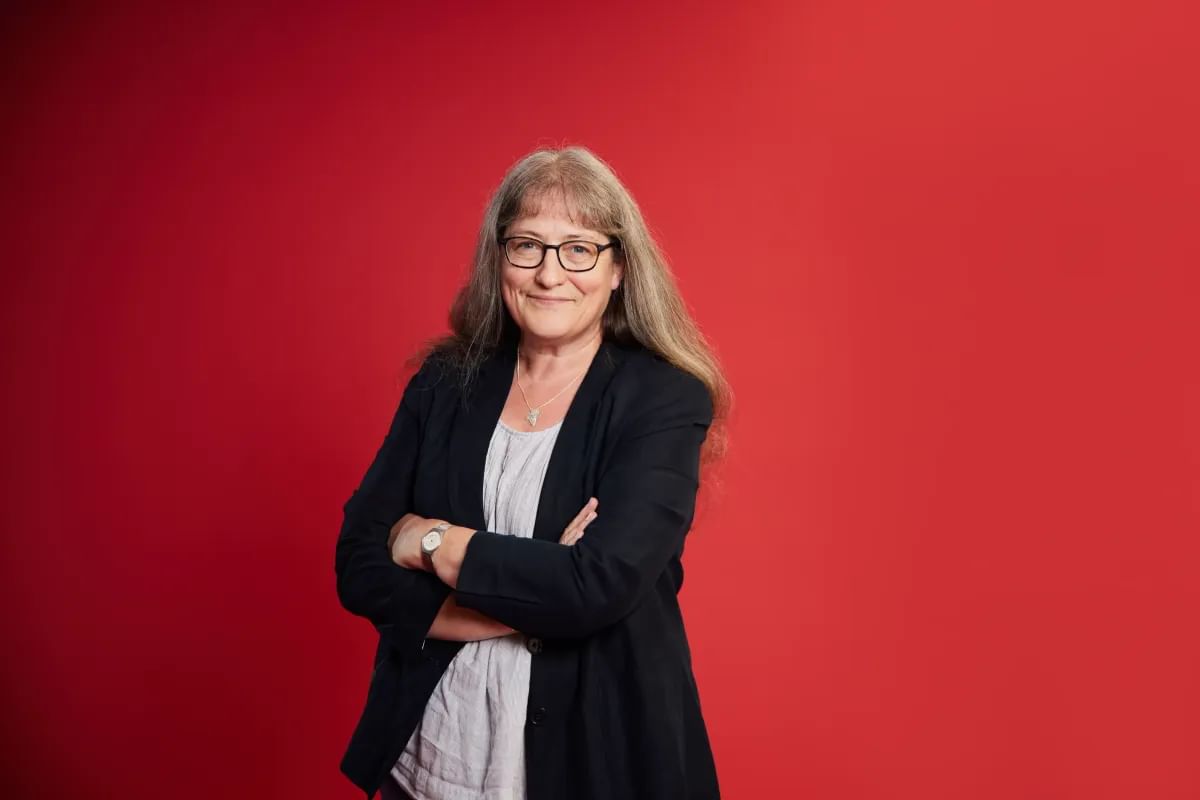
If you have any questions about our research or would like to study or collaborate with us, please contact Professor Diana Wallace.
Professor Diana WallaceOur Expertise
English at the University of South Wales is one of the University’s most successful research areas. In the 2021 Research Excellence Framework - the government’s official measure of research capability - 79% of our research outputs were rated as being world-leading (4*) or internationally excellent (3*). Half our research was rated as being world-leading with respect to Impact. Overall, 66% of all English research submitted was judged to be world-leading (4*) or internationally excellent (3*).
Our areas of expertise include:
- Creative writing and critical-creative writing, including poetry, fiction and non-fiction.
- Welsh writing in English, women’s writing, historical fiction, the Gothic, postcolonial writing, genre fiction.
- TESOL (Teaching English to Speakers of Other Languages).
RESEARCH PROJECTS
Modernism and historical fiction: writing the past
Literary scholar Diana Wallace works on historical fictions with a particular interest in how women and other marginalised writers have used this often-maligned genre. Her work explores how novelists and short story writers re-imagine the unrecorded past through fiction and intervene in traditional historiographical narratives. Her current project, a monograph entitled Modernism and Historical Fictions: Writing the Past (to be published by Palgrave), uncovers and explores a strangely neglected body of work by writers in and from the four nations of Britain. Writers discussed will include Virginia Woolf, Joseph Conrad, H.D., Lynette Roberts, Naomi Mitchison and Helen Waddell.
Mapping Spatial Ambiguity
Dr Rebecca Hutcheon is a literary scholar whose work sits at the intersection of literary studies, digital humanities and the geo-humanities. Her current project, Mapping Spatial Ambiguity: Developing Tools to Meet Complexity in the Humanities, uses interdisciplinary approaches to solve the challenge which spatial ambiguity poses to visualising literary space. In traditional literary mapping and GIS methods, tied to ‘real-world’ mapping approaches, ambiguity is treated as a problem to be solved rather than a key organising principle of literary space. Mapping Spatial Ambiguity proposes a new phase for the digital humanities by developing a systematic approach to encode and visualise spatial ambiguity in literature, using Charles Dickens as a test case. To do this, it will create easy-to-use and accessible tools for tracking and visualising literary space and, in so doing, uncover the foundations of realist literary geographies.
Speak to Me: Still Me?
Creative writer Barrie Llewelyn’s research interest is Writing for Wellbeing. She developed and leads the Speak to Me project which brings together those seeking sanctuary in Wales with local English speakers in a series of creative projects and activities. The most recent iteration of the project is Still Me? in which partners explored their self-portraits in a variety of medium such as collage, fine art, photography and writing. Still Me? was inspired by a walk and talk visit to the National Museum of Wales to see the Art of the Selfie exhibition in 2024. There is an exhibition of the creative work planned for September 2025 and a short film has been produced by filmmaker Rebecca Leach to document the project.
Barrie’s forthcoming article on Writing for Wellbeing, entitled ‘When a Poem Doesn’t Need to be Good’, will be published in the Lapidus International magazine in August 2025.
English Language teaching and the migrant crisis
Working in collaboration with external partners such as the Welsh Refugee Council (WRC), the Learning and Work Institute and Adult Learning Wales, Professor Mike Chick researches the provision of ESOL to refugees and people seeking sanctuary in Wales. Language skills are essential to the integration of people seeking safety from war or persecution and Prof Chick’s research explores innovative and practical ways in which the language classroom can act as vehicle to promote integration and thus help forced migrants to build new lives in Wales. As USW’s Refugee Champion, Prof Chick promotes the university’s Refugee Sanctuary Scheme.
GenAI in English language teaching
Dr Rhian Webb is currently undertaking a series of projects focusing on generative AI (GenAI) in English Language teaching. In 2024, she undertook a collaborative research project with Dr Ferah Senaydin at Ege University, Turkey, funded by the Welsh Government’s Taith scheme. The research explored teachers’ reactions to student statements about their GenAI usage for English language studies. Analysis revealed that students used ChatGPT (version 3.5) as a human collaborator to build content, clarify tasks, organize and enhance language, gain critiques and feedback, which they found encouraging and motivating. However, teachers’ reactions to their students’ usage were inconsistent and exposed a need for unified teacher identity development which is shaped by GenAI literacy training and supported with institutional policies. Dr Webb delivered a Keynote conference speech at Charles University in Prague, entitled, “Pandora’s box has been opened.” AI in English Language teaching – what do teachers need to consider? in May 2025. Further elements of this research explore the ethical implications of MA TESOL students’ GenAI use for writing, and English medium instruction (EMI) students’ Gen AI use for their academic studies.
RESEARCH OUTPUTS AND IMPACT
Creative writer Barrie Llewelyn developed and leads the Speak to Me project (which has been funded in its various iterations by Literature Wales’s Literature for Well-Being Funding Scheme, Civic Activity Funding, Research Funding, Keif Funding and Build Back Better Funding). In January 2020 Syrian and Sudanese refugees resettled in Rhondda Cynon Taff were paired with local English speakers in a series of creative workshops. The project investigated the role of creativity in language acquisition and also aided integration and the understanding of each other’s cultures. The output was an exhibition of words, photographs, art and sound recordings. Speak to Me activities have continued with an online woman’s group who met during the Covid 19 lockdowns, with monthly walk and talk groups that have visited places like Tenby, Skirrid Fawr, St Fagans National Museum of History, Gwaelod y Garth and London, to name a few. There have been several more six week creative projects and one day activities. Barrie has also published two book chapters on this project so far.
Dr Rhian Webb worked with Professor Kenan Dikilitas, from Stavanger University, Norway, to explore the impact of Covid-19 on TESOL education globally. Education moved from being a physical to digital experience overnight and teachers delivered lessons without training or experience. This research explored the impact of this on teachers’ beliefs, roles, practices and feelings post pandemic. The topics were discovered from a pilot qualitative questionnaire, which was distributed to 50 TESOL contacts in 25 countries. From this, a quantitative and qualitative questionnaire was constructed and distributed using the snowball sampling technique. More than 500 responses from 42 countries have been received.
Many TESOL practices undertaken during the lockdown will not be reversed as the pandemic changed global English Language teaching. It is important to research and document what changes have taken place by teachers. Findings will create an understanding of future teacher education needs and training requirements, which will impact the TESOL industry globally.
Professor Wallace’s most recent publication is a new edition of Margiad Evans’s Autobiography (1943) for Honno’s Welsh Women’s Classics series. An outstanding piece of nature writing, Autobiography explores in delicate and precise detail Evans’s relationship with the Welsh borders landscape around Ross on Wye. This new edition was published, with a scholarly introduction by Professor Wallace, in Autumn 2022. It was reviewed in Nation Cymru where Jon Gower commented that ‘Margiad Evans’ pulsing, invigorating words in this marvellous volume are ineffably beautiful, tellingly honest and strikingly true’ and The Guardian where the reviewer noted Wallace’s ‘perceptive introduction’ to this ‘Visionary and lyrical’ text.
Dr Hutcheon’s most recent book, New Approaches for Digital Literary Mapping: Chronotopic Cartography, co-authored by Sally Bushell (Lancaster University), reconsiders what the focus of digital literary mapping should be for English Literature, what digital tools should be employed, and to what interpretative ends. It asks: how can we harness the digital to find new ways of understanding spatial meaning in the Humanities? It explores the potential of Mikhail Bakhtin’s ‘chronotope’ as a way of structuring digital literary maps that provides a solution to the complexities of mapping time and space. This method is then applied to mapping the realist novel by way of Dickens, and then to the multiple states of J. M. Barrie’s Peter Pan.
Hutcheon is also a co-director of the social enterprise company Litcraft: Bringing the Text to Life. Litcraft makes accurate scale models of literary worlds in Minecraft to re-engage children with reading through play. It has school and library collaborators across the UK. Cardiff Libraries are its most recent partnership.
In 2023, Prof Chick and Learning and Work Institute were commissioned by the Welsh Government to review their policy on language education for migrants in Wales, with recommendations from the review informing both policy and practice. At present, Prof Chick is researching the role the Welsh language might play in fostering a sense of belonging amongst those people seeking sanctuary in Wales.
In February 2020, Prof Chick and Dr Catherine Camps were awarded a £4k grant from Advance HE to conduct research with students and alumni of the scheme in order to understand how it benefitted them, and how their well-being can be transformed as a model for further developments.
Research on St Cadoc/Catwg, one of founders of Christian Wales and an early contender for patron saint, by poet and critic Kevin Mills has led to a series of publications and a co-authored experimental drama. Professor Mills’ award-winning poetry pamphlet, Stations of the Boar (2016), led to a co-authored play, Cadoc and the Drowned Boys, which was performed in Blackwood Little Theatre and seven churches named after the saint, and to a sequence of poems in his collection, Zeugma (2020). It has also led to the formation of a CIC theatre company, Contemporancient Theatre, which is now planning a new project based on Professor Mills’ research on Dr Richard Price.
During the Covid-19 pandemic in 2020 and 2021, Dr Rhian Webb undertook two collaborative research projects with Nicky Partridge from Peartree Languages, Cardiff, which were funded by USW’s Partnership and Engagement Programmes and USW’s Strategic Impact Planning Fund respectively. The research explored digital online learning with a specific focus on breakout rooms. Participants included undergraduate USW TESOL students, who managed breakout room activities during Peartree Languages’ online lessons, which were delivered to over 80 international learners from 12 countries. The research informed online live teaching practices and was at the cutting edge of industry requirements during the pandemic. In 2022, Dr Webb undertook a collaborative research project with Professor Kenan Dikilitas at University of Stavanger, Norway, which was funded by USW’s English Research Fund. The research explored the impact of the Covid-19 pandemic on TESOL education globally through an examination of teachers’ beliefs, roles, practices and feelings about teaching and learning post pandemic and the impact of these on traditional thinking.
Interior Monologues (February – March 2019) was an exhibition and zine publication highlighting the work of seven artists and eight writers all working in response to artworks selected from the USW art collection.
The title of the exhibition is a play on words meaning both a person's inner voice and the personal truths revealed through choices of interior décor. As a literary device the Interior monologue creates a window into the mental processes of a character. Modernist writers such as May Sinclair, James Joyce and Virginia Woolf used interior monologues to challenge literary form and to convey the psychology of their protagonists.
The USW writers – Tony Curtis, Cathy Dreyer, Judith Goldsmith, Dale Frances Hay, Maria Lalić, Colum Sanson-Regan, Melanie Smith - were invited to contribute stream of consciousness writing in prose or poetry which was then displayed in the gallery alongside with the artworks and printed in the accompanying free zine.
As a prize-winning poet, novelist and teacher of Creative Writing, Emeritus Professor Philip Gross’s work is concerned with the development of individuals’ creative practice (both adults’ and children’s), outside the academy as well as inside it. His work has led to a wider awareness of the ways in which creative process can enhance our understanding of some of the most urgent challenges of contemporary society.
Since 1993, Professor Gross has published twenty collections of poetry, including the T.S. Eliot Prize-winning The Water Table (2009) and Deep Field (2011),and three collections of poetry for young people, including the prize-winning Off Road to Everywhere (2010), as well as nine novels.
His work has enhanced consciousness of environmental issues and impacted on thinking about the disintegration of language and its implications for the personality.
Since 1997, Emeritus Professor Jane Aaron has been the founding and continuing editor of the series ‘Welsh Women’s Classics’, published by the independent Welsh feminist press Honno. Professor Diana Wallace joined her as co-editor on the series in 2025. The series aims to bring back into print virtually forgotten texts. Thirty six volumes have appeared to date, five of which Aaron edited and introduced while three have been edited by Wallace.
Their impact on the reading public and on higher educational institutions in Wales has been considerable; far more Welsh women writers – the majority of them published in the series – are taught, researched and read today than in the mid-1990s.
Each edition includes a scholarly introduction setting the work in its historical context. Writers published in the series include Margiad Evans, Dorothy Edwards, Hilda Vaughan, Menna Gallie, Eiluned Lewis and Amy Dillwyn. Recent publications include Allen Raine’s A Welsh Witch (1902) edited by Jane Aaron, and Margiad Evans’s Autobiography (1943) edited by Professor Diana Wallace.
/prod01/channel_2/media/university-of-south-wales/site-assets/images/00-miscellaneous/misc-students-focus-group.jpg)
Work with us
We’re passionate about working with partners to address real-world challenges. Our experts work with organisations of all sizes, and from all sectors, to develop new ideas, products and services that solve a specific problem. We help policy makers gather evidence to understand the needs and experiences of a sector or industry to better inform solutions. Contact Professor Diana Wallace to find out more.
OUR PARTNERS
Collaborations with Oriel y Bont
English staff and students have collaborated with the curators of USW’s museum-status Oriel y Bont as well as a number of visual artists in several exhibitions including Issue International, 2019; Interior Monologues 2019; Vis-à-Vis, 2018; Engaging with the Past, 2015, and The River Next Door, 2015.
- Honno Press
- Welsh Refugee Council
OUR MEMBERS
English research at USW has internationally-recognised expertise in creative writing, critical-creative writing, Welsh writing in English, women’s writing, textuality and cultural spaces, genre fiction, Gothic studies and TESOL. Our research generates collaborations with a range of external partners, including creative practitioners, industry, arts and cultural organisations and policy makers.
Professor Jane Aaron is the editor of Honno Press’s reprint series Welsh Women’s Classics, for which she has edited five volumes. Her monographs include Nineteenth-Century Women’s Writing in Wales (2007), which won the 2009 Roland Mathias Award, and Welsh Gothic (2013), and a biography of the nineteenth-century woman writer and editor, Cranogwen, which won the Creative Non-Fiction award in the Wales Book of the Year 2024. She was a co-founder of the UWP series Gender Studies in Wales.
Professor Tony Curtis is a poet, critic and writer of fiction who introduced Creative Writing to the campus over thirty years ago. He is the author of numerous collection of poetry and his Fortunate Isles; New and Selected Poems was published by Seren in 2016. His most recent publications include a novel, Darkness in the City of Light, and a poetry collection entitled Leaving the Hills. He is a Fellow of the Royal Society of Literature.
Professor Gavin Edwards has published on the poetry of George Crabbe, theories of narrative, travel writing and book history. study of innovative uses of a typographic case, The Case of the Initial Letter: Charles Dickens and the politics of the dual alphabet, was published in 2020. From 2010 to 2012 he was a Visiting Research Fellow at the Institute of English Studies, University of London.
Professor Philip Gross is a writer of many parts, author of poetry, fiction and drama for children and adults and Professor of Creative Writing. Winner of a hat-trick of major awards within the last few years – the TS Eliot poetry prize for The Water Table, Wales Book of the Year for ‘I Spy Pinhole Eye’ and the CLPE Award for children’s poetry for Off-Road To Everywhere, and the Roland Mathias Poetry Award (Wales Book of the Year) for Love Songs of Carbon. His most recent publications are The Thirteenth Angel (shortlisted for the T.S. Eliot Prize) and The Shores of Vaikus.
Professor Jeremy Hooker is a poet and critic. His criticism and scholarship focus on Anglophone Welsh writing, including David Jones and John Cowper Powys, modern British and American poetry, the English rural tradition (e.g. Richard Jefferies, Thomas Hardy, and Edward Thomas), and British landscape painting. His collected poems, The Cut of the Light: Poems 1965-2005, was published in 2006 and a collection of his critical essays, Ditch Vision: Essays on Poetry, Nature, and Place, was published in 2017. His most recent publications include With a Stranger’s Eyes and a collaboration with the sculptor Lee Grandjean, Presence and Place.
Professor Christopher Meredith is a novelist, poet, critic, and translator, as well as doing a little writing for radio and the stage, and articles and reviews, fiction and verse for many magazines. His first novel, Shifts (1988), is regarded as the classic novel of post-industrialization in South Wales and is now ‘an automatic choice’ as a set text on any university course on Welsh writing in English. It was republished in Parthian’s Library of Wales series in 2023. His most recent books are a novella, Please, and a collection of poetry entitled Still.
Professor Jeff Wallace’s main research interests are in science and literature since Darwin, modernism, D.H. Lawrence, contemporary writing, and posthumanism. His most recent publication is a monograph entitled Abstraction in Modernism and Modernity: Human and Inhuman (2023). He is Emeritus Professor of English at Cardiff Metropolitan University.
Our Research Students
Jan Tunley, PhD
Title: Self and Others in the role of Woman: Selima Hill, Liz Lockhead and Rupi Kaur.
Katriona Rees, MPhil/PhD
Title: Anglo-Welsh gothic genre fiction.
Juliet Larsen, PhD
Title: Religion, Folk Belief and the Sacred Landscape in Women’s Writing in Wales, 1847 – 1909.
Dr Carolyn Reagon, PhD by Portfolio
Title: Depictions of space and place in contemporary ghost novels: fostering the uncanny and reflecting social identities and relationships.
Rev David Parry
Title: Cultivating Presence: A conceptual autoethnography examining my rejection of received representation in contemporary miracle and mystery traditions.
Emily Grist, MA by Research
Title: Representations in Gay Wales: A Comparison of Gender Representations and Queer Experiences in Contemporary Welsh Literature.
Nazmia Jamal, MA by Research
Title: Lesbians Talk Issues – 50 years of shifting lesbian feminisms in Britain.
Joanne Spearman, MA by Research
Title: Genre and Politics: The Historical Fictions of Godwin and Shelley.
STUDY WITH US
Postgraduate study
We welcome applications for PhD or Masters by Research study in one of our areas of expertise. You can study full or part time, on campus or remotely. If you're a professional with an existing body of research, a PhD by Portfolio could be the route for you.
Postgraduate researchers are assigned a supervisory team who have the expertise and experience to support them in their studies. Supervisors will help you to shape your doctoral research project, advise you on creating networks and establishing your career.
World-class expertise
English at the University of South Wales is one of the University’s most successful research areas.
In the 2021 Research Excellence Framework - the government’s official measure of research capability - 79% of our research outputs were rated as being world-leading (4*) or internationally excellent (3*). Half our research was rated as being world-leading with respect to Impact. Overall, 66% of all English research submitted was judged to be world-leading (4*) or internationally excellent (3*).
Postgraduate Research Degrees
Tuition fees
Postgraduate Fees and Funding

Thinking of applying?
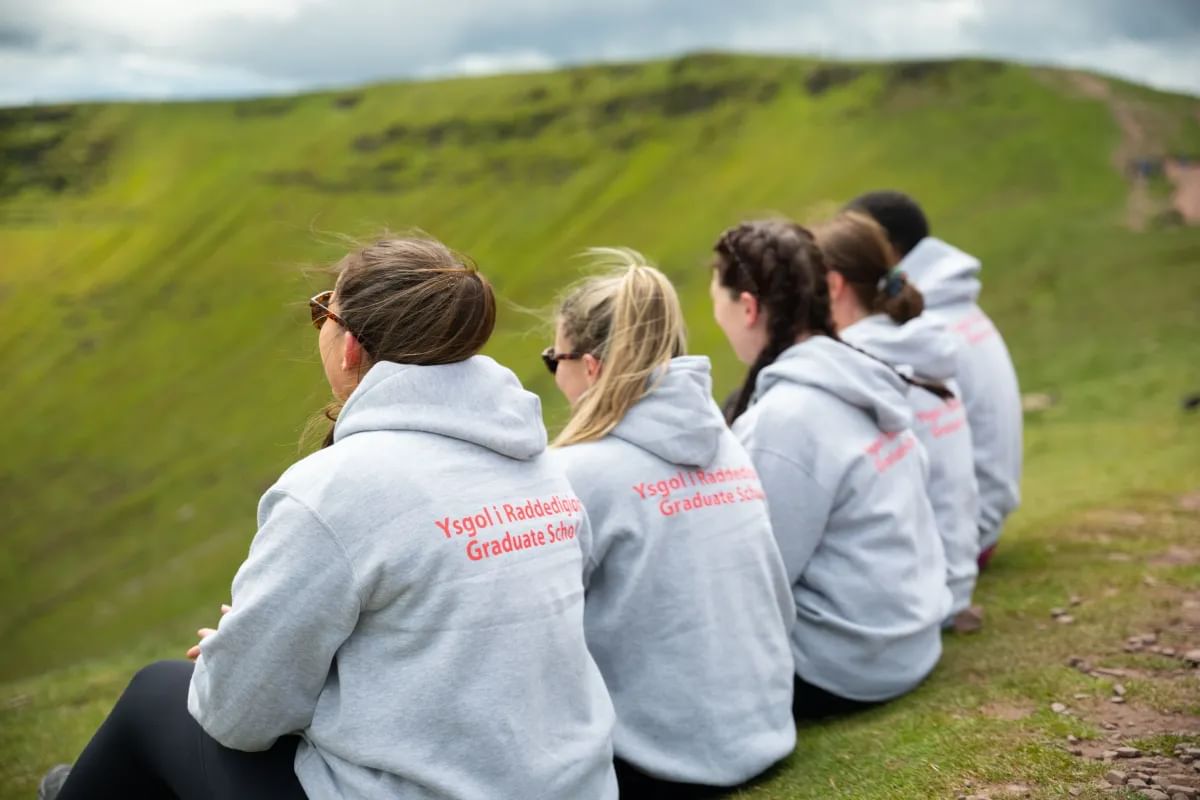
The Graduate School