Centre for Social Policy
The Centre for Social Policy is a leading hub for social and public policy analysis. One of its primary aims is to generate knowledge and evidence to inform policy formation and implementation.
Social Policy Research and Innovation Group/prod01/channel_2/media/university-of-south-wales/site-assets/images/01-campus-and-facilities/11-campus-exterior-shots/Ty-Crawshay-sunrise_26013-(3).jpg)
The results of the Research Excellence Framework 2021 found that:
- 71% of our social policy / social work research is world leading or internationally excellent (4* / 3*)
- More than 80% of our research impact is world leading or internationally excellent (4* / 3*)
- 75% of our outputs are world leading or internationally excellent (4* / 3*)
- First in Wales for impact out of three universities - based on 4* / 3*
We have strengths in a range of areas of social and public policy including displacement and development; climate debate; European youth policy; wellbeing; citizen involvement and participation; governance and scrutiny; equality and outcome assessments. We also have researchers in social policy theory, as related to sociology, political theory, and political and social philosophy.
The University has the strongest grouping of researchers in Wales working in the field of criminal justice, and policing, terrorism and security, with whom we closely collaborate.
Members of the Centre have been successful in securing external grants from prestigious sources, including the British Academy, the Economic Social Research Council and the Welsh Government.
Our expertise is recognised by external stakeholders in several key areas and is characterised by:
- Credible experience in the challenges of policy application and the delivery of public services
- Adaptability in responding rigorously to ‘real world’ challenges
- Strong links with decision-makers and implementers at all levels
- Focus on the issues facing devolved Wales, with international knowledge and connections
We also have a longstanding commitment to educating public service professionals. Our alumni are to be found in leading positions in public service organisations in Wales and beyond.
Contact us
If you would like to find out more about what the Centre can offer you and your organisation, please contact Professor Palash Kamruzzaman.
Professor Palash KamruzzamanRESEARCH PROJECTS
- Brick Mule: film ethnography and critical consciousness participatory action-research towards positive transformation, in Nepal’s equine-owning and brick-making communities, industries and policy-makers
- Politics of Denial and Non-Recognition of Genocide
- Exploring the representations of climate change as international crime – evolution, trends, and implications for climate
- Angles and Standpoints: demystifying the concepts of ‘youth perspective’ and ‘youth mainstreaming’
RESEARCH OUTPUTS AND IMPACT
Policy Challenges towards Rohingya Crisis in Bangladesh: The Role of National Development Experts
This research is based on the findings of a pilot study jointly convened by Professor Palash Kamruzzaman and Dr Bulbul Siddiqi (North South University, Bangladesh). The study extends Professor Kamruzzaman’s idea of National Development Experts (NDEs) and apply it in a practical policy context, namely the Rohingya crisis in Bangladesh.
Based on 25 qualitative interviews with development professionals working on Rohingya issues, this paper explores to what extent NDEs can play a meaningful role in resolving this crisis.
Evidence presented in this paper suggests that a nonchalant non-responsive practice limits the role of experts towards finding a dignified solution to the crisis. Additionally, for the NDEs, as opposed to international experts, the space is further confined. Dr Siddiqi and Professor Kamruzzaman contend that the lack of an evidence-based policy culture further complicates the Rohingya crisis as locally derived expertise is often ignored in policy recommendations when seeking a durable yet dignified solution to the Rohingya crisis.
Professor Palash Kamruzzaman led a British Academy funded project (with Professor Ali Wardak and Professor Kate Williams of the Centre for Criminology) to explore the experiences of violence and loss of dignity among the Rohingyas in Bangladesh and Internally Displaced People (IDPs) in Afghanistan.
This project aimed to contribute to a more in-depth and nuanced understanding of some of the world’s poorest, most excluded and victimised groups of people: the Rohingyas in Bangladesh and Internally Displaced People (IDPs) in Afghanistan.
Dr Filippos Proedrou's research into energy security and geopolitics includes oil and gas and extends to renewables, and global climate policy. His recent research explores the transition to low-carbon energy systems - the pivotal political economy issue for the EU as it stands in the nexus of energy, politics and markets. His research also aims to critically discuss the trade-offs involved in the roll-out of smart grids and the existent barriers.
Dr Filippos Proedrou has been a 2019 Academic Fellow with the National Assembly for Wales, conducting research and providing expert advice to the Climate Change, Environment, and Rural Affairs Committee in regards to Wales' climate policy and decarbonisation plans.
His research, Addressing the climate policy gap in Wales, is based on a thorough scrutiny of the Welsh political and climate policy context and existing legislative framework, the work of the National Assembly for Wales Climate Change, Environment and Rural Affairs Committee, the Welsh Government’s related policy documents, including the most recent Prosperity for All: A low carbon Wales, And the UK Committee on Climate Change advice and reports, including the very recent Report Net Zero: The UK’s contribution to stopping global warming.
The report contributes insights and conceptualisations of the climate change challenge and its interaction with other key political and policy priorities, and sources evidence and best practices from around the world.
The report elaborates on the co-benefits of an ambitious climate policy, and provides ample evidence and global best practices that can be utilised in Wales. It also discusses Welsh climate policy within the broader growth paradigm Wales follows, and sets out different energy transition pathways.
The report also qualifies the need for an energy company for Wales, and delineates the role and the tasks it could play, and looks into the potential for rendering the Zone Demarcation Scheme more engaging with local communities/ citizens. It also points at a number of implications Brexit can bear for Welsh climate policy.
Professor Howard Williamson has been closely involved in youth research and youth policy. He has provided wide-ranging policy advice at many levels of governance from the Welsh government level to the United Nations. Professor Williamson’s research on youth policy revolve around a number of areas including education, vocational training and employment, health, and criminal justice.
In recent years, his focus has been more specifically on the European institutions: the European Commission and the Council of Europe, and the Partnership between them in the field of youth. Between 1997 and 2016, he co-ordinated youth policy reviews of 21 European countries, authoring three volumes capturing the salient issues emerging from them. He was also involved in ‘advisory missions’ to a number of member states of the Council of Europe. He helped to draft the Council of Europe youth sector strategy 2030, launched in January 2020. Most recently, he has co-edited and co-authored a manual on youth policy from a European perspective.
Over the past ten years, Professor Howard Williamson has contributed to research on the history of youth work in Europe organising research seminars and co-editing seven volumes published by the Council of Europe. The editing process has involved considerable writing collaboration with many contributors for whom English is rarely a first language.
Professor Williamson has served as the rapporteur-general for three successive European Youth Work Conventions (2010, 2015, 2020), providing position papers – Finding Common Ground, and Cornerstone Challenges for European Youth Work and Youth Work in Europe – respectively, for the last two Conventions. After the 2nd Convention in 2015, he co-edited a key text on youth work in Europe. At the end of 2020, he prepared the final declaration of the 3rd Convention, ‘Signposts for the Future’.
Some of the key questions in policy studies include ‘who makes policy’, ‘for whom’ and ‘whose interests and agendas are served during the process of policymaking’? Often, polices are made through a top-down process, where the elites and powerful make various policies with stated aims of promoting socio-economic benefits for all including socially excluded marginal groups within the society. For a long time, participation, especially from the poor and marginalised groups, has been excluded in making policies. However, participatory policymaking is now an established field in social science.
Professor Palash Kamruzzaman explores in his research to what extent wider participation in the processes of policymaking can actually ensure the stated aims actually benefit the poor and marginalised people? Why participation in some cases are used as a pre-condition for policymaking, to legitimise or validate the top-down agenda, as a tokenistic gesture for inclusive policymaking, or to empower the people who are generally excluded and usually do not have a voice in this process?
The landscape of international development is dominated by the discourses and narratives of the Western donors. Most frequently, donor countries/organisations shape and dictate the agenda of development for the aid recipient countries. In this process, the scholars and experts from the western countries play some important roles brokering, cultivating, transferring, and producing development in the global South. But is development expertise racially blind? There is an emerging genre of reflexive literature, often described as ‘aid-ethnographies’, assesses the effectiveness of aid and development through the lenses of Western/International experts of development.
In this context, Professor Palash Kamruzzaman has coined a new term National Development Experts (NDEs) in understanding the roles, motivations, and agencies of the development experts who are based in and work for their countries of origin. Prof Kamruzzaman’s research reveals that without the views of the NDEs, existing ethnographies of aid will only depict a partial picture, like colonial ethnographies.
Dr Ehsan Kabir’s research interests cover displacement, economic migration, livelihood transition, and climate change adaptation. HIs works are inspired by theoretical frameworks in political ecology, sustainability and empirical knowledge on multifaceted nature of human diversity and resilience.
His most recent project focused on unpacking the magnitude and heterogeneity of the impacts of reverse migration in environmentally vulnerable locations in Bangladesh.
Global development goals such as Millennium Development Goals (MDGs) and Sustainable Development Goals (SDGs) make reduction/eradication of extreme poverty as one of their headlining goals and objectives. This is a noble goal indeed. But, how is extreme poverty measured? Apparent catchy ideas such as $1 a day poverty line may sound simple but these are notoriously tricky and often beyond the comprehension of most people without a specialist knowledge in economics (mainly because the $1 a day definition (and updated versions $1.90/day) is based on purchasing power parity value).
Prof Palash Kamruzzaman’s work focuses on how the poor people themselves, whose conditions the global development architects want to improve, make of current definitions of extreme poverty and what implications these views may have for the global development goals.
Beyond his European research and policy work, Professor Howard Williamson has sustained his longitudinal ethnographic study of the ‘Milltown Boys’, about whom he first published in 1978. Just short of 50 years after first meeting them, he has written a third book about their lives.
/prod01/channel_2/media/university-of-south-wales/site-assets/images/04-profiles/45-university-staff/profile-academic-staff-research-dr-md-palash-kamruzzaman-48000.jpg)
Work with us
We’re passionate about working with partners to address real-world challenges. Our experts work with organisations of all sizes, and from all sectors, to develop new ideas, products and services that solve a specific problem. We help policy makers gather evidence to understand the needs and experiences of a sector or industry to better inform solutions. Contact Professor Palash Kamruzzaman to find out more.
OUR MEMBERS
We have strengths in a range of areas of social and public policy including displacement and development; climate debate; European youth policy; wellbeing; citizen involvement and participation; governance and scrutiny; equality and outcome assessments. We also have researchers in social policy theory, as related to sociology, political theory, and political and social philosophy.
Members of the Centre have been successful in securing external grants from prestigious sources, including the British Academy, the Economic Social Research Council and the Welsh Government.
Our Research Students
Salim Alkathiri, MPhil/PhD
Title: Exploring Work-Life Balance among Employees of governor office of Oman: The Role of Organizational Dynamics, Employee Perceptions, Demographics, and Societal Culture across Two Cities.
James Chard, MPhil/PhD
Title: Walking the Walk: An assessment of UK universities’ commitment to Climate Justice within Sustainability and Net Zero Strategies.
Alexandra Cusack, MRes
Title: Bridging the Implementation Gap in Sustainable Development Initiatives: from a Low-Income Household Perspective in South Wales.
Alessia Evans, MPhil/PhD
Title: A co-productive approach to developing and evaluating the acceptability and feasibility of a social engagement intervention for men living in extra-care.
Elen Ghassempoory, PhD
Title: Anti-Oppressive Practice Oppressive? A Case Study Considering Anti-Oppressive Practice and Approaches with Children and Young People in England and Wales.
Kate Haywood, MPhil/PhD
Title: Naming, shaming, blaming and reclaiming
Bishnu Khatri, MPhil/PhD
Title: Effecting Policy Change to Enhance Climate Change Resilience Within Threatened Communities in Nepal.
Ahmed E Marwan, MPhil/PhD
Title: How Does English Language Proficiency Interplay with Social Vulnerabilities and Resilience-Building Among Refugees in the UK?
Qirat Naz, MPhil/PhD
Title: Cultural competence and healthcare challenges of minority diverse population in South Wales.
Samantha Owens, MRes
Title: Assessing the effectiveness of Curriculum Decolonisation as a Tool of Power to Change Societal Norms and Values.
Cynthia Udekwe, MRes
Title: Exploring policy Impacts on early childhood education in northern Nigeria.
Abasiokpon Udoakah, MPhil/PhD
Title: Social Capital and National Poverty Eradication Programme (NAPEP) in Nigeria.
Neil Lodwick, PhD
Title: Caldey, Inis Oirr and Iona: a multi-site ethnography of small island sustainability.
Wendy Booth, PhD
Title: Tolerance and Empathy in the Classroom and Beyond: A case study examining the use of Sociology and Psychology within the Welsh Baccalaureate to promote higher levels of Tolerance and greater Ethnocultural Empathy
STUDY WITH US
Postgraduate study
We welcome applications for PhD or Masters by Research study in one of our areas of expertise. You can study full or part time, on campus or remotely. If you're a professional with an existing body of research, a PhD by Portfolio could be the route for you.
Postgraduate researchers are assigned a supervisory team who have the expertise and experience to support them in their studies. Supervisors will help you to shape your doctoral research project, advise you on creating networks and establishing your career.
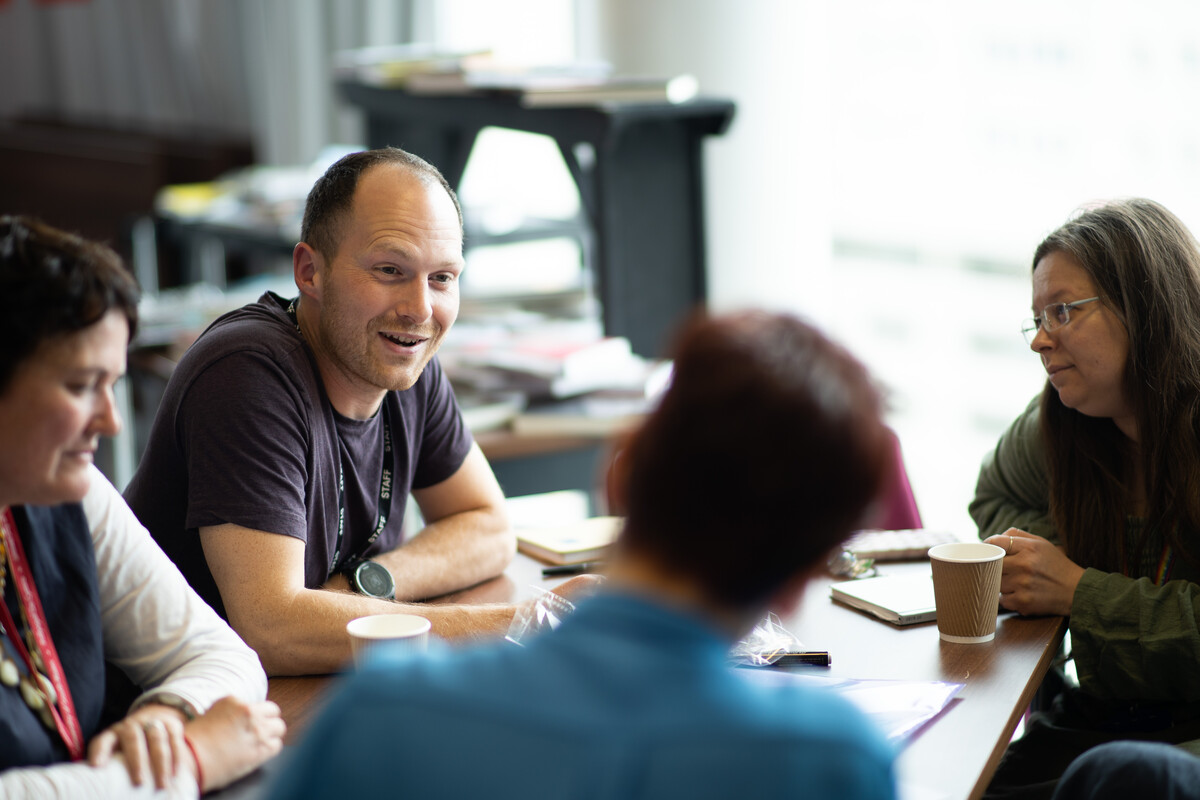
Postgraduate Research Degrees
Tuition fees

Postgraduate Fees and Funding

Thinking of applying?
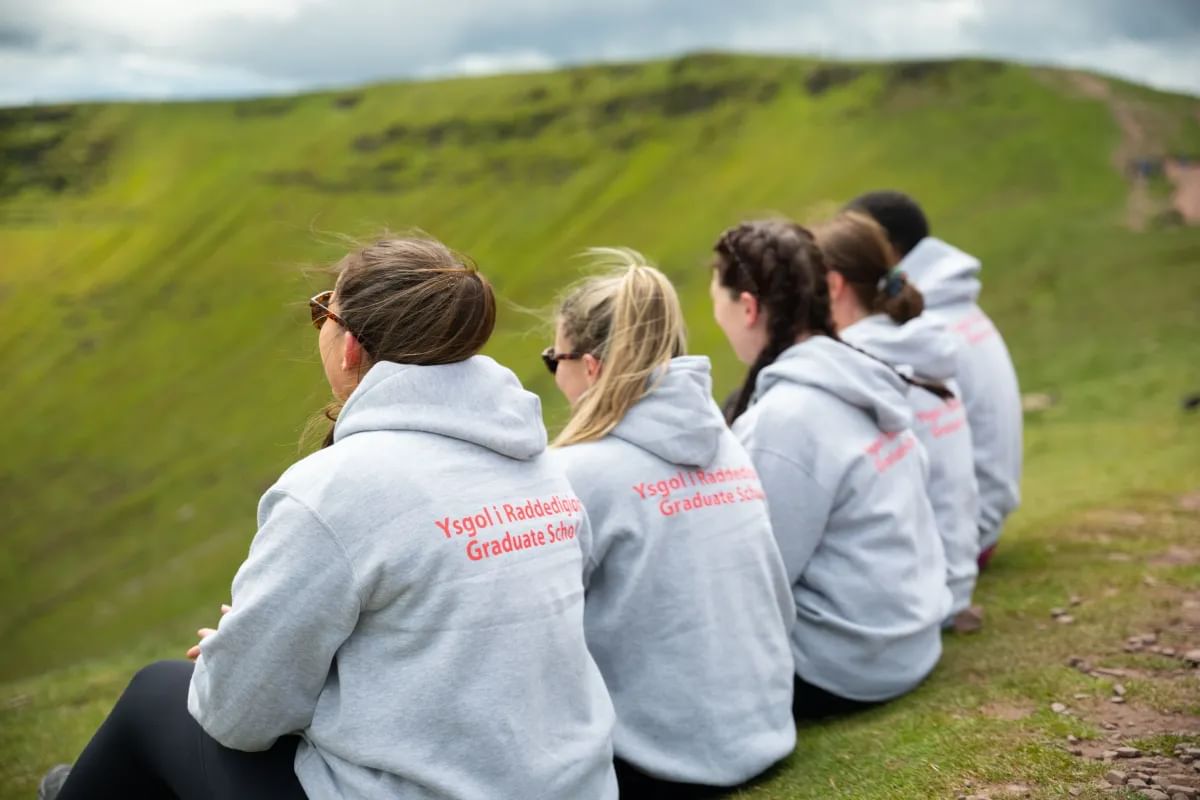
The Graduate School