Fostering Ethnocultural Empathy
Dr Wendy Booth, course leader for Sociology and researcher in social policy, explores how tolerance and ethnocultural empathy can be taught in secondary school citizenship classrooms.
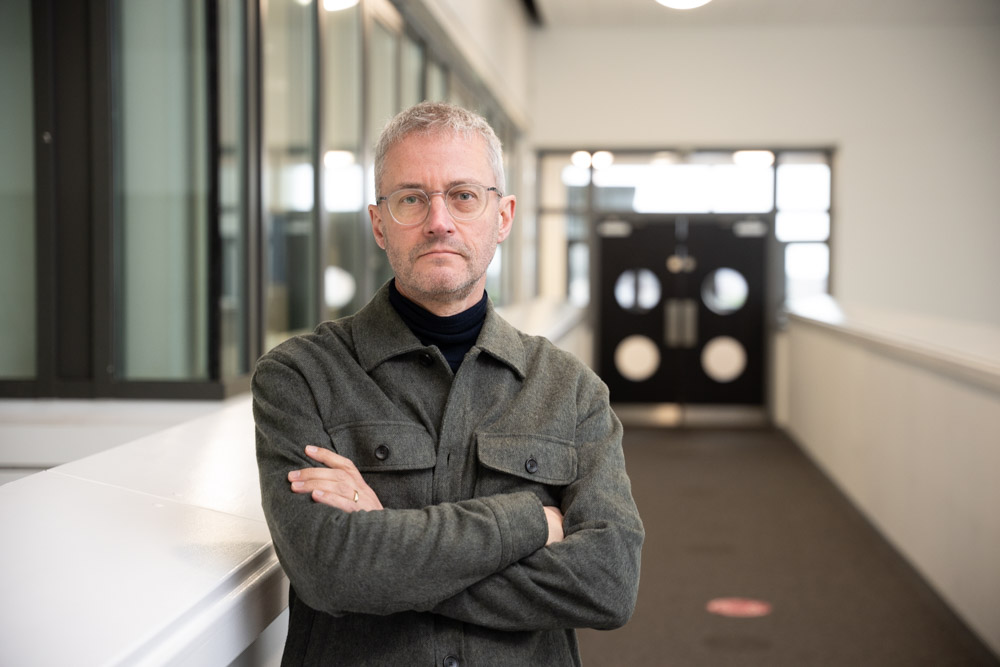
Black History Month/prod01/channel_2/media/university-of-south-wales/site-assets/images/news/2025/10-october/Dr-Wendy-Booth_BHM.jpg)
Dr Wendy Booth has written a new book – Educating for Community Cohesion: Promoting Tolerance and Ethnocultural Empathy – which builds on her research into community cohesion and social justice.
Here, Wendy tells us more about her work.
Black History Month offers each of us the opportunity to reflect more deeply on issues of justice, belonging, and our collective future. In a moment defined by global movements for equality, Black History Month remains vital – not as a single month of remembrance, but as an invitation to transform our understanding of community and to challenge assumptions that perpetuate division.
As a lecturer and researcher, I am often asked whether it is possible to teach young people to be more tolerant and empathetic, especially across lines of race, faith and background. My answer, shaped by research and direct work in classrooms, is yes.
Breaking the Cycle of In-Groups and Out-Groups
Human societies, it seems, are wired for division as much as for unity. From playgrounds to parliaments, the tendency to form in-groups and out-groups (where “us” is granted understanding and “them” is met with criticism) remains a stubborn challenge. This dynamic affects us all, and it is important to address it during early adolescence, when young people are forming identities and negotiating belonging.
For educators, the challenge is to break these cycles, encouraging learners to reflect on how their experiences and assumptions are shaped by wider forces. Central to this is self-reflection: asking what it might feel like to walk in someone else’s shoes, especially those who have faced marginalisation, displacement or inequality. Such empathetic perspective taking cannot eliminate every barrier, but it does lay the groundwork for communities to be built not on fear, but on respect.
A Pathway for Education
Through my research at USW, and in partnership with secondary schools, I have developed the TEEMA (Tolerance and Ethnocultural Empathy for Mutual Acceptance) resources. This toolkit engages pupils with the realities of difference and belonging, using social psychology and sociology to explore topics from in-group/out-group dynamics to the power of language and media influence. In two contrasting Welsh schools, research indicated that targeted, reflective teaching does make a real difference, with participating pupils demonstrating heightened awareness of bias, a growth in critical thinking, and more richly developed forms of empathy.
A key framework underlying this work is the distinction between ‘thin’ and ‘thick’ forms of tolerance. Thin tolerance asks only for peaceful coexistence – to “live and let live”. Thick tolerance, by contrast, recognises and celebrates diversity as a source of mutual strength and learning. My research suggests that a citizenship-based curriculum designed with empathy and justice at its core can help move schools along this continuum, developing not only knowledge about difference, but genuine curiosity, openness, and respect. Within the current political context, even a thin form of tolerance is beneficial compared to the intolerance we are now seeing on the streets and social media.
Black History Month is a reminder that education has a critical responsibility: not only to remember the past, but to shape the future. Resources like TEEMA, and a commitment to empathy as a practice, rather than a one-off event, can support schools, colleges and universities to become spaces where every student’s story is valued, and where understanding takes root beyond the classroom walls. As someone who cares deeply about justice in education, I hope the themes and resources developed through this work can inspire other educators, curriculum designers, and students. If we are to make progress against the currents of division and intolerance, we need more than good intentions - we need structured opportunities to teach, model, and reflect on what it means to belong, together.