Master of Chiropractic
Master the manual techniques and professional skills you need to thrive in the professionally regulated and rapidly growing chiropractic healthcare industry.
How to apply Apply through UCAS Book an Open Day Chat to us/filters:format(webp)/prod01/channel_2/media/university-of-south-wales/site-assets/images/03-courses/chiropractic/master-of-chiropractic.jpg)
UCAS Code
B320
Start Date
September 2027
Location
Pontypridd
Campus Code
A
UCAS Points
112
International students: £17,600*
Course Overview
Gain everything you need to succeed as a chiropractor through world-leading experts, state-of-the-art facilities, and extensive real-world experiences. Develop outstanding manual skills and anatomical knowledge, while learning to collaborate with healthcare professionals and solve complex problems.
Accreditations
/prod01/channel_2/media/university-of-south-wales/site-assets/images/09-logos/logo-chiropractic-accrediation-general-chiropractic-council.png)
/prod01/channel_2/media/university-of-south-wales/site-assets/images/09-logos/logo-chiropractic-accreditation-euorpean-council-on-chiropractic-education.png)
We’re accredited by the General Chiropractic Council (GCC) and the European Council on Chiropractic Education (ECCE)
Why study this course?
What you'll study
Lay the foundations of your knowledge as we introduce you to human anatomy and physiology, biophysics and radiography.
You’ll develop your understanding of clinical management and the biopsychosocial aspects of musculoskeletal conditions.
Learn the initial framework of musculoskeletal clinical assessment and get to grips with orthopaedic, manual therapy and exercise rehabilitation techniques.
Understand anatomical structures and systems and their clinical importance, and develop skills in muscle testing, deep tendon reflexes, dermatomes, and myotome assessment.
Explore the psychological and social factors relating to clinical practice and how these impact the patient-practitioner relationship, and clinical outcomes.
Develop knowledge of fundamental mechanical principles and material science theory, enabling you to solve biomechanical problems around kinetics and kinematics.
Learn how to identify normal anatomical features and interpret findings on plain film radiographs. Get a grounding in current legislation and safety principles around radiography.
Examine the eleven physiological human systems, understanding their role in homeostasis, with an introduction to disorders and disease.
Progress your knowledge of physiology, imaging, and clinical management as you look deeper into neuroanatomy and public health.
Begin to apply your skills to chiropractic scenarios as we introduce you to clinical diagnosis.
Build the neuroanatomical knowledge required for neurological examination, including aetiology, disease mechanisms and diagnostic criteria.
Explore repair mechanisms and disease processes, recognising conditions based on the associated presentation of symptoms within a clinical setting.
Apply public health principles to chiropractic practice and explore wider health issues and motivations for change concerning health behaviours.
Develop your competence in the fundamental chiropractic skills of spinal manipulative therapy techniques, stretching and massage, and build your knowledge of exercise rehabilitation.
Extend your ability to read clinical images, including X-rays, MRI, CT and ultrasound scans, to recognise pathological states relevant to chiropractic.
Broaden your knowledge base of all human physiological systems by identifying and understanding a variety of physiological adaptations, disorders and diseases.
Finely tune your knowledge, confidence and practical skills in preparation for your final-year placement.
Explore a broad range of pathology as you develop your ability to diagnose and manage all manner of neuromusculoskeletal presentations you may encounter in our clinic.
Develop the critical thinking and clinical reasoning skills required to implement evidence into practice, considering concepts such as cognitive bias and statistical analysis.
Understand the role of Primary Healthcare Practitioner (Chiropractor) within the Welsh Institute of Chiropractic environment and the General Chiropractic Council's (GCC) Code.
Develop your ability to identify and differentiate conditions commonly encountered in chiropractic practice through physical examinations of body systems and lab test findings.
Develop and refine a complex range of basic and advanced manual and rehabilitation skills and learn how to create evidence-based chiropractic treatment plans.
Learn how to perform a neurological and/or orthopaedic examination of the body and interpret the outcome to make decisions about diagnoses, management and referral.
Refine your image analysis and interpretation skills, integrating case history, image findings and lab investigations to inform diagnoses of a range of conditions.
Develop, consolidate and apply all the knowledge, skills and professional qualities you’ve built over the initial three years.
As you diagnose, treat and manage patients in our in-house clinic, you’ll demonstrate your readiness to become a professional chiropractor.
Deepen your understanding of evidence-based practice and learn how to communicate chiropractic research in a way patients can understand.
Complete a full research project involving ethics procedures, participant recruitment and statistical analysis, with the potential for work to be published in academic journals.
Advance your knowledge of key chiropractic principles through detailed reviews of complex procedures, problems, case studies and research.
Develop the professional requirements of the Code of Practice and learn what it takes to establish a private practice, including business, audit and entrepreneurial skills.
Demonstrate your professional readiness to become a fully qualified chiropractic practitioner as you diagnose and treat patients within our supervised outpatient clinic.
We regularly review our courses to keep pace with changing skills and employer needs. If a review leads to significant changes, we’ll contact you to explain what’s changing for the coming year.
Teaching and Assessment
Get ready to immerse yourself into the exciting world of chiropractic with hands-on experience and expert training.
You'll learn essential manual techniques for patient care and use cutting-edge tools like Anatomage tables, Force Sensing Table Technology, and the Hydra Suite. Team up on projects with physiotherapy students and gain real-world experience through a crucial placement that shapes your learning and final assessment. Plus, you'll enjoy interactive lectures and tutorials that bring key theories to life, with exams, coursework, and presentations to showcase your knowledge.
You’ll build clinical and manual skills, understand the biopsychosocial approach to patient health, and learn to work alongside other healthcare professionals. Hands-on methods, case evaluation and clinical reasoning are central to your learning, helping you become a practitioner who can confidently assess and manage patient needs.
From day one, plunge yourself into real-world chiropractic practice, mastering techniques, procedures, and patient treatment equipment. Start with supervised practical experience that gradually evolves as you advance. Everything builds towards your final clinical placement in year four, where you’ll reveal all the skills and competencies required to be an independent practitioner. You’ll also have opportunities for placements alongside other medical professionals such as surgeons and physiotherapists. Chiropractic is growing within sport, and you could work with sports teams in USW's world-class facilities.
On our Treforest campus, you’ll find the Welsh Institute of Chiropractic (WIoC) Centre, where you’ll treat patients in your final year. Featuring 26 treatment rooms DEXA scanning facilities,, UltraSound Imaging facility and a rehabilitation suite, it offers unmatched clinical resources. Our anatomy and radiology lab contains the Anatomage Table, and we’re one of the few institutions in Europe to use Force Sensing Table technology (FSTT) to help optimise your skill development with spinal manipulation. The Hydra simulation suite allows you to experience clinical scenarios in collaboration with other medical professionals.
Course Leader
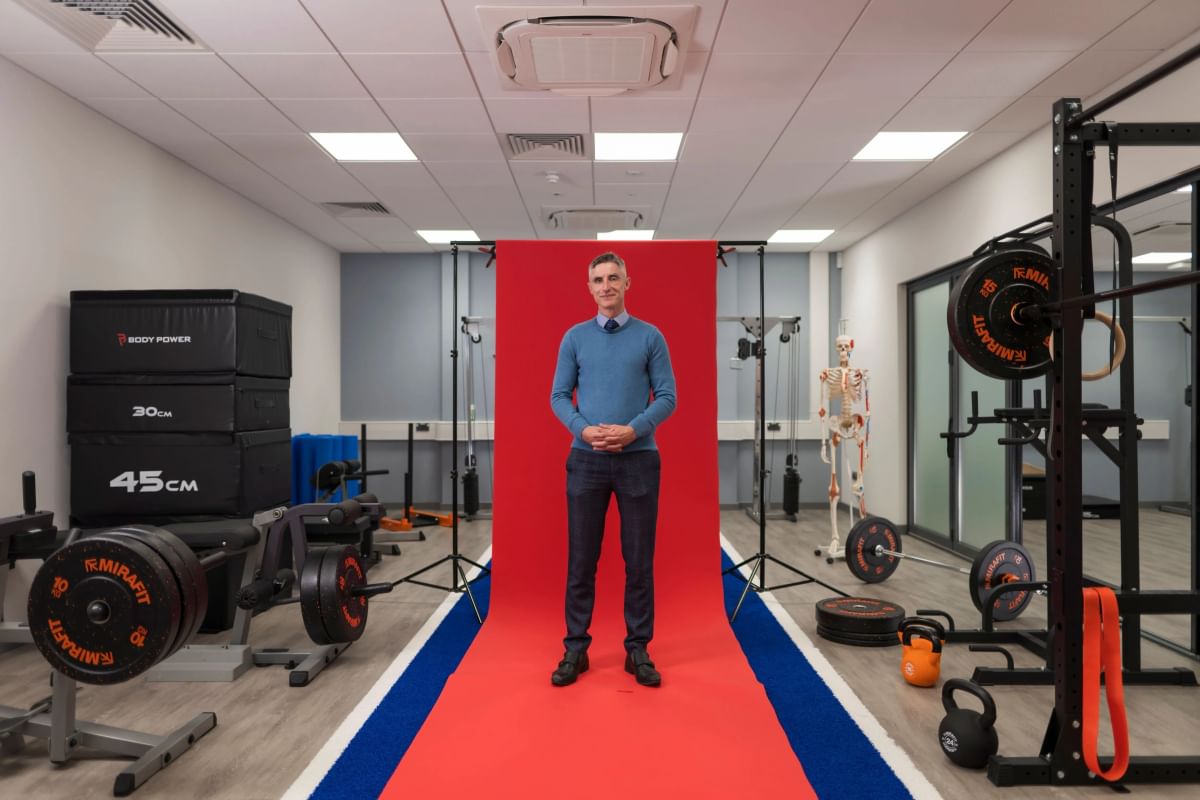
Dr Paul McCambridge (Doctor of Chiropractic)
Paul is Course Leader for the Master of Chiropractic at the University of South Wales. His expertise spans musculoskeletal rehabilitation, pain science, and evidence-based care. He has extensive clinical experience, delivers CPD internationally, and has been recognised by the British Journal of Sports Medicine. Paul maintains strong industry links and collaborates internationally. His teaching focuses on clinical reasoning, active care, and real-world application, with research interests in pain education and clinical decision-making.
Got questions about the course, teaching style or whether it’s the right fit for you? Reach out to Paul directly by email.
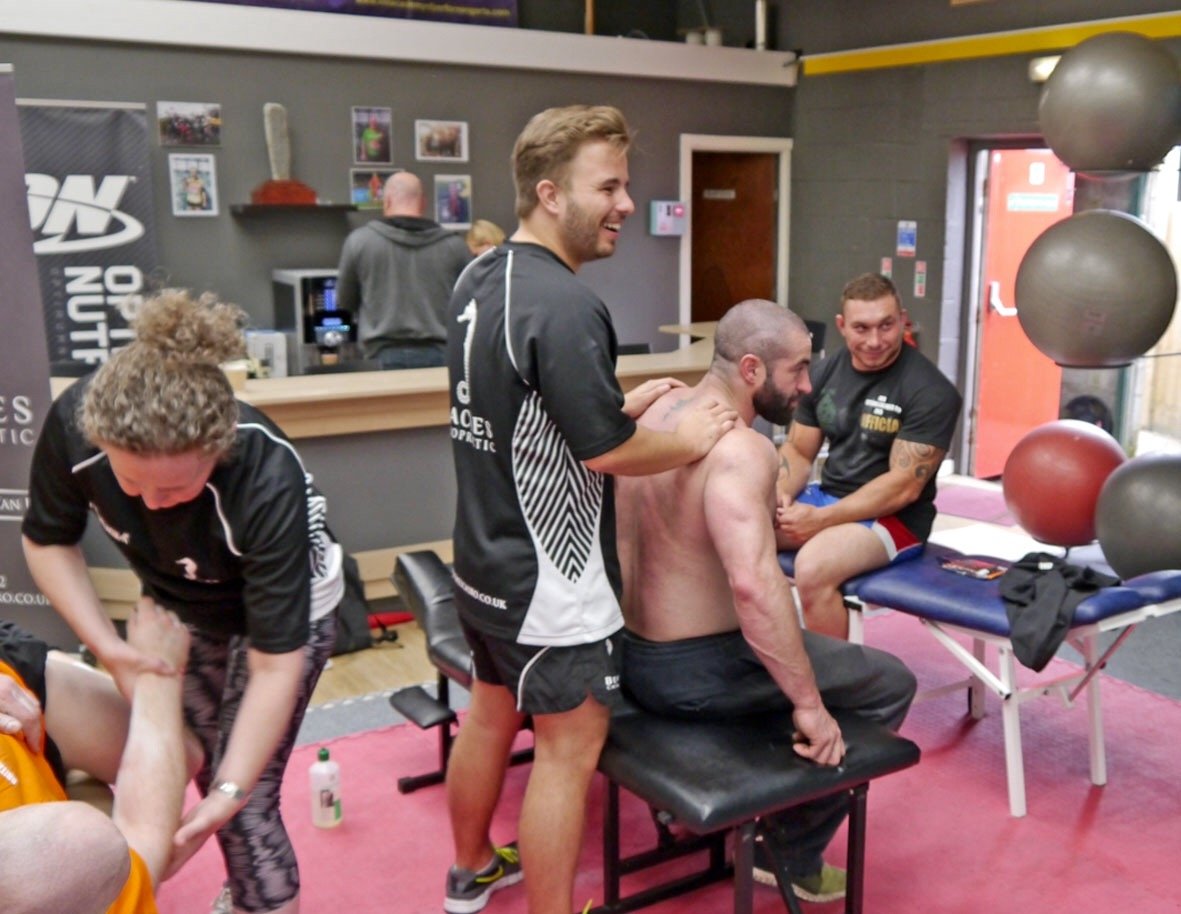
“Chiropractic is a career that offers countless possibilities. Whether your interest is paediatrics and obstetrics, elite sports, or maybe even chronic pain management, Chiropractic has avenues to help and treat people with a wide range of problems.”
Daniel Morgan, Chiropractic graduate
Entry Requirements
Additional
The University normally requires a minimum 5 GCSEs including Mathematics/Numeracy and English at Grade C or Grade 4 or above, or their equivalent, but consideration is given to individual circumstances.
An Enhanced Disclosure and Barring Service (DBS) check on the Child & Adult Workforce and Child & Adult Barring List and subscription to the DBS Update Service is required. (Overseas equivalent required for non-uk applicants).
Evidence of observation of a minimum of 3 hours of a chiropractor in clinical practice. An IELTS (or equivalent) minimum average score of 6.0 is required for non-UK applicants.
Contextual offers
We may make you a lower offer based on a range of factors, including your background (where you live and the school or college that you attended, for example), your experiences and individual circumstances (as a care leaver, for example). This is referred to as a contextual offer, and we receive data from UCAS to support us in making these decisions.
USW prides itself on its student experience and we support our students to achieve their goals and become a successful graduate. This approach helps us to support students who have the potential to succeed and who may have faced barriers that make it more difficult to access university.
How to applyContextual admissions policyAsk us a question112 UCAS points or above
Typical qualification requirements
A Level:
BBC to include Grade B in Biology and one other Science subject which must be either Chemistry, Psychology, Physical Education, Mathematics or Physics and to exclude General Studies
Welsh BACC:
Pass the Advanced Welsh Baccalaureate Diploma with Grade C in the Skills Challenge Certificate and BB at A Level to include Biology and one other Science subject which must be either Chemistry, Psychology, Physical Education, Mathematics or Physics, and to exclude General Studies
BTEC:
BTEC Extended Diploma Distinction Merit Merit to include Biology, Human Anatomy or Physiology modules
Access to HE:
Science Diploma with 60 credits overall to include 45 level 3 credits with 18 Distinctions from Science units, a further 24 Merits and 3 Passes. Other combinations equating to 112 UCAS tariff points are acceptable
T Level:
Pass (C and above)
International applications welcomed:
We welcome international applications with equivalent qualifications of our entry requirements. For more details related to your country of residence, please view our dedicated country pages.
International studentsPre-Sessional EnglishEnglish language requirements
International applicants will need to have achieved an overall of IELTS 6.0 with a minimum of 5.5 in each component/TOEFL 4 overall and a minimum of 4 in each component or equivalent.
Equivalents can be located on our English Language pages.
If you have previously studied through the medium of English, IELTS might not be required, please visit our country specific page for further details. If your country is not featured, please contact us.
If you do not meet the English entry criteria, please visit our Pre-Sessional course pages.
Fees and Funding
Studying at university is one of the most significant investments you'll ever make. Whilst you’re studying, you’ll have two main financial obligations – tuition fees and living costs. There’s lots of financial help available from the University of South Wales and external funding sources, that may provide loans (which have to be paid back) and grants, scholarships and bursaries (that don't).
*Full-time fees are per year. Part-time fees are per 20 credits. Once enrolled, the fee is anticipated to remain at the same rate throughout the duration of your study on this course except as described below.
Please be aware that we may increase the maximum fee for home students on full-time undergraduate courses only where the Welsh Government increases the permitted level of inflation of fees. Fees for all students (including part-time, postgraduate and international students) may be amended in accordance with our applicable Fees and Debt Management Policy. We will ensure that students are given clear, intelligible, unambiguous and timely information about our courses and costs in good time, ahead of the next academic year.
As a student of USW, you’ll have access to lots of free resources to support your study and learning, such as textbooks, publications, online journals, laptops, and plenty of remote-access resources. Whilst in most cases these resources are more than sufficient in supporting you with completing your course, additional costs, both obligatory and optional, may be required or requested for the likes of travel, memberships, experience days, stationery, printing, or equipment. *Obligatory
National Police Check for non UK applicants
Non-UK applicants must provide a satisfactory National Police check, with costs varying by country. Varies
DBS*
Enhance DBS is a requirement for the course to ensure suitability for clinical Practice. £56
Diagnostic Kit*
Students are required to purchase a diagnostic kit necessary for their training. Purchases are advised after course commencement, with guidance provided on required equipment for each training phase. £300
per year
Studying at university is one of the most significant investments you'll ever make. Whilst you’re studying, you’ll have two main financial obligations – tuition fees and living costs. There’s lots of financial help available from the University of South Wales and external funding sources, that may provide loans (which have to be paid back) and grants, scholarships and bursaries (that don't).
*Full-time fees are per year. Part-time fees are per 20 credits. Once enrolled, the fee is anticipated to remain at the same rate throughout the duration of your study on this course except as described below.
Please be aware that we may increase the maximum fee for home students on full-time undergraduate courses only where the Welsh Government increases the permitted level of inflation of fees. Fees for all students (including part-time, postgraduate and international students) may be amended in accordance with our applicable Fees and Debt Management Policy. We will ensure that students are given clear, intelligible, unambiguous and timely information about our courses and costs in good time, ahead of the next academic year.
As a student of USW, you’ll have access to lots of free resources to support your study and learning, such as textbooks, publications, online journals, laptops, and plenty of remote-access resources. Whilst in most cases these resources are more than sufficient in supporting you with completing your course, additional costs, both obligatory and optional, may be required or requested for the likes of travel, memberships, experience days, stationery, printing, or equipment. *Obligatory
National Police Check for non UK applicants
Non-UK applicants must provide a satisfactory National Police check, with costs varying by country. Varies
DBS*
Enhance DBS is a requirement for the course to ensure suitability for clinical Practice. £56
Diagnostic Kit*
Students are required to purchase a diagnostic kit necessary for their training. Purchases are advised after course commencement, with guidance provided on required equipment for each training phase. £300
/filters:format(webp)/prod01/channel_2/media/university-of-south-wales/site-assets/images/18-campaign-assets/built-to-shape-futures/campaign-built-to-shape-futures-58868.jpg)
/filters:format(webp)/prod01/channel_2/media/university-of-south-wales/site-assets/images/01-campus-and-facilities/12-campus-spaces/campus-spaces-cardiff-library-pod.jpg)
Explore our facilities
/filters:format(webp)/prod01/channel_2/media/university-of-south-wales/site-assets/images/01-campus-and-facilities/16-pontypridd-facilities/161-treforest-facilities/campus-facilities-treforest-chiropractic-clinic-new.jpg)
How to apply
All applications for full-time undergraduate courses or foundation degrees should be made via UCAS. Take the next step: Apply through UCAS
You can apply to us directly for all part-time undergraduate courses, if you’re seeking advanced entry or you’re an international student. To apply directly, please choose the application form below for your preferred start date and mode of study (full-time or part-time).
-
Apply direct
Master of Chiropractic
-
Full-time, 4 years
-
September
-
Pontypridd
-
If you already have a relevant qualification or experience related to the course you're applying for, you may be eligible to start at a later stage of the course. For example, students from partner colleges can ‘top up’ their qualifications to a degree by joining us in Year Two or Year Three of a course. This process is known as ‘advanced entry’, you can apply directly to the University for 'advanced entry' using the application forms provided above.
Applicants accepted through advanced entry may study a different combination of modules to those advertised, as they will be joining a course already in progress. You will be contacted and advised about these modules once your application has been processed and an offer made.
International applicants can apply to us directly. If the University has an in-country team in your region, your application will be assigned to them for assistance.
/filters:format(webp)/prod01/channel_2/media/university-of-south-wales/site-assets/images/01-campus-and-facilities/16-pontypridd-facilities/161-treforest-facilities/campus-facilities-treforest-chiropractic-workshop-52793.jpg)
/filters:format(webp)/prod01/channel_2/media/university-of-south-wales/site-assets/images/14-features/features-daniel-morgan.jpg)
/filters:format(webp)/prod01/channel_2/media/university-of-south-wales/site-assets/images/00-miscellaneous/misc-chiropracter-skeleton-model.png)
/filters:format(webp)/prod01/channel_2/media/university-of-south-wales/site-assets/images/14-features/profile-ug-chiropractic-lora-roberts.jpg)
/filters:format(webp)/prod01/channel_2/media/university-of-south-wales/site-assets/images/04-profiles/41-undergraduate-student/profile-ug-chiropractic-sam-tiley-43490.jpg)
Related stories and highlights
/filters:format(webp)/prod01/channel_2/media/university-of-south-wales/site-assets/images/news/2025/10-october/Chiro-Clinic-opening-Oct-2025.jpg) News Article
News Article
/filters:format(webp)/prod01/channel_2/media/university-of-south-wales/site-assets/images/07-student-life/72-students-union/student-life-students-union--52621.jpg)