Aerospace Systems Engineering
Master the advanced theoretical and practical skills and mathematics required to leave Earth’s atmosphere using cutting-edge equipment and real flight experience.
How to apply Apply through UCAS Book an Open Day Chat to us/filters:format(webp)/prod01/channel_2/media/university-of-south-wales/site-assets/images/01-campus-and-facilities/16-pontypridd-facilities/161-treforest-facilities/Flight-Simulator-Exercise_41506.jpg)
UCAS Code
Start Date
September 2027
Location
Pontypridd
Campus Code
A
Course Overview
Getting to space requires engineers who not only have outstanding technical skills, but the creativity to solve new and complex problems. The skills and hands-on experience you’ll gain in this course prepare you for roles across aerospace, as well as aviation, automotive, manufacturing and more.
Why study this course?
What you'll study
Learn the essential scientific principles and practices of aerospace engineering.
You'll gain hands-on experience with design tools and manufacturing techniques, including industry-standard CAD packages and programming languages.
Understand the relevance of mathematics in engineering and develop the mathematical and data skills needed to solve engineering problems.
Learn how to define problems, identify requirements and apply engineering principles within design, manufacturing, materials and practice.
Gain a grounding in the use of computing to simulate and solve engineering problems, including the use of programming code and computer-aided design.
Solve mechanical problems in static and dynamic systems, looking at key concepts such as stress, bending, torsion and vibration.
Analyse alternating current (AC) and direct current (DC) circuits, including different combinations of resistor/inductor/capacitor (RLC), voltage and current sources.
Understand the basic thermodynamic and fluid mechanic properties of both liquids and gases, applying thermodynamic principles to key engineering processes.
Explore key areas within aerospace engineering, including rocket and space technology and aerospace design.
You’ll apply skills gained in year one to tackle aerospace engineering problems such as RC aircraft and model rockets.
Get to grips with widely used control strategies for single-input and single-output (SISO) control and instrumentation systems, looking at various sensors and transducers.
Combine advanced principles of thermodynamics and apply them to aerospace engineering applications, exploring different methods of analysis for working fluids.
Use standard testing methods to identify causes of failure, and explore how the structure, properties and processing of engineering materials influence their use in aerospace.
Bring your inner Einstein to the fore as you solve engineering challenges using advanced mathematical models such as differential equations, eigenvalues and z-transform.
Learn what it takes to get a rocket to space and keep spacecraft there safely as you explore orbital mechanics, rocket science, robotics and satellite communication.
Working in groups, develop a conceptual aircraft design and produce an RC aircraft. Explore rocket design by producing a model rocket.
Become an aerospace expert by gaining a deep understanding of spacecraft structure and propulsion.
Experience test flights in the Jetstream aircraft and flight simulator and develop professional skills by leading an engineering project to become 'work ready.'
Use industry-leading tools such as Ansys Fluent software and wind tunnels to solve problems within finite element analysis and computation fluid dynamics.
Spend plenty of time in the flight simulator as you assess the flying and handling qualities of an aircraft and produce a detailed report.
Identify, research and present your findings on an aerospace engineering topic that fascinates you, bringing all your skills and knowledge together.
Explore a range of solid and liquid propulsion systems including scramjet and ramjet engines, and design and analyse your own system.
Understand the design principles of aerospace structures and components such as wings, fuselages, control surfaces, stabilisers and satellite frames.
Prepare to thrive in the engineering workplace as you develop key qualities around management, quality assurance, commercial and environmental knowledge.
You have the option to undertake a sandwich placement after your second year at a key aerospace, aeronautical or mechanical engineering organisation such as Airbus.
We regularly review our courses to keep pace with changing skills and employer needs. If a review leads to significant changes, we’ll contact you to explain what’s changing for the coming year.
Teaching and Assessment
Assessment methods include exams and coursework as well as practical assessment via simulations and problem-solving tasks. Group projects emphasise presentation skills, where you’ll deliver your findings to peers. A real highlight takes place in the final year, when you’ll fly in a real aircraft, giving you immersive insights into aircraft behaviour and control principles.
The BEng Aerospace Engineering course combines lectures, tutorials, lab work and seminars. You’ll also get to visit the facilities of industry giants and benefit from guest lectures by prominent industrialists and academics discussing the latest technological progress.
You’ll be assessed through various methods including exams, coursework and practical tasks such as simulations and problem-solving activities. You’ll emphasise your presentation skills through group projects which will see you deliver your research findings to your course mates. In your final year you’ll fly a real plane, giving you exciting and immersive insights into aircraft behaviour and control principles.
We know nothing beats getting out into the real world, seeing how the engineering industry operates and developing your skills in real environments.
We support you in finding meaningful placements and you have the option for a year-long sandwich year after your second year. These include major engineering employers such as GE Aviation, Airbus and British Airways Maintenance, and we’re working hard to develop more opportunities within the aerospace sector.
We organise several field trips and invite industry experts from various companies to deliver lectures and support projects, giving you further insights into the world of work.
Learn on a real aircraft using our cutting-edge aerospace facilities, which we recently invested £3.3million in, including 1,000m2 of workshop and lab space, two aircraft hangars, and a Merlin MP521 flight simulator.
Our Aerospace Centre houses a Jetstream 31 aircraft, gas turbine maintenance, riveting, hand tools, and welding workshops.
From September 2026, our Computing, Engineering, Technology and Built Environment courses will move into Calon, our new £60m building, giving you access to the facilities and opportunities to shape the future.
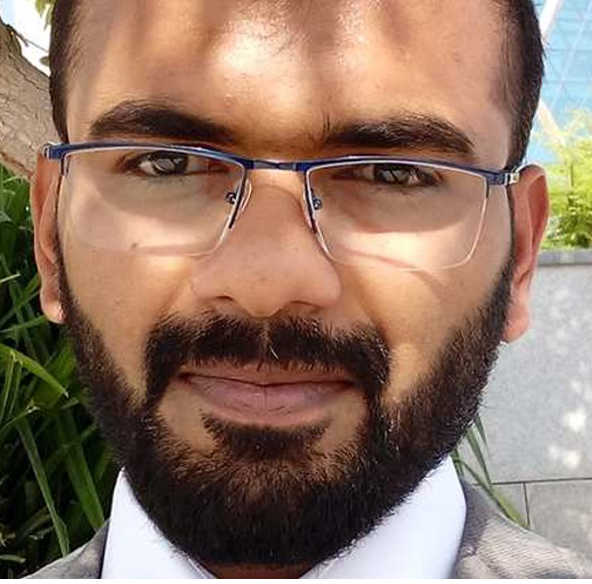
"The flight simulator helped me to simulate flight conditions and study how the design of an aircraft has an impact during its flight."
Aboobakar Shahjahan, Aeronautical Engineering Graduate
/filters:format(webp)/prod01/channel_2/media/university-of-south-wales/site-assets/images/06-locations/61-cardiff/cardiff-study-spaces-library-56702.png)
/filters:format(webp)/prod01/channel_2/media/university-of-south-wales/site-assets/images/01-campus-and-facilities/12-campus-spaces/campus-spaces-cardiff-library-pod.jpg)
Explore our facilities
/filters:format(webp)/prod01/channel_2/media/university-of-south-wales/site-assets/images/03-courses/engineering-aerospace/bsc-aircraft-maintenance-engineering-foundation-year.png)
/filters:format(webp)/prod01/channel_2/media/university-of-south-wales/site-assets/images/14-features/features-eachan-hardie.jpg)
Admissions Advice
We're here to help. Whether you a have a question about your course, fees and funding, the application process or anything else, there are plenty of ways you can get in touch and we'd to talk to you. You can contact our friendly admissions team by phone, email or chat to us online
-
Aerospace Systems Engineering
-
Full-time, 3 years
-
September
-
Pontypridd
-
Related stories and highlights
/filters:format(webp)/prod01/channel_2/media/university-of-south-wales/site-assets/images/news/2025/09-september/news-september-calon-emma.jpg) News Article
News Article
/filters:format(webp)/prod01/channel_2/media/university-of-south-wales/site-assets/images/news/2026/02-february/news-february-kaba.jpg)
/filters:format(webp)/prod01/channel_2/media/university-of-south-wales/site-assets/images/08-subjects/engineering-aerospace/Flight-Simulator-Exercise_41502.jpg)
/filters:format(webp)/prod01/channel_2/media/university-of-south-wales/site-assets/images/13-video-thumbnails/Innovation-Hub-screenshot.png)
/filters:format(webp)/prod01/channel_2/media/university-of-south-wales/site-assets/images/14-features/features-aboobakar.png)
/filters:format(webp)/prod01/channel_2/media/university-of-south-wales/site-assets/images/07-student-life/72-students-union/student-life-students-union--52621.jpg)