Applied Biology
Explore biology in its widest sense with a degree that combines hands-on learning through lab work and field trips with theory.
How to apply Apply through UCAS Book an Open Day Chat to us/filters:format(webp)/prod01/channel_2/media/university-of-south-wales/site-assets/images/03-courses/biological-sciences/biological-sciences-bsc-biology-placeholder-01.png)
UCAS Code
Start Date
September 2027
Location
Pontypridd
Campus Code
A
Course Overview
Explore this foundational science in-depth, discovering the evolutionary, physiological, molecular, and ecological processes driving all life on Earth. Combining outstanding field work opportunities with cutting-edge facilities, you’ll go broad, then choose to specialise in this well-rounded degree.
Why study this course?
What you'll study
Year One lays the foundation for further study.
A “Key Skills” module provides a background in scientific research, while all other modules begin your journey across various levels of biological complexity.
An introduction to scientific reading and writing skills, referencing, critical analysis of published work, and statistical principles.
*These modules can be studied 25% through the medium of Welsh
Study principles of genetics and evolutionary theory. Understand molecular genetics, including structure and organisation of DNA and DNA replication, and factors driving evolution.
Explore how different cellular components in both prokaryotic and eukaryotic organisms contribute to function. Learn basic microbiology lab techniques.
*This module can be studied 25% through the medium of Welsh
Get to grips with organisational structures and functions of the human body and biochemical principles underlying chemical processes in biological systems.
Learn the principles and methodologies of taxonomy and classification of living organisms. Apply theory to field and lab work, developing your practical skills.
Study ecological theory; through lecture, field and practical lab work, identify and critically evaluate ecological hierarchy, processes, cycles and successions.
Year Two advances concepts introduced in Year One and provides more opportunity for applying your knowledge.
Students have a choice of modules to allow for either a field or laboratory emphasis in Year Two.
Build your competency in data acquisition, manipulation and science communication using statistical analysis, bioinformatics, cartography and spatial analysis.
*These modules can be studied 25% through the medium of Welsh
Explore the history, development and controversies within evolutionary theory. This module is student-driven and discursive, allowing you to engage deeply.
Cover molecular genetics and genetic basis of inherited disorders. Learn theoretical and practical applications of key molecular biology techniques and their use.
Combining Earth history with anatomical form and physiological function, you’ll study the evolution of the vertebrate classes and their comparative lifestyles.
Gain an understanding of the beneficial and harmful human interactions with a wide variety of microorganisms. Develop safe working practices with human pathogens in a laboratory environment and competence in core microbiological laboratory skills for the identification of bacterial pathogens.
*This module can be studied 25% through the medium of Welsh
Develop a grounding in behavioural ecology and use theoretical frameworks to understand the interaction between behaviour, ecology and evolution.
On an international residential trip, combine theory, case studies and fieldwork in tropical landscapes to explore ecology and conservation. (Optional. Additional cost).
Gain technical lab experience in a range of microscopy techniques for analysing biological and geological materials, considering factors affecting sample preservation and quality.
An optional opportunity to work with an employer or on a simulated employer placement. You could be offered a placement or arrange one yourself.
Follow your own interests with a self-directed dissertation, investigating a subject you’re intrigued by.
In this final year, you can choose from a range of optional modules depending on what you enjoy and your career plans.
Culminating in presenting at a conference, learn project planning, research and professional skills through your research project.
*This module can be studied 25% through the medium of Welsh
Consider what it is to be human; critically analyse conflicting theories in palaeoanthropology, behavioural ecology, and evolutionary theory.
Study human biological variation inc. evolutionary foundations. Cover historical views including “race” science and biological determinism, contrasting with contemporary approaches.
Explore inequality’s impact on health and wellbeing. Biological, environmental, economic, and political factors as drivers of public health inequality.
*This module can be studied 25% through the medium of Welsh
Apply your scientific knowledge and skills to the interpretation of ecological responses to anthropogenic impacts, including climate change, land and sea use change.
Apply genetic and tissue engineering approaches for medical application and drug discovery and learn how novel approaches to diagnosis and treatment can manage human diseases.
Demonstrate an understanding of aquatic ecosystems, their ecological systems and processes, the physiology and behaviour of their plants and animals that inhabit them.
Develop an understanding of current and emerging technological developments in ecology and wildlife conservation. Including how to integrate technology into ecological practices correctly and effectively.
We regularly review our courses to keep pace with changing skills and employer needs. If a review leads to significant changes, we’ll contact you to explain what’s changing for the coming year.
Teaching and Assessment
You’ll learn through group activities, lectures, laboratory sessions, tutorials, directed learning, online activities, and both UK and overseas field trips. The number of contact hours per week will vary, but on average you can expect 10-12 contact hours a week. You will also need to spend a significant amount of time each week on preparation for classes, background reading, revision, or working on assignments.
In your second year, there’s an optional overseas field trip, Applied Tropical Conservation, which gives students the opportunity to learn to scuba dive and develop their knowledge of terrestrial and marine tropical ecosystems.
You’re skills and biological understanding will be assessed through various methods including exams, coursework and practical tasks.
Discover the diverse world of biology as you learn through group activities, lecturers, laboratory sessions, tutorials, directed learning, online activities and both UK and overseas fieldtrips.
You’ll have the opportunity to take part in an optional Professional Practice and Placement module, providing you with either work experience with an employer or on a simulated employer placement. You can either work at an organisation in their place of work or do a simulated placement by working on a live project or brief online.
We will support you with looking for placement opportunities, but you’ll also need to put time and energy into finding them. This process is supported by our professional services team.
Our George Knox laboratories are part of a £15m investment, meaning you will be taught in new and well-equipped spaces. You will benefit from several well-equipped laboratories and rooms for practical and project work, including:
- Microbiology laboratory capable of handling pathogens (category 2)
- Molecular biology laboratory for DNA isolation and analysis
- Projection microscopes in the microbiology and microscopy laboratories for group teaching
- General biology laboratories for teaching, including a range of skeletons for vertebrate zoology
- Computer rooms with specialist GIS software to support your learning
Course Leader
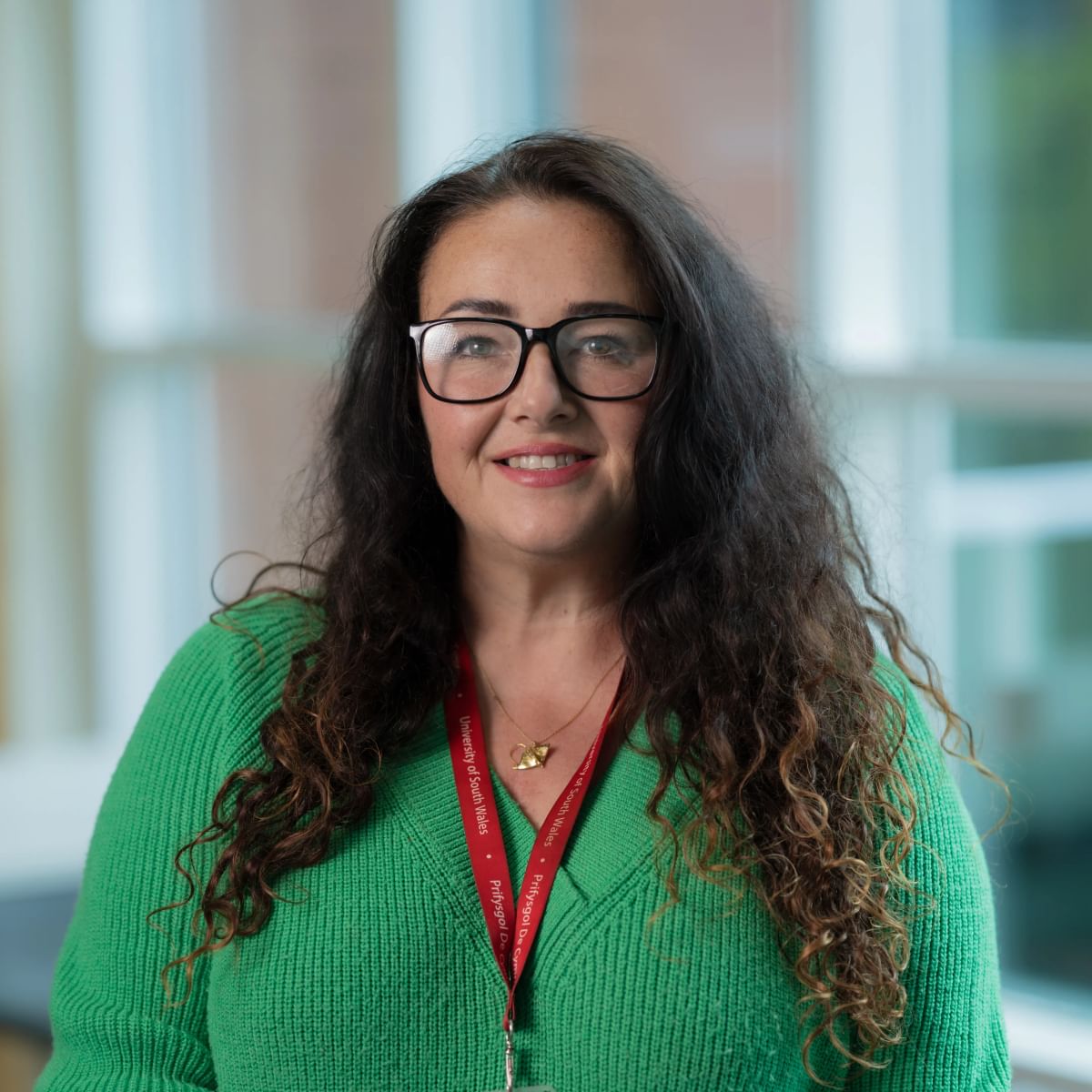
Natalie Lubbock
Natalie is passionate about habitat restoration and the “One Health” message, with a keen focus on sustainability in her teaching. She is a Scientific Dive Master with 2,000+ hours of underwater experience on top of her extensive field experience and time as an academic.
Natalie has 12 years or lecturing and extensive field experience, from running marine sites in Central America to expeditions in Borneo, and she brings world-class expertise to the classroom. Natalie’s research investigates the ecological consequences of Long-spined Sea Urchin dieback on degraded Caribbean coral reefs. Her doctoral research is supported by Operation Wallacea.
/filters:format(webp)/prod01/channel_2/media/university-of-south-wales/site-assets/images/06-locations/61-cardiff/cardiff-study-spaces-library-56702.png)
/filters:format(webp)/prod01/channel_2/media/university-of-south-wales/site-assets/images/01-campus-and-facilities/12-campus-spaces/campus-spaces-cardiff-library-pod.jpg)
Explore our facilities
/filters:format(webp)/prod01/channel_2/media/university-of-south-wales/site-assets/images/03-courses/chemical-and-pharmaceutical-sciences/Pharmaceutical-Science_56953.png)
Admissions Advice
We're here to help. Whether you a have a question about your course, fees and funding, the application process or anything else, there are plenty of ways you can get in touch and we'd to talk to you. You can contact our friendly admissions team by phone, email or chat to us online
-
Applied Biology
-
Full-time, 3 years
-
September
-
Pontypridd
-
Related stories and highlights
/filters:format(webp)/prod01/channel_2/media/university-of-south-wales/site-assets/images/13-video-thumbnails/Biology-thumbnail.png)
/filters:format(webp)/prod01/channel_2/media/university-of-south-wales/site-assets/images/13-video-thumbnails/FIELDWORK_PORTRAIT_ENG.png)
/filters:format(webp)/prod01/channel_2/media/university-of-south-wales/site-assets/images/07-student-life/72-students-union/student-life-students-union--52621.jpg)