Biomedical Science including Foundation Year
Biomedical Science at USW explores how the healthy human body works, from organ systems to cells, genes, and biochemistry, helping you understand how life functions and how everything connects.
How to apply Apply through UCAS Book an Open Day Chat to Us/prod01/channel_2/media/university-of-south-wales/site-assets/images/03-courses/biological-sciences/bsc-biomedical-science-foundation-year.png)
Key Course Details
-
UCAS Code
B90F
-
Start Date
September
-
Location
Pontypridd
-
Campus Code
A
Fees
International students
£17,600*
You will study how diseases develop, how they are investigated, how treatments work, and how new therapies can be researched and developed to improve lives.
DESIGNED FOR
Prepare students for graduate careers in the biomedical sciences, in academic and industry research environments, or further education (e.g. PhD) by developing specific knowledge and competence that underpins Biomedical Science. Prepare potential candidates for admission to graduate entry Medicine.
Accredited by
- Royal Society of Biology
Career Paths
- Research in universities, research institutes and the pharmaceutical industry
- Clinical Scientist/Medical laboratory scientific officers
- Further study at MSc and PhD level
- Publish health or Forensic labs
- Medical writing and publishing
Skills taught
- Data collection and analysis
- Safe working practice in laboratories
- Scientific research skills
- Use of laboratory analytical equipment and interpretation
- Critical evaluation of scientific information and research


Course Highlights
Module Overview
In your Foundation Year, you’ll explore biology, chemistry, and real-world challenges, build practical, academic, and teamwork skills, and develop curiosity, confidence, and problem-solving abilities to prepare for future study and impact.
Starting your University Journey
This module helps you develop academic, personal and professional skills for university study. You’ll reflect on your progress, build confidence, and create an evidence-based portfolio to support your future learning.
The Science of Life: Foundations in Biology
You’ll explore core biological principles from molecules to whole organisms, develop practical laboratory skills, and use real-world examples to support your learning and prepare you for further study in the life sciences.
Chemistry in Action: Science That Shapes the World
You’ll develop an understanding of key chemical concepts, from molecules to reactions, build practical laboratory skills, and gain essential experience to support your future scientific studies.
The Impact Challenge
You’ll work in teams with other Foundation Year students to tackle real-world challenges, developing solutions through research, curiosity, collaboration, and responsible problem-solving while building skills that will support your future studies.
Course Highlights
How you'll learn
You’ll learn by doing, through real-world activities that help you understand how learning works at university. You’ll be encouraged to ask questions, explore new ideas and work with others, as well as independently. Teaching builds confidence, critical thinking and reflection, supported by digital tools. Regular feedback helps you track progress, plan next steps and build resilience and a strong sense of belonging as you prepare for higher-level study.
/prod01/channel_2/media/university-of-south-wales/site-assets/images/03-courses/biological-sciences/biological-sciences-bsc-biology-placeholder-02.png)
How you'll be assessed
You’ll be assessed in different ways, including short tasks, coursework, presentations, and group work. Early assessments are designed to support your learning and help you understand what is expected at university. Most assessments are coursework-based and help you develop key skills such as research, academic writing, teamwork, and communication. You’ll also reflect on your progress and use university systems and digital tools. Clear, timely feedback will help you understand how to improve and support your next steps.
/prod01/channel_2/media/university-of-south-wales/site-assets/images/03-courses/biological-sciences/bsc-biomedical-science.png)
Placements
After your Foundation Year, as you progress onto your degree, you’ll have opportunities to gain real-world experience through professional placements. A Summer Placement runs at the end of your second year, between June and September, giving you the chance to work or volunteer with an employer, community group, or research-active teaching staff.
A Sandwich Placement lasts a full year after your second year, allowing you to step into a professional environment, develop practical skills, and build confidence. Both options are designed to help you grow, explore your potential, and prepare for a successful career.
/prod01/channel_2/media/university-of-south-wales/site-assets/images/03-courses/biological-sciences/biological-sciences-bsc-biology-placeholder-01.png)
Facilities
Our Glyntaff campus provides a range of modern laboratory facilities including:
- Category II microbiology labs for the growth and analysis of micro-organisms
- Molecular analysis labs for advanced DNA analysis and sequencing
- Tissue culture facilities for the growth of cells
- Biology labs with a wide range of anatomical models and microscopes
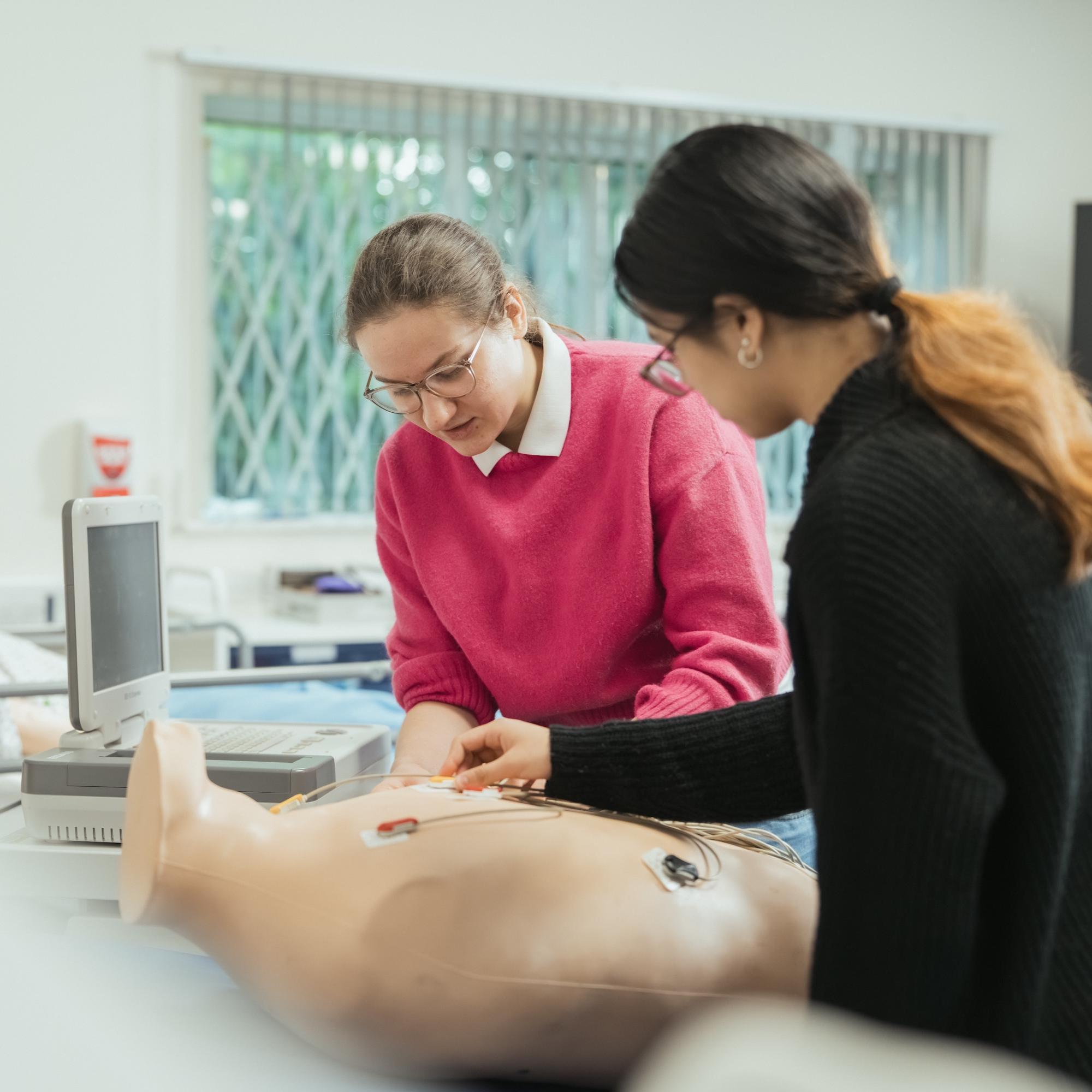
- Clinical Skills room with simulation mannequins for applied physiology teaching.
- Coagulation laboratory for the analysis of blood clotting
/prod01/channel_2/media/university-of-south-wales/site-assets/images/03-courses/biological-sciences/biological-sciences-bsc-international-wildlife-biology-placeholder-02.png)
Ella Mugford
Biomedical Science student
Clare Wilkie
Biomedical Science student

Jakob
Forensic Investigation student

Emma Barrett
Forensic Investigation student
Emily Rees
Forensic Science graduate
/prod01/channel_2/media/event-graduation-cardiff-28660-857X857.jpg)
/prod01/channel_2/media/university-of-south-wales/site-assets/images/01-campus-and-facilities/12-campus-spaces/campus-spaces-newport-library-27766-785X785.jpg)
/prod01/channel_2/media/university-of-south-wales/site-assets/images/01-campus-and-facilities/12-campus-spaces/campus-spaces-newport-library-27717-857X857.jpg)
ENTRY REQUIREMENTS
UCAS points: 48 (or above)
Typical qualification requirements:
- A Level: DD, 48 tariff points to include a relevant Science subject but exclude General Studies.
- Welsh BACC: N/A
- BTEC: BTEC Extended Diploma Pass Pass Pass or BTEC Diploma Pass Pass in a relevant subject.
- Access to HE: Pass Access to HE Diploma in Science with a minimum of 48 UCAS Tariff points.
- T Level: Pass (D or E).
Additional requirements include:
The University normally requires a minimum 3 GCSEs including Mathematics and English at Grade C/Grade 4 or above, or their equivalent but consideration is given to individual circumstances
International applications welcomed:
We welcome international applications with equivalent qualifications of our entry requirements. For more details related to your country of residence, please view our dedicated country pages.
English language requirements
International applicants will need to have achieved an overall of IELTS 6.0 with a minimum of 5.5 in each component/TOEFL 4 overall and a minimum of 4 in each component or equivalent.
Equivalents can be located on our English Language pages.
If you have previously studied through the medium of English, IELTS might not be required, please visit our country specific page for further details. If your country is not featured, please contact us.
If you do not meet the English entry criteria, please visit our Pre-Sessional course pages.
Contextual offers
We may make you a lower offer based on a range of factors, including your background (where you live and the school or college that you attended, for example), your experiences and individual circumstances (as a care leaver, for example). This is referred to as a contextual offer, and we receive data from UCAS to support us in making these decisions.
USW prides itself on its student experience and we support our students to achieve their goals and become a successful graduate. This approach helps us to support students who have the potential to succeed and who may have faced barriers that make it more difficult to access university.
We're here to help
Whether you a have a question about your course, fees and funding, the application process or anything else, there are plenty of ways you can get in touch, and we'd love to talk to you. You can contact our friendly admissions team by phone, email or chat to us online.
Fees and Funding
£17,600
per year*Additional Costs
Whilst in most cases these resources are more than sufficient in supporting you with completing your course, additional costs, both obligatory and optional, may be required or requested for the likes of stationery, printing, or equipment during your foundation year. For costs after you progress to year 1 of your degree programme, please see the list below.
/prod01/channel_2/media/university-of-south-wales/site-assets/images/01-campus-and-facilities/16-pontypridd-facilities/162-glyntaff-facilities/campus-facilities-glyntaff-forensic-lab-35437.jpg)
Course Kit Bursary
As a student of BSc (Hons) Biomedical Science, you'll receive a USW-branded lab coat and goggles when you enrol, to support you with course costs.
University Quality Assurance
At USW, we regularly review our courses in response to changing patterns of employment and skills demand to ensure we offer learning designed to reflect today’s student needs and tomorrow’s employer demands.
If during a review process course content is significantly changed, we’ll write to inform you and talk you through the changes for the coming year. But whatever the outcome, we aim to equip our students with the skillset and the mindset to succeed whatever tomorrow may bring. Your future, future-proofed.
Life at USW
Halls are a big part of your student experience and there’s accommodation at all three of our locations. If you don’t want to live near the campus, there are great transport links to keep you connected.
/prod01/channel_2/media/university-of-south-wales/site-assets/images/07-student-life/75-cafe-bars-pubs/student-life-students-on-campus-treforest-su-52657.jpg)
/prod01/channel_2/media/university-of-south-wales/site-assets/images/01-campus-and-facilities/11-campus-exterior-shots/campus-exterior-glyntaff-alfred-russell-wallace-sunshine-7472.jpg)
/prod01/channel_2/media/university-of-south-wales/site-assets/images/02-accommodation/23-pontypridd-accommodation/accommodation-pontypridd-double-room-50964.jpg)
How to apply
There are still places available for September 2026. Apply through Clearing and get support and benefits worth up to £3k. Call our admissions team to secure your place: 03455 76 06 06 or apply online now.
You can apply to us directly for all part-time undergraduate courses, if you’re seeking advanced entry or you’re an international student. To apply directly, please choose the application form below for your preferred start date and mode of study (full-time or part-time).
Advanced entry
If you already have a relevant qualification or experience related to the course you're applying for, you may be eligible to start at a later stage of the course. For example, students from partner colleges can ‘top up’ their qualifications to a degree by joining us in Year Two or Year Three of a course. This process is known as ‘advanced entry’, you can apply directly to the University for 'advanced entry' using the application forms provided above.
Applicants accepted through advanced entry may study a different combination of modules to those advertised, as they will be joining a course already in progress. You will be contacted and advised about these modules once your application has been processed and an offer made.
International admissions
International applicants can apply to us directly. If the University has an in-country team in your region, your application will be assigned to them for assistance.