Sound, Lighting and Live Event Technology
Develop the technical skills behind live events, from sound and lighting to video, networking and power systems.
How to apply Apply through UCAS Book an Open Day Chat to us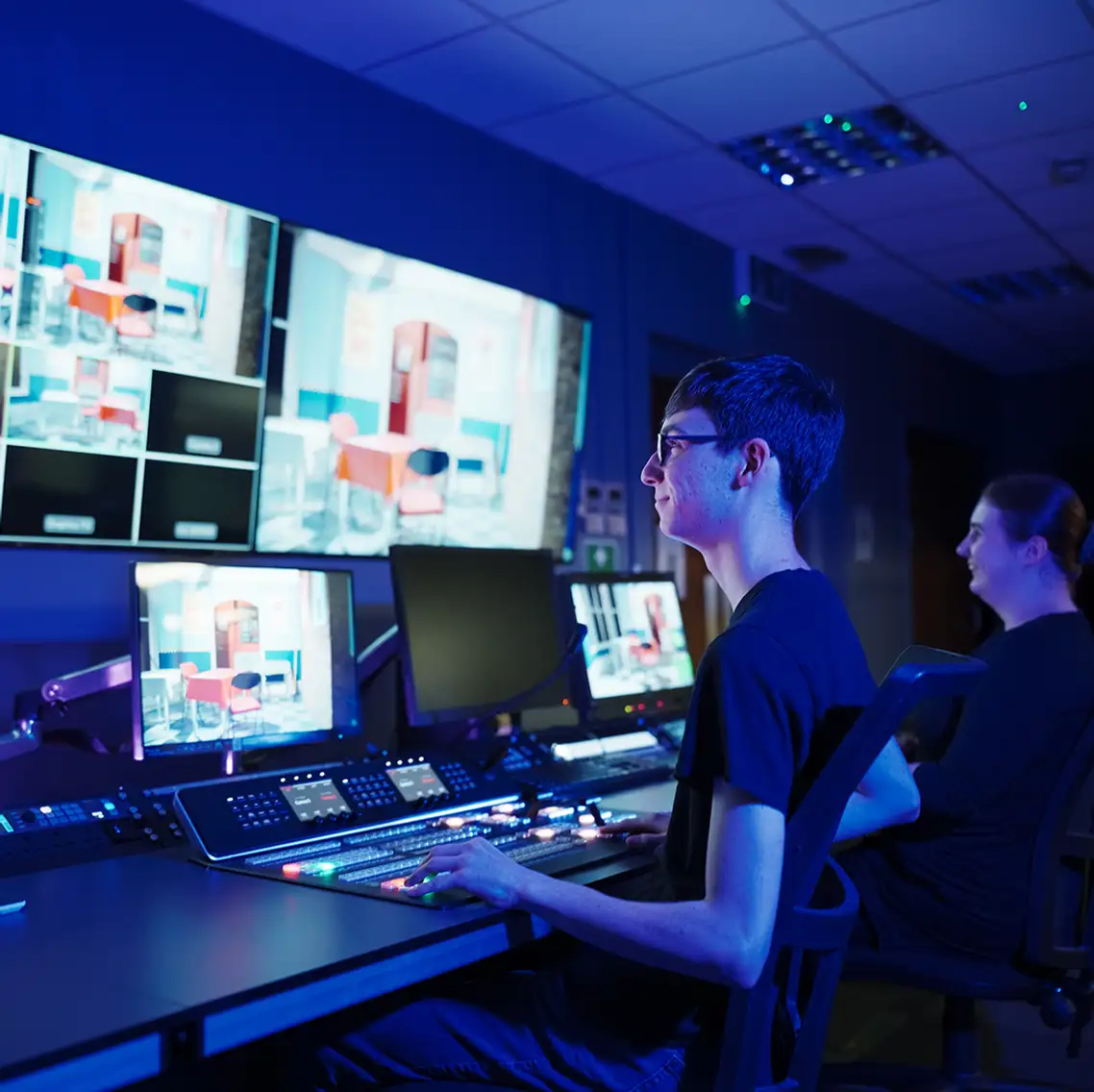
UCAS Code
J994
Start Date
September 2027
Location
Cardiff
Campus Code
B
UCAS Points
96
International students: £17,600*
UCAS Code
J995
Start Date
September 2027
Location
Cardiff
Campus Code
B
UCAS Points
96
Course overview
You'll learn from industry specialists, be connected to the industry during your study and graduate ready for careers across the entertainment and events industries.
Develop key skills and knowledge around safe and effective practice before refining your craft and creativity through live projects and work experience. Gain knowledge that is practically experienced, before choosing your specialisms and preparing for the world of work.
Why study this course?
What you'll study
Build the foundational skills, knowledge and professional habits that support your future development and get some experience working for real clients, with plenty of opportunities for work experience alongside your study.
Get used to safety as a culture, learn the industry language and get rid of any bad habits you may have picked up previously.
Get to grips with the electrical systems that underpin everything you’ll do, as well as the visual and auditory concepts involved in the live event experience.
A simple but comprehensive introduction to modern theatre technology and techniques, as well as a looking at history and developments over time.
Experiment with light and sound solutions to support a live music performance. You’ll also learn some of the business skills required to be a successful freelancer.
Explore the software packages available to bring artistic and logistic ideas to life and solve technical problems.
Analyse and build systems to solve audiovisual (AV) problems, working in groups as you understand their fundamental and practical operation.
Learn how to work collaboratively with other departments – key to delivering safe and profitable events.
Build confidence in the critical areas of rigging, power and networking, and refine your sound and lighting craftsmanship so you can take a holistic approach to system design.
Explore the unique challenges and solutions of recording for the screen, covering various techniques and installation options for lighting and sound.
A look under the hood of familiar network environments, seeing how they apply to live events and exploring the challenges of wireless systems at live events.
The events industry relies on safe and effective rigging to create impressive production designs, and this module teaches you best-practice rigging skills.
Learn to effectively manage the complex workflow and systems involved in an as-live recorded, streamed or live broadcasted event.
Learn how to design, set up and operate large-scale power systems, covering key features such as safety, redundancy and sustainability.
Develop the craft of designing and deploying audio systems and sound reproduction solutions to suit different venues, audiences and artist profiles.
Experiment with various hardware and software lighting control systems in different contexts, as you develop your own preferences and methodology.
An optional sandwich year placement where you can spend time working in the live events industry – an opportunity to build your skills, experience and network.
Choose your specialisms, complete projects in your areas of interest and showcase your technical prowess and creativity.
You will play a key role in supporting many University and external real-client events, focussing on developing the soft skills and business knowledge that helps you thrive as an employee or freelancer.
Build on your previous knowledge as you develop the high-level planning and testing skills required to successfully install permanent AV systems.
Reflect on and develop the practical and ‘soft’ skills required to manage projects, ensure strong client and peer relationships and become a high-value contractor.
Play a key role in USW's very own established Immersed Festival as you showcase your skills and solve real technical challenges in a live environment.
Work on an industry-related project, either research-based or practical, following a line of your interest and showcasing your in-depth knowledge.
Use media servers, live-generated content, LED screens and projection to create and evaluate an integrated visual media piece supporting a live performance.
Develop specialist skills and solve complex problems as you work with advanced elements such as augmented and virtual reality (AR/VR), motion capture and UHD2.
Research and design immersive and innovative audio solutions using advanced technologies such as wireless (RF) and digital (IP) audio signal integration.
Explore complex and futuristic lighting technology used in increasingly innovative displays, including IP integration, multi-protocol and multi-control interface setups.
We regularly review our courses to keep pace with changing skills and employer needs. If a review leads to significant changes, we’ll contact you to explain what’s changing for the coming year.
Teaching and assessment
You'll learn through a combination of lectures, practical workshops, technical demonstrations and project work, building your knowledge alongside hands-on experience. You'll be taught by lecturers with up to date industry expertise and learn from visiting professionals who share current practices and technologies. Assessment is coursework-based, giving you the opportunity to apply your skills throughout the course.
From your first year, you'll spend time in specialist facilities using professional sound, lighting and video equipment. You'll work on practical projects, support live productions and collaborate with students across creative disciplines, developing the technical and teamwork skills needed in the live events industry. Guest speakers, industry partnerships and an optional placement year provide further opportunities to build your experience and professional network.
Assessment is in-line with industry skills, there are no formal written exams. Instead, you'll be assessed through practical projects, technical production work, presentations, reports, class tests and portfolio-based assignments. These assessments reflect the way you'll apply your skills in a professional environment, helping you demonstrate both your technical knowledge and problem-solving ability.
Everything you learn is directly linked to industry requirements and practices. Our partnership with Stage Sound Services enables regular live projects and guest lectures, which give you real-world experience. A course highlight is the Immersed Festival, where you’ll deliver all the technical support as USW’s creative sectors converge in one spectacular event. You also have the option of a placement after the second year, where our staff and careers team can support you in finding a year-long industry opportunity. Many of our students also enjoy seasonal work experience from the very beginning of the course in Cardiff based venues and beyond.
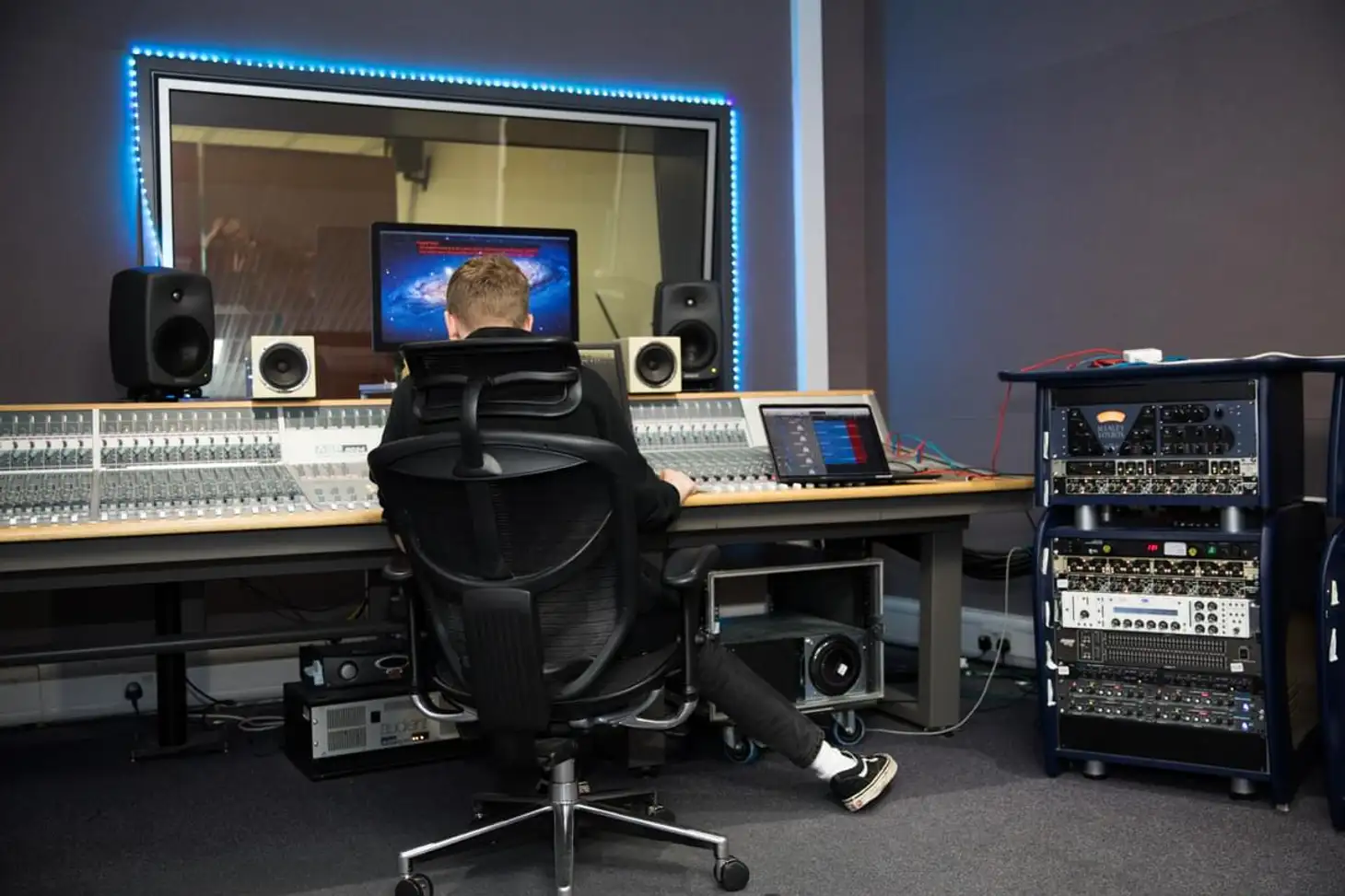
Our Production Partners enable demos and training on the very latest equipment, meaning you’re ready to enter the industry at a high level. You’ll have access to an experimentation and networking lab, TV studio, theatre, live music spaces, 3D printing and general workshop and high-spec PC labs for rendering lighting and sound designs. We partner with specialist companies for power systems and ‘big build’ training, and we regularly invest in our facilities, such as our recently refurbished theatre and TV control rooms.
Course Leader
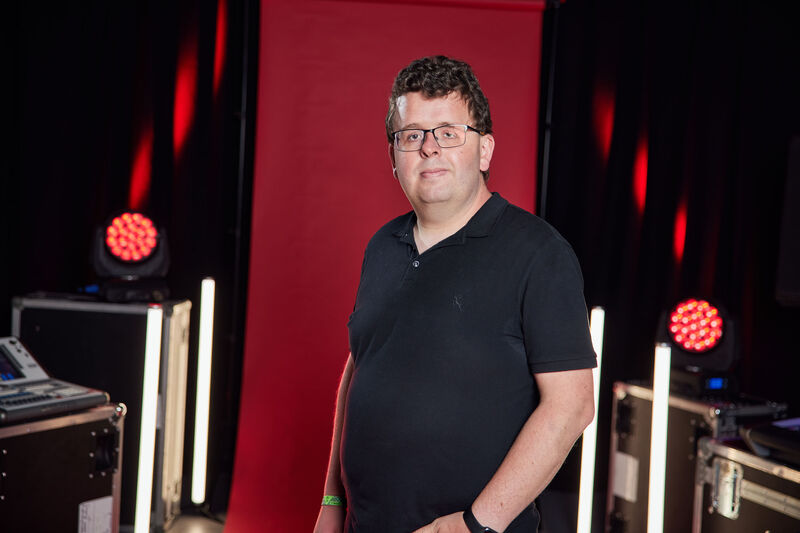
Philip Hughes
Meet Philip Hughes, audio and video systems specialist, MD of Magnum PA Ltd - a production company delivering event solutions around the UK and Course Leader for Sound, Lighting and Live Event Technology BSc. Phil ensures that the course aligns with industry needs and that the content is relevant to how things are done in the real world. Phil is passionate about delivering the next generation of event professional. Reach out via email to ask him about the course and starting or continuing your journey into the industry.
Entry requirements
Additional requirements include:
The University normally requires a minimum 5 GCSEs including Mathematics/Numeracy and English at Grade C or Grade 4 or above, or their equivalent, but consideration is given to individual circumstances.
Contextual offers
We may make you a lower offer based on a range of factors, including your background (where you live and the school or college that you attended, for example), your experiences and individual circumstances (as a care leaver, for example). This is referred to as a contextual offer, and we receive data from UCAS to support us in making these decisions.
USW prides itself on its student experience and we support our students to achieve their goals and become a successful graduate. This approach helps us to support students who have the potential to succeed and who may have faced barriers that make it more difficult to access university.
How to applyContextual admissions policyAsk us a question96 UCAS points or above
Typical qualification requirements
A Level:
CCC to include a relevant subject
Welsh BACC:
Pass the Advanced Welsh Baccalaureate Diploma with C in the Skills Challenge Certificate and CC at A Level with a relevant subject
BTEC:
Merit Merit Merit in a relevant subject
Access to HE:
Pass the Access to HE Diploma with a minimum of 96 UCAS tariff points.
T Level:
Pass (C and above)
International applications welcomed:
We welcome international applications with equivalent qualifications of our entry requirements. For more details related to your country of residence, please view our dedicated country pages.
International studentsPre-Sessional EnglishEnglish language requirements
International applicants will need to have achieved an overall of IELTS 6.0 with a minimum of 5.5 in each component/TOEFL 4 overall and a minimum of 4 in each component or equivalent.
Equivalents can be located on our English Language pages.
If you have previously studied through the medium of English, IELTS might not be required, please visit our country specific page for further details. If your country is not featured, please contact us.
If you do not meet the English entry criteria, please visit our Pre-Sessional course pages.
Fees and Funding
Studying at university is one of the most significant investments you'll ever make. Whilst you’re studying, you’ll have two main financial obligations – tuition fees and living costs. There’s lots of financial help available from the University of South Wales and external funding sources, that may provide loans (which have to be paid back) and grants, scholarships and bursaries (that don't).
*Full-time fees are per year. Part-time fees are per 20 credits. Once enrolled, the fee is anticipated to remain at the same rate throughout the duration of your study on this course except as described below.
Please be aware that we may increase the maximum fee for home students on full-time undergraduate courses only where the Welsh Government increases the permitted level of inflation of fees. Fees for all students (including part-time, postgraduate and international students) may be amended in accordance with our applicable Fees and Debt Management Policy. We will ensure that students are given clear, intelligible, unambiguous and timely information about our courses and costs in good time, ahead of the next academic year.
As a student of USW, you’ll have access to lots of free resources to support your study and learning, such as textbooks, publications, online journals, laptops, and plenty of remote-access resources. Whilst in most cases these resources are more than sufficient in supporting you with completing your course, additional costs, both obligatory and optional, may be required or requested for the likes of travel, memberships, experience days, stationery, printing, or equipment.
Equipment
Only required where students wish to make use of specialist software packages outside of USW spaces, such as when freelancing. Software package licences used in Event Production range in pricing; all required software packages, their licenses and associated computing to run these are provided to students by USW during their time of study.
Cost: £600-£2000
Study Trips
Study trips vary annually depending on what events are happening or which companies offer to host students for learning days.
Cost: £100-£400
Travel
Students may be expected to travel to master classes/ conferences / events/ performances at their own cost (all academic years).
Cost: £150
per year
Studying at university is one of the most significant investments you'll ever make. Whilst you’re studying, you’ll have two main financial obligations – tuition fees and living costs. There’s lots of financial help available from the University of South Wales and external funding sources, that may provide loans (which have to be paid back) and grants, scholarships and bursaries (that don't).
*Full-time fees are per year. Part-time fees are per 20 credits. Once enrolled, the fee is anticipated to remain at the same rate throughout the duration of your study on this course except as described below.
Please be aware that we may increase the maximum fee for home students on full-time undergraduate courses only where the Welsh Government increases the permitted level of inflation of fees. Fees for all students (including part-time, postgraduate and international students) may be amended in accordance with our applicable Fees and Debt Management Policy. We will ensure that students are given clear, intelligible, unambiguous and timely information about our courses and costs in good time, ahead of the next academic year.
As a student of USW, you’ll have access to lots of free resources to support your study and learning, such as textbooks, publications, online journals, laptops, and plenty of remote-access resources. Whilst in most cases these resources are more than sufficient in supporting you with completing your course, additional costs, both obligatory and optional, may be required or requested for the likes of travel, memberships, experience days, stationery, printing, or equipment.
Equipment
Only required where students wish to make use of specialist software packages outside of USW spaces, such as when freelancing. Software package licences used in Event Production range in pricing; all required software packages, their licenses and associated computing to run these are provided to students by USW during their time of study.
Cost: £600-£2000
Study Trips
Study trips vary annually depending on what events are happening or which companies offer to host students for learning days.
Cost: £100-£400
Travel
Students may be expected to travel to master classes/ conferences / events/ performances at their own cost (all academic years).
Cost: £150

Explore our facilities
Media Loans
Access industry-standard cameras, lighting, sound and recording gear, supported by free Media Loans and experienced technicians. We have everything you need to help you experiment, refine and bring your work to life with confidence.
How to apply
All applications for full-time undergraduate courses or foundation degrees should be made via UCAS. Take the next step: Apply through UCAS
You can apply to us directly for all part-time undergraduate courses, if you’re seeking advanced entry or you’re an international student. To apply directly, please choose the application form below for your preferred start date and mode of study (full-time or part-time).
-
Apply direct
Sound, Lighting and Live Event Technology
-
Full-time, 3 years
-
September
-
Cardiff
-
-
Apply direct
Sound, Lighting and Live Event Technology
-
Sandwich, 4 years
-
September
-
Cardiff
-
If you already have a relevant qualification or experience related to the course you're applying for, you may be eligible to start at a later stage of the course. For example, students from partner colleges can ‘top up’ their qualifications to a degree by joining us in Year Two or Year Three of a course. This process is known as ‘advanced entry’, you can apply directly to the University for 'advanced entry' using the application forms provided above.
Applicants accepted through advanced entry may study a different combination of modules to those advertised, as they will be joining a course already in progress. You will be contacted and advised about these modules once your application has been processed and an offer made.
International applicants can apply to us directly. If the University has an in-country team in your region, your application will be assigned to them for assistance.
Related stories and highlights

 Success Story