Game Design
Build your creative and technical skills to design, develop and take your own games to market.
How to apply Register for open day Chat to us/filters:format(webp)/prod01/channel_2/media/university-of-south-wales/site-assets/images/03-courses/animation-and-games/ba-computer-games-design.jpg)
UCAS Code
I610
Start Date
September 2026
Location
Cardiff
Campus Code
B
UCAS Points
96
Fees
Home students: £9,790*
International students: £16,800*
UCAS Code
I610
Start Date
September 2027
Location
Cardiff
Campus Code
B
UCAS Points
96
International students: £17,600*
Course Overview
Create and produce games from day one.
Enjoy hands-on experiences at gaming events, submit your work to national competitions such as Tranzfuser, and connect with industry experts. Use top-quality labs with Unreal Engine and Adobe Suite and build your network within the games industry .
Partnerships
/prod01/channel_2/media/university-of-south-wales/site-assets/images/09-logos/logo-design-unreal-engine-partnership.png)
Unreal Engine Academic Partner
Why study this course?
What you'll study
Start by exploring the essentials and creating games immediately. In your first six weeks, you'll craft your debut game and build at least three by year’s end.
With practical modules on Level Design, Game Mechanics and World Building, you’ll blend creativity with technical skills from the start.
Create digital prototypes and explore game structures, mechanics and narratives. Experiment with rules and aesthetics while developing, pitching and producing games through projects.
Develop and produce a game in groups, focusing on mechanics and iterative design. Use research, experimentation and feedback. Boost skills through studio work and an immersive project.
Explore game design theory with hands-on engine work. Create levels by focusing on planning, playtesting and iterative design. Develop and showcase through independent and joint learning.
Explore theory and practice in Game Studies. Research, debate and analyse games to understand development and culture. Develop critical skills for academic and practical insights.
Develop skills in evaluating and solving design problems with a focus on player-centric design. Communicate game concepts through practical exercises and real-world challenges.
It’s time to tackle sophisticated projects with live briefs, creating polished, pitch-ready games for industry pros.
Explore areas like Systems and Mechanics or Game Asset Production, and deepen your understanding of design theories. Specialise in your areas of interest to prepare for your final year.
Push the boundaries of game design by exploring innovative gameplay, new tech and unique themes. Create a playable demo from a brief, focusing on originality and practical execution.
Create a game based on a client brief, working in teams and collaborating with other courses. Develop professionalism and industry-relevant skills by learning how to pitch and present to industry veterans.
Master game content production with a focus on workflows and engine pipelines. Balance aesthetics, creativity and technical limits through hands-on exercises.
Explore advanced game studies through research and debate. Engage in critical discussions, develop intellectual arguments, and refine your research skills with peer and staff guidance.
The final year is your time to shine! You'll prototype and produce a professional-level game, creating standout work for your portfolio.
Learn how to showcase your skills, apply for jobs, and nail interviews. Your dissertation will let you deep dive into a game design topic you're passionate about.
Explore and experiment to develop a functional game prototype, focusing on core mechanics, player experience and style. Develop prototypes and design docs, using your skills and self-directed learning to prepare for your career.
Complete and publish your game, focusing on your production strengths. Document design choices, manage project scope and create a portfolio-ready game with promotional materials for public display.
Research a game design topic of interest, exploring key issues and debates. Present a well-reasoned, original argument, using evidence or practice-based insights.
Reflect on your achievements and career goals. Build your CV, portfolio and LinkedIn profile. Attend career events, seek advice and prepare for job interviews in the industry.
We regularly review our courses to keep pace with changing skills and employer needs. If a review leads to significant changes, we’ll contact you to explain what’s changing for the coming year.
Teaching and Assessment
Assessment is centred on practical, project-based work, allowing you to develop a professional portfolio throughout your studies. You'll be assessed through game development projects, creative briefs, presentations, and collaborative work, helping you demonstrate both your technical skills and creative thinking in industry-relevant contexts.
You’ll jump straight into hands-on learning with group projects, practical workshops and presentations. Expect a mix of lectures, tutorials, and studio time to sharpen your skills. You’ll also work on your portfolio, complete real-world projects and go on field trips.
Assessment is centred on practical, project-based work, allowing you to develop a professional portfolio throughout your studies. You'll be assessed through game development projects, creative briefs, presentations, and collaborative work, helping you demonstrate both your technical skills and creative thinking in industry-relevant contexts.
In your second year, the Professional Practice module features live-brief projects. By your third year, the Tranzfuser scheme offers the opportunity to develop work for the UK Games Fund competition.
At USW’s Cardiff campus, you’ll have access to cutting-edge facilities, industry-standard software, and professional equipment designed to support your creative development. Games design students work with tools such as Unreal Engine, Unity, Autodesk Suite, and Adobe Suite, alongside advanced technology including Nvidia RTX graphics cards, ultra-wide monitors, and VR kits. A cloud-based source control system enables seamless collaboration both on campus and remotely. You’ll also benefit from access to a wide range of equipment through our free Media Loans service, including cameras, lighting, audio equipment, and studio resources, with expert technical staff on hand to provide support and training throughout your studies.
Course Leader
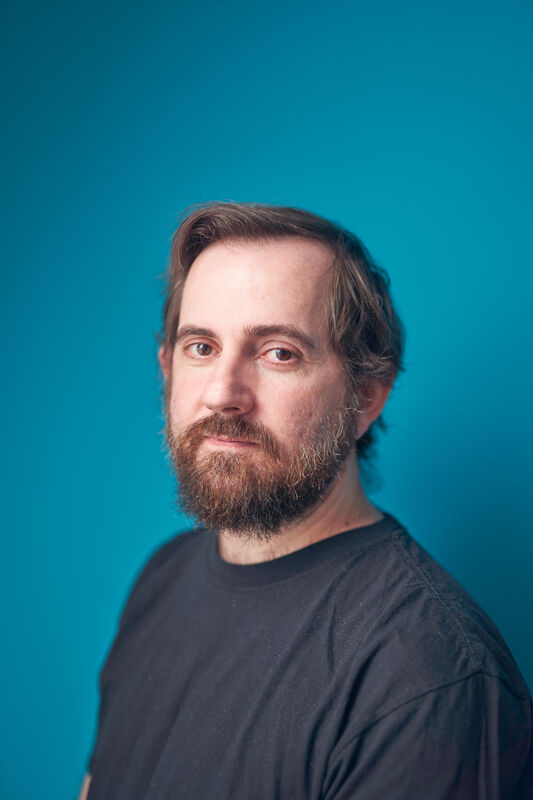
Dann Rees
Dann Rees is the Course Leader for BA (Hons) Games Design, bringing over 25 years of experience across games, apps and interactive media. Specialising in game design, gameplay systems and Unreal Engine development, he takes a practical, hands-on approach to teaching, helping students build creative confidence, develop industry-relevant skills and bring their game ideas to life.
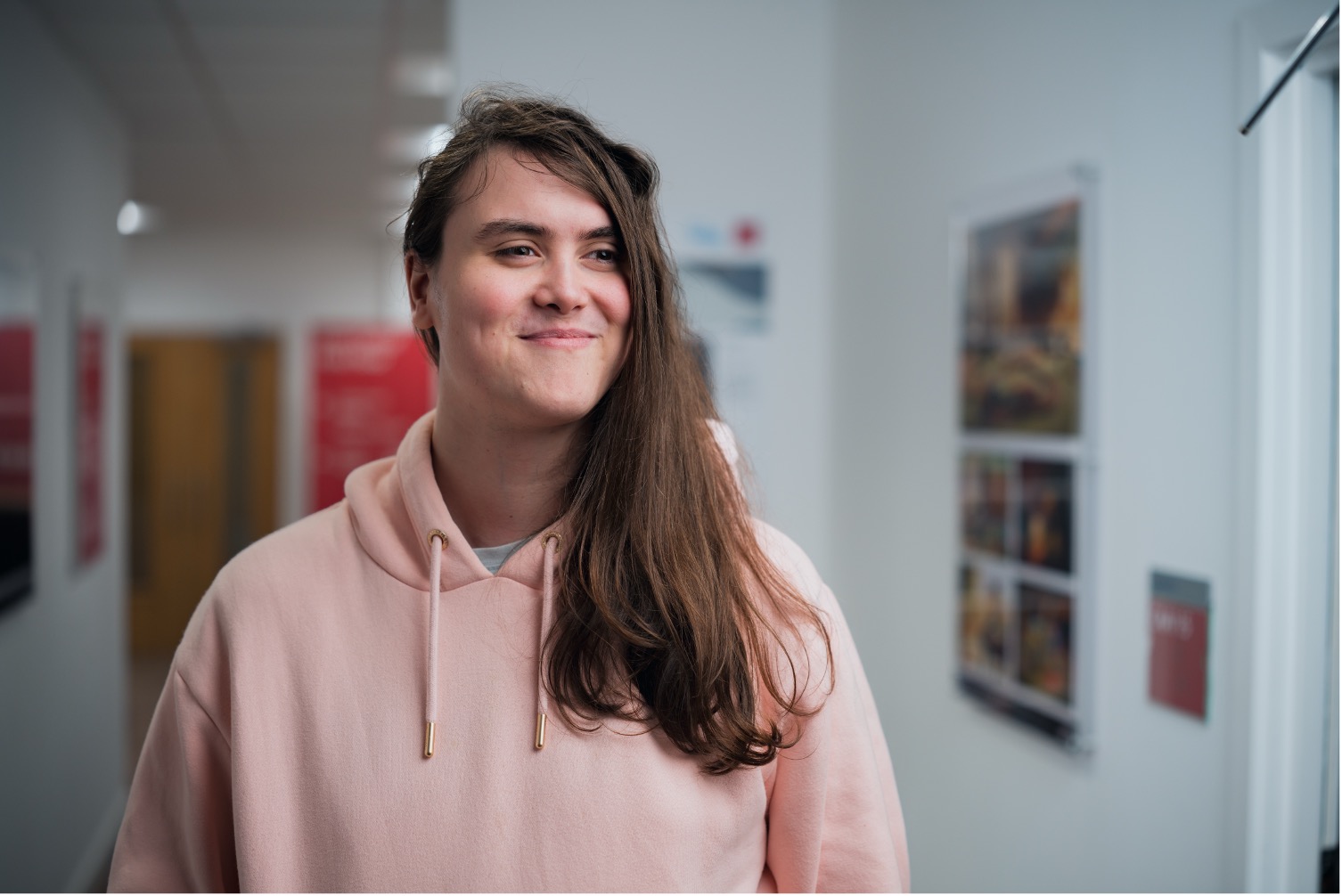
"The PCs here have industry-standard software that we'll be using in our future careers, so learning how to use it now is brilliant."
Harper Matthews, Games Design astudent
Entry Requirements
Additional
The University normally requires a minimum of 5 GCSEs including Mathematics/Numeracy and English at Grade C or Grade 4 or above, or their equivalent, but consideration is given to individual circumstances.
Contextual offers
We may make you a lower offer based on a range of factors, including your background (where you live and the school or college that you attended, for example), your experiences and individual circumstances (as a care leaver, for example). This is referred to as a contextual offer, and we receive data from UCAS to support us in making these decisions.
USW prides itself on its student experience and we support our students to achieve their goals and become a successful graduate. This approach helps us to support students who have the potential to succeed and who may have faced barriers that make it more difficult to access university.
How to applyContextual admissions policyAsk us a question96 UCAS points or above
Typical qualification requirements
A Level:
CCC to include a relevant Art and Design subject
Welsh BACC:
Advanced Skills Baccalaureate Wales Grade C and CC at A Level with a relevant Art and Design subject
BTEC:
BTEC Extended Diploma Merit Merit Merit in a relevant Art and Design subject
Access to HE:
Pass an Access to HE Diploma in a relevant Art and Design subject with a minimum of 96 UCAS tariff points
T Level:
Pass (C and above) in a relevant art and design subject
International applications welcomed:
We welcome international applications with equivalent qualifications of our entry requirements. For more details related to your country of residence, please view our dedicated country pages.
International studentsPre-Sessional EnglishEnglish language requirements
International applicants will need to have achieved an overall of IELTS 6.0 with a minimum of 5.5 in each component/TOEFL 4 overall and a minimum of 4 in each component or equivalent.
Equivalents can be located on our English Language pages.
If you have previously studied through the medium of English, IELTS might not be required, please visit our country specific page for further details. If your country is not featured, please contact us.
If you do not meet the English entry criteria, please visit our Pre-Sessional course pages.
Fees and Funding
per year
Studying at university is one of the most significant investments you'll ever make. Whilst you’re studying, you’ll have two main financial obligations – tuition fees and living costs. There’s lots of financial help available from the University of South Wales and external funding sources, that may provide loans (which have to be paid back) and grants, scholarships and bursaries (that don't).
*Full-time fees are per year. Part-time fees are per 20 credits. Once enrolled, the fee is anticipated to remain at the same rate throughout the duration of your study on this course except as described below.
Please be aware that we may increase the maximum fee for home students on full-time undergraduate courses only where the Welsh Government increases the permitted level of inflation of fees. Fees for all students (including part-time, postgraduate and international students) may be amended in accordance with our applicable Fees and Debt Management Policy. We will ensure that students are given clear, intelligible, unambiguous and timely information about our courses and costs in good time, ahead of the next academic year.
As a student of USW, you’ll have access to lots of free resources to support your study and learning, such as textbooks, publications, online journals, laptops, and plenty of remote-access resources. Whilst in most cases these resources are more than sufficient in supporting you with completing your course, additional costs, both obligatory and optional, may be required or requested for the likes of travel, memberships, experience days, stationery, printing, or equipment.
Art Materials
Cost: £20 - £40
Gaming PC/Laptop
PC's are available in class. However, we do advise that students invest in a gaming PC but this is optional.
Cost: £1,500 to £2,000
PC Periphals
Cost: £30 - £100
per year
Studying at university is one of the most significant investments you'll ever make. Whilst you’re studying, you’ll have two main financial obligations – tuition fees and living costs. There’s lots of financial help available from the University of South Wales and external funding sources, that may provide loans (which have to be paid back) and grants, scholarships and bursaries (that don't).
*Full-time fees are per year. Part-time fees are per 20 credits. Once enrolled, the fee is anticipated to remain at the same rate throughout the duration of your study on this course except as described below.
Please be aware that we may increase the maximum fee for home students on full-time undergraduate courses only where the Welsh Government increases the permitted level of inflation of fees. Fees for all students (including part-time, postgraduate and international students) may be amended in accordance with our applicable Fees and Debt Management Policy. We will ensure that students are given clear, intelligible, unambiguous and timely information about our courses and costs in good time, ahead of the next academic year.
As a student of USW, you’ll have access to lots of free resources to support your study and learning, such as textbooks, publications, online journals, laptops, and plenty of remote-access resources. Whilst in most cases these resources are more than sufficient in supporting you with completing your course, additional costs, both obligatory and optional, may be required or requested for the likes of travel, memberships, experience days, stationery, printing, or equipment.
Art Materials
Cost: £20 - £40
Gaming PC/Laptop
PC's are available in class. However, we do advise that students invest in a gaming PC but this is optional.
Cost: £1,500 to £2,000
PC Periphals
Cost: £30 - £100
/filters:format(webp)/prod01/channel_2/media/university-of-south-wales/site-assets/images/18-campaign-assets/built-to-shape-futures/campaign-built-to-shape-futures-58868.jpg)
/filters:format(webp)/prod01/channel_2/media/university-of-south-wales/site-assets/images/01-campus-and-facilities/12-campus-spaces/campus-spaces-cardiff-library-pod.jpg)
Explore our facilities
/filters:format(webp)/prod01/channel_2/media/video-course-game-art.jpg)
Media Loans
Access industry-standard cameras, lighting, sound and recording gear, supported by free Media Loans and experienced technicians. We have everything you need to help you experiment, refine and bring your work to life with confidence.
How to apply
All applications for full-time undergraduate courses or foundation degrees should be made via UCAS. Take the next step: Apply through UCAS
You can apply to us directly for all part-time undergraduate courses, if you’re seeking advanced entry or you’re an international student. To apply directly, please choose the application form below for your preferred start date and mode of study (full-time or part-time).
-
Apply direct
Games Design
-
Full-time, 3 years
-
September
-
Cardiff
-
-
Apply direct
Games Design
-
Full-time, 3 years
-
September
-
Cardiff
-
If you already have a relevant qualification or experience related to the course you're applying for, you may be eligible to start at a later stage of the course. For example, students from partner colleges can ‘top up’ their qualifications to a degree by joining us in Year Two or Year Three of a course. This process is known as ‘advanced entry’, you can apply directly to the University for 'advanced entry' using the application forms provided above.
Applicants accepted through advanced entry may study a different combination of modules to those advertised, as they will be joining a course already in progress. You will be contacted and advised about these modules once your application has been processed and an offer made.
International applicants can apply to us directly. If the University has an in-country team in your region, your application will be assigned to them for assistance.
/filters:format(webp)/prod01/channel_2/media/university-of-south-wales/site-assets/images/04-profiles/41-undergraduate-student/Turnbull-.jpg)
/filters:format(webp)/prod01/channel_2/media/university-of-south-wales/site-assets/images/04-profiles/41-undergraduate-student/Harper-Matthews.jpg)
/filters:format(webp)/prod01/channel_2/media/university-of-south-wales/site-assets/images/13-video-thumbnails/video-thumbnail-lukes-story-computer-games-design.png)
Related stories and highlights
/filters:format(webp)/prod01/channel_2/media/university-of-south-wales/site-assets/images/news/2025/07-july/RuneCube-Studios-Tranzfuser.jpeg)
/filters:format(webp)/prod01/channel_2/media/university-of-south-wales/site-assets/images/news/2026/01-january/Games-and-Animation-Academy---student-work-3.png) News Article
News Article
/filters:format(webp)/prod01/channel_2/media/university-of-south-wales/site-assets/images/news/2024/04-april/Game-developed-by-USW-graduates-becomes-global-top-seller.jpg)
/filters:format(webp)/prod01/channel_2/media/university-of-south-wales/site-assets/images/16-other/gradfest/creative-graduate-festival-2026/Games-Academy-Launch-(61-of-110).jpg)
/filters:format(webp)/prod01/channel_2/media/university-of-south-wales/site-assets/images/news/2024/04-april/BAFTA-Games-Awards-2024-logo.png)
/filters:format(webp)/prod01/channel_2/media/university-of-south-wales/site-assets/images/07-student-life/72-students-union/student-life-students-union--52621.jpg)