Accounting and Finance
Prepare for a future in professional practice, industry or finance with real world experiences and industry insights through our multi-Accredited Accounting and Finance degree.
How to apply Register for open day Chat to us/filters:format(webp)/prod01/channel_2/media/university-of-south-wales/site-assets/images/03-courses/accounting-and-finance/ba-accounting-and-finance.jpg)
UCAS Code
N420
Start Date
September 2026
Location
Pontypridd
Campus Code
A
UCAS Points
112
Fees
Home students: £9,790*
International students: £16,800*
UCAS Code
Start Date
September 2026
Location
Pontypridd
Campus Code
A
UCAS Points
112
Fees
Home students: £804*
UCAS Code
N421
Start Date
September 2026
Location
Pontypridd
Campus Code
A
UCAS Points
112
Fees
Home students: £9,790*
International students: £16,800*
UCAS Code
N420
Start Date
September 2027
Location
Cardiff
Campus Code
B
UCAS Points
112
International students: £17,600*
UCAS Code
Start Date
September 2027
Location
Cardiff
Campus Code
B
UCAS Points
112
UCAS Code
N421
Start Date
September 2027
Location
Cardiff
Campus Code
B
UCAS Points
112
Course Overview
You will gain a solid grounding in the core elements of accounting and finance, ensuring you are well prepared for a variety of accountancy careers after graduation.
Our students have the chance to gain the ACCA supported certificate in Sage, which is the UK’s biggest accounting software provider and also learn from experts in our real-life securities trading room.
The course is accredited by The Association of Chartered Certified Accountants (ACCA, Institute of Chartered Accountants in England and Wales (ICAEW), Chartered Institute of Management Accountants (CIMA) and Chartered Institute of Public Finance Accountants (CIPFA).
Accreditations
/prod01/channel_2/media/university-of-south-wales/site-assets/images/09-logos/logo-accreditation-accounting-acca.png)
/prod01/channel_2/media/university-of-south-wales/site-assets/images/09-logos/The_Institute_of_Chartered_Accountants_Logo-Hi-Res.png)
/prod01/channel_2/media/university-of-south-wales/site-assets/images/09-logos/logo-cima-1.png)
/prod01/channel_2/media/university-of-south-wales/site-assets/images/09-logos/logo-CIPFA.png)
Why study this course?
What you'll study
Your first year will focus on financial accounting, management accounting, financial planning, and data analysis.
You’ll also learn about the business environment, and corporate law and have the opportunity to gain the CIMA-accredited Sage Accounting Certificate.
Learn to record, summarise and report on transactions that happen within a business and present financial information including a balance sheet and profit and loss statement.
This module aims to develop an awareness of the financial environment in relation to both personal financial planning and the financial services sector.
Learn the techniques of costing and management accounting, whilst putting your strategic decision-making to the test in this hands-on module.
This module covers the role of an accountant in many different business environments and explores the responsibilities that accountants need to take on.
The module will develop knowledge and skills in the understanding of the legal framework that applies in England and Wales with a focus on specific areas of law relating to business and finance.
Learn data analysis and quantitative methods relating to accounting and finance. Through the use of software, you will combine knowledge from other modules to create, manipulate and analyse data and information.
You’ll look at financial reporting, performance measurement and control, audit and assurance, financial management and digital accounting.
You’ll also work on live business projects with external organisations and hear from guest speakers.
You will develop an understanding of financial reporting standards and techniques and then apply such techniques and understanding in the preparation and analysis of financial statements.
Collect, analyse and present financial information for wider business decision making, performance measurement and the management of costs and revenues.
Gain an advanced understanding of financing issues, financial instruments/risk and the concepts and techniques of financial management, preparing you for financial management roles.
Learn digital accounting and taxation including HMRC compliant software for the processing of taxes and financial accounting.
Learn to verify or debunk the information on a company's financial reports for auditing and evaluate the processes that lead to financial data with assurance.
Here you develop your employability, benefitting from guest speakers on various aspects of the recruitment process and also work in small teams on live projects with real world businesses.
The final year looks at some more advanced aspects of accounting along with specialist optional modules, including forensic accounting and financial trading and investment.
You’ll also prepare yourself for the graduate recruitment process and have the opportunity to work on a research project.
Explore more recent and current developments in financial reporting and more advanced aspects, including group accounting and capital instruments.
Explore how to contribute and critically evaluate the decision-making process at all levels within an organisation.
Discover what it takes to become a strategic business partner, applying business strategy theory within a wider business structure.
Learn all about tax and taxation including the preparation of tax calculations and providing tax planning advice.
Work on preparing yourself for the graduate recruitment process and undertake a business research project which most students link with their employment or business interests.
Explore the fast-moving world of forensic accounting and meet a rogues gallery of fraudsters, liars and swindlers. You will learn techniques in business valuation, examine the role of the expert witness, and explore tools used to prevent and detect fraud, including data analysis.
Develop a solid understanding of risk, reward, and the psychological aspects of trading and investing in financial assets like stocks, while building essential skills in forecasting price movements using fundamental and technical analysis.
We regularly review our courses to keep pace with changing skills and employer needs. If a review leads to significant changes, we’ll contact you to explain what’s changing for the coming year.
Teaching and Assessment
You'll be learning from professionally qualified accountants, subject specialists and financial planning professionals who have the skills and knowledge to give you a competitive career advantage.
You’ll learn the core elements of accounting and finance through engaging workshops and computer lab sessions. We pride ourselves on having small class sizes, giving our students the chance to speak out and ask questions in confidence. This coupled with our open-door policy means you’re always welcome to share your thoughts.
Most modules are assessed by a combination of examination and coursework. There is a variety of coursework – helping you develop your employability skills through the use of IT, preparing written reports, and giving presentations.
You’ll have the opportunity to apply for a one-year work placement after your second year of study or a shorter placement of up to three months between your second and third year. It’s a great option if you want a mixture of academic and practical learning, teaching and assessment.
Recent work placements have included work at one of the world’s largest credit insurers, Atradius, global communications leader Alcatel-Lucent, and the Welsh Government. Having the opportunity to work at companies like these will help your CV stand out from the crowd.
Our accounting students get access to an on-campus financial Trading Room with state-of-the-art computer hardware, software, and live data from the city. This practical way of learning means you’re exposed to a working environment as you learn how to navigate the financial world. You’ll learn first-hand the complex strategies associated with buying and selling and understand the volatility and fluctuations of the market and the uncertainty of risk.
Course Leader
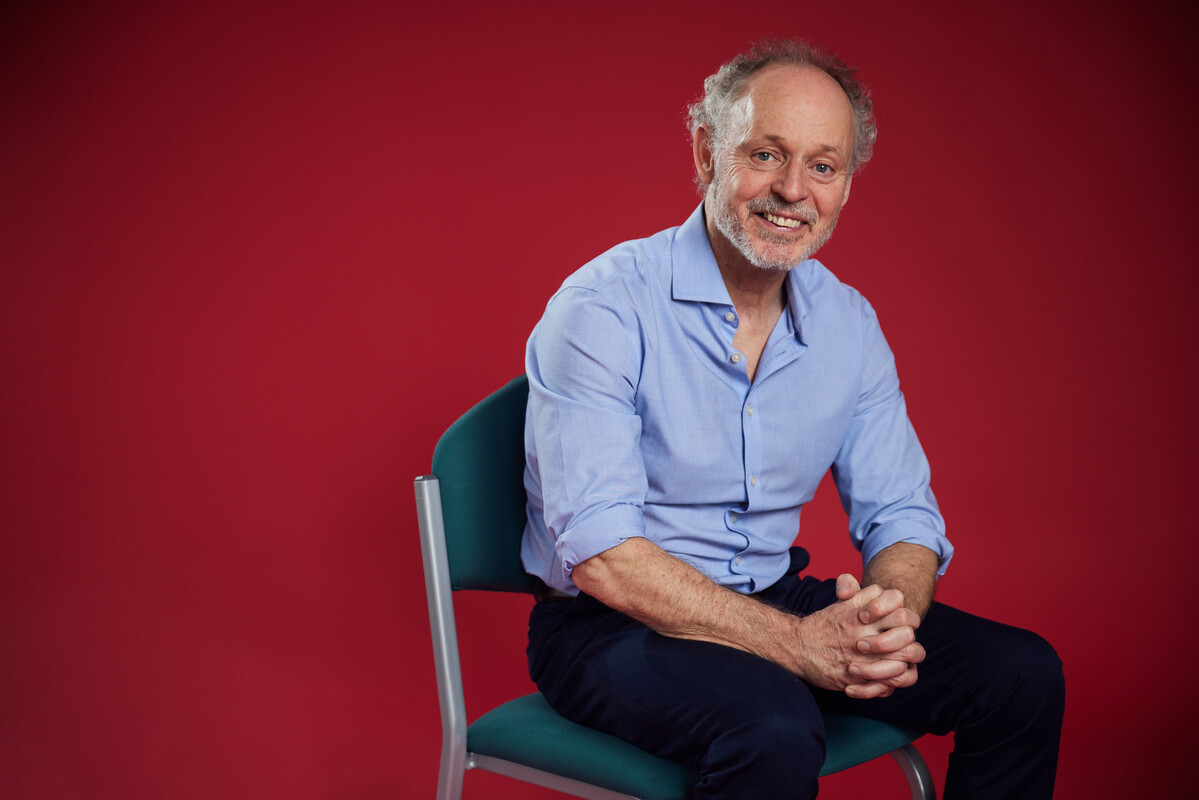
Simon McCarthy
Meet Simon McCarthy, a highly experienced academic who qualified as a Chartered Accountant (ICAEW), having trained with Deloitte prior to his academic career. Simon brings a wealth of professional and teaching expertise, with extensive experience of delivering accounting education across all levels. As Course Leader for the BA (Hons) Accounting and Finance course, he plays a central role in shaping the student experience while continuing to teach a number of modules on the degree.
Simon’s consultancy and research activities are focused on areas of significant contemporary relevance, including small business growth and finance, the commercialisation of university research, and sports finance, where he contributes both academic insight and practical expertise.

"Engaging with industry professionals at careers fairs and through guest lectures allowed me to network and ultimately secure a graduate job as a business tax analyst at Deloitte."
Rhys Jones, Accounting and Finance student
Entry Requirements
Contextual offers
We may make you a lower offer based on a range of factors, including your background (where you live and the school or college that you attended, for example), your experiences and individual circumstances (as a care leaver, for example). This is referred to as a contextual offer, and we receive data from UCAS to support us in making these decisions.
USW prides itself on its student experience and we support our students to achieve their goals and become a successful graduate. This approach helps us to support students who have the potential to succeed and who may have faced barriers that make it more difficult to access university.
How to applyContextual admissions policyAsk us a question112 UCAS points or above
Typical qualification requirements:
A Level
BBC
AAT
Level 3 for 1st year entry or Level 4 for direct 2nd year entry.
Welsh Baccalaureate:
Advanced Skills Baccalaureate Wales grade B/C with BB-BC at A Level.
BTEC:
BTEC Extended Diploma Distinction Merit Merit.
Access to HE:
Pass the Access to HE Diploma and obtain a minimum of 112 UCAS tariff points.
T Level:
Pass (C and above)
Additional Requirements:
The University normally requires a minimum 5 GCSEs including Mathematics/Numeracy and English at Grade C or Grade 4 or above, or their equivalent, but consideration is given to individual circumstances.
International applications welcomed:
We welcome international applications with equivalent qualifications of our entry requirements. For more details related to your country of residence, please view our dedicated country pages.
International studentsPre-Sessional EnglishEnglish language requirements
International applicants will need to have achieved an overall of IELTS 6.0 with a minimum of 5.5 in each component/TOEFL 4 overall and a minimum of 4 in each component or equivalent.
Equivalents can be located on our English Language pages.
If you have previously studied through the medium of English, IELTS might not be required, please visit our country specific page for further details. If your country is not featured, please contact us.
If you do not meet the English entry criteria, please visit our Pre-Sessional course pages.
Fees and Funding
per year
per 20 credits
Studying at university is one of the most significant investments you'll ever make. Whilst you’re studying, you’ll have two main financial obligations – tuition fees and living costs. There’s lots of financial help available from the University of South Wales and external funding sources, that may provide loans (which have to be paid back) and grants, scholarships and bursaries (that don't).
*Full-time fees are per year. Part-time fees are per 20 credits. Once enrolled, the fee is anticipated to remain at the same rate throughout the duration of your study on this course except as described below.
Please be aware that we may increase the maximum fee for home students on full-time undergraduate courses only where the Welsh Government increases the permitted level of inflation of fees. Fees for all students (including part-time, postgraduate and international students) may be amended in accordance with our applicable Fees and Debt Management Policy. We will ensure that students are given clear, intelligible, unambiguous and timely information about our courses and costs in good time, ahead of the next academic year.
As a student of USW, you’ll have access to lots of free resources to support your study and learning, such as textbooks, publications, online journals, laptops, and plenty of remote-access resources. Whilst in most cases these resources are more than sufficient in supporting you with completing your course, additional costs, both obligatory and optional, may be required or requested for the likes of travel, memberships, experience days, stationery, printing, or equipment.
Placement expenses
The exact cost of attending any placement is dependent upon the its location in relation to the student's place of residence, mode of transportation etc. and therefore cannot be determined at this moment in time. Furthermore, depending upon the placement the student may need to purchase suitable attire (e.g. a suit or formal clothing).
Cost: Up to £300
Text books
Some additional text books may need to be purchased
Cost: Up to £300
Additional assessment or memberships: Student membership of professional bodies
Reduced fee membership of ACCA "Accelerate" scheme. Normally £79 but we have a special fee of £20
Cost: £20
Travel costs for work placements
Placement Year. Travel costs depend on placement location
Cost: Up to £300
per year
Studying at university is one of the most significant investments you'll ever make. Whilst you’re studying, you’ll have two main financial obligations – tuition fees and living costs. There’s lots of financial help available from the University of South Wales and external funding sources, that may provide loans (which have to be paid back) and grants, scholarships and bursaries (that don't).
*Full-time fees are per year. Part-time fees are per 20 credits. Once enrolled, the fee is anticipated to remain at the same rate throughout the duration of your study on this course except as described below.
Please be aware that we may increase the maximum fee for home students on full-time undergraduate courses only where the Welsh Government increases the permitted level of inflation of fees. Fees for all students (including part-time, postgraduate and international students) may be amended in accordance with our applicable Fees and Debt Management Policy. We will ensure that students are given clear, intelligible, unambiguous and timely information about our courses and costs in good time, ahead of the next academic year.
As a student of USW, you’ll have access to lots of free resources to support your study and learning, such as textbooks, publications, online journals, laptops, and plenty of remote-access resources. Whilst in most cases these resources are more than sufficient in supporting you with completing your course, additional costs, both obligatory and optional, may be required or requested for the likes of travel, memberships, experience days, stationery, printing, or equipment.
Placement expenses
The exact cost of attending any placement is dependent upon the its location in relation to the student's place of residence, mode of transportation etc. and therefore cannot be determined at this moment in time. Furthermore, depending upon the placement the student may need to purchase suitable attire (e.g. a suit or formal clothing).
Cost: Up to £300
Text books
Some additional text books may need to be purchased
Cost: Up to £300
Additional assessment or memberships: Student membership of professional bodies
Reduced fee membership of ACCA "Accelerate" scheme. Normally £79 but we have a special fee of £20
Cost: £20
Travel costs for work placements
Placement Year. Travel costs depend on placement location
Cost: Up to £300
/filters:format(webp)/prod01/channel_2/media/university-of-south-wales/site-assets/images/18-campaign-assets/built-to-shape-futures/campaign-built-to-shape-futures-58868.jpg)
/filters:format(webp)/prod01/channel_2/media/university-of-south-wales/site-assets/images/01-campus-and-facilities/12-campus-spaces/campus-spaces-cardiff-library-pod.jpg)
How to apply
All applications for full-time undergraduate courses or foundation degrees should be made via UCAS. Take the next step: Apply through UCAS
You can apply to us directly for all part-time undergraduate courses, if you’re seeking advanced entry or you’re an international student. To apply directly, please choose the application form below for your preferred start date and mode of study (full-time or part-time).
-
Apply direct
Accounting and Finance
-
Full-time, 3 years
-
September
-
Pontypridd
-
-
Apply direct
Accounting and Finance
-
Part-time, 5 years
-
September
-
Pontypridd
-
-
Apply direct
Accounting and Finance
-
Sandwich, 4 years
-
September
-
Pontypridd
-
-
Apply direct
Accounting and Finance
-
Full-time, 3 years
-
September
-
Cardiff
-
-
Apply direct
Accounting and Finance
-
Part-time, 5 years
-
September
-
Cardiff
-
-
Apply direct
Accounting and Finance
-
Sandwich, 4 years
-
September
-
Cardiff
-
If you already have a relevant qualification or experience related to the course you're applying for, you may be eligible to start at a later stage of the course. For example, students from partner colleges can ‘top up’ their qualifications to a degree by joining us in Year Two or Year Three of a course. This process is known as ‘advanced entry’, you can apply directly to the University for 'advanced entry' using the application forms provided above.
Applicants accepted through advanced entry may study a different combination of modules to those advertised, as they will be joining a course already in progress. You will be contacted and advised about these modules once your application has been processed and an offer made.
International applicants can apply to us directly. If the University has an in-country team in your region, your application will be assigned to them for assistance.
/filters:format(webp)/prod01/channel_2/media/university-of-south-wales/site-assets/images/04-profiles/41-undergraduate-student/profile-accounting-tom-parry.jpg)
/filters:format(webp)/prod01/channel_2/media/university-of-south-wales/site-assets/images/04-profiles/41-undergraduate-student/profiles-accounting-nika-holly.jpg)
/filters:format(webp)/prod01/channel_2/media/university-of-south-wales/site-assets/images/04-profiles/41-undergraduate-student/profile-ug-accounting-kee-hau-49693.jpg)
/filters:format(webp)/prod01/channel_2/media/university-of-south-wales/site-assets/images/14-features/features-lowri-connick.jpg)
/filters:format(webp)/prod01/channel_2/media/university-of-south-wales/site-assets/images/04-profiles/41-undergraduate-student/profile-accounting-adam-oliver.jpg)
Related stories and highlights
/filters:format(webp)/prod01/channel_2/media/university-of-south-wales/site-assets/images/news/2025/04-april/Audit-Wales-challenge-winning-student-group-2025.png)
/filters:format(webp)/prod01/channel_2/media/university-of-south-wales/site-assets/images/news/2023/11-november/news-image-celebrating-acca.png)
/filters:format(webp)/prod01/channel_2/media/university-of-south-wales/site-assets/images/07-student-life/72-students-union/student-life-students-union--52621.jpg)